What changes after St. Kitts and Nevis secures landmark US regulatory clearance
Rescission, effective February 2026, driven by reforms undertaken by Citizenship Unit
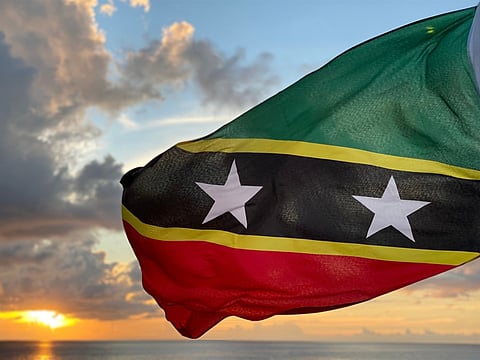
The United States Financial Crimes Enforcement Network (FinCEN) has formally rescinded an advisory against St. Kitts and Nevis Citizenship Programme, ending a decade-old push that had placed the programme under heightened international scrutiny.
The rescission, effective February 2026, is driven by the comprehensive and sustained reforms undertaken by the Citizenship Unit over the past several years.
The FinCEN advisory, issued in 2014, represented the most serious regulatory challenge in the programme’s history, one that the federation has now demonstrably put behind it.
The formal confirmation came from Calvin St. Juste, Executive Chairman of the Citizenship Unit, who described the rescission as a reaffirmation of international confidence in the programme under its restructured governance framework.
“The rescission of the FinCEN advisory reaffirms confidence in the Programme under our new governance framework as a statutory body. Moving forward, we will continue to strengthen our processes and maintain the governance standards that led to the removal of the advisory,” Executive Chairman St. Juste added.
What has actually changed on the ground
The rescission did not arrive because circumstances shifted in Washington. It arrived because circumstances shifted in Basseterre. St. Kitts and Nevis undertook what can be described, without exaggeration, as overhaul of its citizenship programme in the last two years.
The most consequential change was structural. The Citizenship Unit was reconstituted as a fully independent statutory body, governed by a Board of Governors and removed from the direct orbit of political decision-making.
In the world of regulatory credibility, institutional independence is a foundational requirement. It is what distinguishes a programme that is run by an accountable CIU subject to transparent oversight.
Alongside that structural transformation came a comprehensive overhaul of due diligence processes. Partnerships were established with leading international vetting firms, entities that bring proprietary global databases, financial crime intelligence networks, and cross-jurisdictional screening capabilities to bear on every applicant assessment. Background checks were deepened and financial screening was made materially more rigorous.
Crucially, mandatory applicant interviews were introduced. This single procedural change signals a philosophical shift in how the programme operates, from a document-processing exercise to a substantive evaluation of the individual seeking citizenship. An interview cannot be fabricated. It requires presence, coherence, and accountability.
Biometric data collection, fingerprints and facial recognition, is now mandatory for all new applicants. This aligns St. Kitts and Nevis with the identity verification standards deployed by border agencies in the United States, the European Union, and the United Kingdom. The programme now speaks the same technical language as the world's most rigorous passport control systems.
Enhanced information-sharing arrangements with local, regional, and international law enforcement agencies have been formalised. Independent external audits have been commissioned and completed, providing third-party validation that the reforms are substantive rather than procedural, a critical distinction when the audience is FinCEN.
And it has, scheduled for 2026, the forthcoming genuine-link requirement, a framework that will require applicants to demonstrate substantive, ongoing connection to the federation. This is the most significant forward-looking reform on the programme's roadmap, and it is one that elevates St. Kitts and Nevis above the transactional model that draws regulatory fire globally.
A citizenship programme that requires genuine participation is structurally different from one that sells passports. That distinction is not lost on the international bodies that monitor this space.
How the Citizenship Programme emerges stronger
When FinCEN issued its advisory in 2014, the global citizenship-by-investment industry was at an inflection point. Programmes across the Caribbean and Mediterranean were expanding rapidly, drawing capital at a pace that outran their governance frameworks. Regulatory bodies were watching. The question was not whether scrutiny would come, it was which programme would lead in response.
St. Kitts and Nevis was made an example of first. It chose, in response, to become an example of something else entirely.
The reforms implemented over the subsequent decade constructed a Citizenship Programme so comprehensive that it effectively redefined what a credible citizenship programme looks like. All these reforms have enhanced and strengthened the programme.
Chance for Middle Eastern Investors
For Middle Eastern high-net-worth individuals evaluating alternative citizenship options, the regulatory clearance from FinCEN changes the calculus in practical terms. The broader context favours St. Kitts and Nevis.
For Middle Eastern investors seeking an internationally recognised and secure path to alternative citizenship.


