The Royal Academy delivers content to cultivate competencies
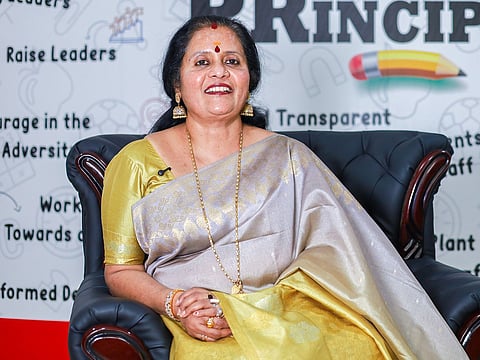
In conversation with Dr Prema Muralidhar, Principal, The Royal Academy, Ajman
How is your school rethinking teaching and learning so that students develop not only academic strength, but also adaptability, problem-solving abilities and the confidence to navigate uncertainty?
At The Royal Academy, we believe that preparing students for examinations alone is no longer sufficient; we are preparing them for life, leadership, and a world that is evolving at an unprecedented speed.
Our pedagogical philosophy has therefore shifted from merely delivering content to cultivating competencies. Through inquiry-based learning, project-driven experiences, collaborative problem-solving, leadership opportunities, innovation challenges, and real-world applications of knowledge, students are encouraged to think critically, communicate effectively, and embrace ambiguity with confidence.
Whether it is our student-led initiatives, innovation showcases, entrepreneurship experiences, sustainability projects, leadership forums, or community engagement programmes regularly highlighted across our social media platforms, every experience is intentionally designed to nurture resilience, adaptability, creativity, and decision-making skills.
Our classrooms are becoming dynamic learning ecosystems where curiosity is celebrated, mistakes are viewed as opportunities for growth, and learners are empowered to become architects of their own success.
Supported by a distinguished Board of Governors, whose collective international expertise spans education, leadership, governance, and global enterprise, we remain steadfastly focused on developing future-ready citizens capable of thriving in an increasingly complex and interconnected world.
Many schools speak about future-ready learning but translating that into the curriculum requires concrete change. How are you redesigning classroom experiences, subject integration and assessment methods to ensure students are developing skills that remain relevant in a fast-changing global economy?
Future readiness cannot exist as a slogan; it must be deliberately engineered into the curriculum. At The Royal Academy, we are progressively transforming traditional subject silos into interconnected learning experiences. Students are increasingly challenged to apply knowledge across disciplines, mirroring how problems are solved in the real world.
For example, our sustainability project integrates scientific investigation, mathematical analysis, persuasive communication, digital literacy, entrepreneurship, and social responsibility. Such experiences enable students to appreciate the interconnectedness of knowledge while strengthening transferable skills.
Assessment practices are similarly evolving. Alongside conventional examinations, students engage in presentations, portfolios, collaborative projects, performance tasks, innovation exhibitions, and reflective learning journeys. These assessments provide richer evidence of competencies such as critical thinking, creativity, collaboration, leadership, and communication.
Technology integration, AI awareness, coding opportunities, digital citizenship education, and experiential learning further ensure that students are equipped not only with knowledge but also with the agility required to succeed in emerging industries and future workplaces.
The result is a curriculum that balances academic rigour with authentic skill development, ensuring our learners remain globally relevant and locally grounded.
What specific initiatives has your school introduced to help students better understand emerging industries, evolving career opportunities and the expectations of higher education institutions worldwide?
At The Royal Academy, career readiness begins long before university applications. Our students are exposed to a broad spectrum of career pathways through university fairs, career exploration programmes, leadership interactions, guest speakers, industry engagements, mentorship opportunities, entrepreneurship initiatives, innovation showcases, and career-focused assemblies.
The school actively facilitates interactions with professionals from diverse sectors including medicine, engineering, business, technology, education, aviation, media, and emerging digital industries. These experiences provide students with invaluable insights into future workforce expectations.
Our social media platforms frequently showcase career talks, leadership interactions, student innovation projects, and university engagement activities that inspire students to explore possibilities beyond traditional career pathways.
Furthermore, we are increasingly helping students understand the transformative influence of artificial intelligence, sustainability, digital transformation, global citizenship, and entrepreneurship on future employment landscapes.
By exposing students to contemporary and emerging professions, we enable them to make informed decisions regarding higher education and future careers while cultivating the adaptability required for professions that may not even exist today.
Career guidance is increasingly moving beyond university counselling into long-term life planning. How does your school support students in making decisions about higher education, career pathways and skill development?
We view career guidance as a lifelong journey of self-discovery rather than a destination-focused process. Our approach integrates academic planning, career exploration, leadership development, wellbeing support, skill mapping, and future aspiration building. Students are encouraged to identify their strengths, passions, interests, and personal values before making decisions regarding higher education and career pathways.
Through personalised guidance, parent engagement programmes, university awareness initiatives, aptitude exploration, leadership opportunities, and exposure to successful professionals, students gain clarity about their future aspirations.
Importantly, we focus on helping students develop enduring human capabilities such as emotional intelligence, resilience, ethical decision-making, collaboration, adaptability, communication, and leadership, competencies that remain valuable regardless of how industries evolve.
The strategic vision and global perspective provided by our Board of Governors significantly enrich this process. Their extensive international experience ensures that our educational provision remains aligned with emerging global trends while maintaining a steadfast commitment to developing responsible, compassionate, and successful future leaders.
Extracurricular programmes are now considered an integral part of student development. How are sports, arts, innovation programmes, entrepreneurship initiatives or leadership opportunities being designed to strengthen competencies that are valuable for future careers and real-world success?
At The Royal Academy, extracurricular programmes are not viewed as optional add-ons; they are indispensable platforms for character formation, leadership cultivation, and competency development. Our sporting programmes foster discipline, teamwork, perseverance, strategic thinking, and resilience. The performing arts nurture creativity, confidence, communication, and emotional expression. Innovation initiatives encourage experimentation, design thinking, and solution-oriented mindsets.
Student leadership structures, including our Student Council and various ambassadorial roles, empower learners to take ownership, influence positive change, and develop authentic leadership capabilities. Entrepreneurship experiences cultivate financial literacy, innovation, problem-solving, and enterprise skills that are increasingly valued in modern economies.
The vibrant activities regularly showcased across our Facebook, LinkedIn, and Instagram platforms reflect a school culture where students confidently lead assemblies, organise events, participate in competitions, present innovative ideas, engage with the community, and celebrate diverse achievements.
These experiences collectively contribute to the development of what we describe as the “Royal Competencies”, communication, collaboration, critical thinking, creativity, character, citizenship, and leadership.
Ultimately, our aspiration extends beyond producing successful graduates. We aim to nurture confident, ethical, globally minded individuals who possess the competence, courage, and conviction to lead meaningful lives and contribute positively to society.
At The Royal Academy, Ajman, we are not merely educating students for the next examination or the next university placement. We are cultivating future-ready leaders, innovators, entrepreneurs, and responsible global citizens. Guided by an internationally accomplished Board of Governors and inspired by our ethos of ‘Believe to Achieve’, we remain unwavering in our commitment to transforming potential into purpose and aspirations into achievement.


