RAKIA's 'Connection Over Collection': Transforming AI-driven public safety
All about how RAKIA is building trusted tech for complex environments in AI-driven world
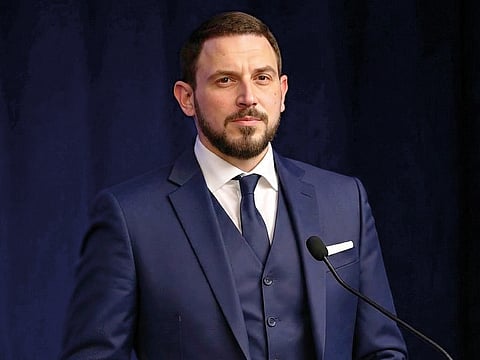
As global systems grow more interconnected, the challenge facing public safety and government decision-makers is no longer access to information but making sense of it in time. Omri Raiter, Founder and CEO, RAKIA Group, has spent nearly two decades working at the intersection of artificial intelligence, big data, and cyber intelligence. In this Q&A, he explains his philosophy of “connection over collection” the evolution of what he calls “aware systems,” and how RAKIA is building trusted technology for complex environments.
You often say the main challenge today isn’t lack of data, but its complexity. What do you mean by that?
Most organisations are overwhelmed, not under-informed. Data is everywhere - sensors, networks, public sources, operational systems - but it exists in silos. The real issue comes from fragmentation. Important signals are present, but they’re buried inside massive volumes of legitimate activity. If you can’t connect them quickly and coherently, they lose operational value.
You describe a shift “from collection to connection.” Why does that shift so important?
For years, success was measured by how much data can be gathered. Today, that approach creates noise. What matters is how fast and accurately you can connect information across domains and present it in a way humans can understand and act on. Connection shortens the distance between detection and decision, which is where outcomes are decided.
Your background spans entrepreneurship and advisory work with government organisations. How did that shape RAKIA?
I’ve spent over 18 years working with AI, big data, and cyber intelligence, often in environments where decisions carry real-world consequences. Many of the systems I helped develop were never public, by design. That experience taught me that technology must be practical, trusted, and aligned with how people actually work. RAKIA was built on that operational mindset, not theory.
What problem was RAKIA specifically created to solve?
There is a gap between perception and decision. Legacy platforms store data but don’t truly interpret it. RAKIA was built to transform complex, multi-source data into a live, human-readable picture, what we call a Mosaic - so decision-makers can understand situations as they evolve, not after the fact.
You’ve introduced the term “Era of Aware Systems.” How do these differ from traditional platforms?
Traditional systems are passive. They wait for users to ask. Aware systems are active. They continuously ingest unlimited data formats, from physical sensors to digital signals and open sources - fusing them in real time. The system understands context, relationships, and change. It doesn’t just show data; it explains it.
RAKIA has expanded quickly from Dubai to Washington, D.C. What’s behind that growth?
The challenges we address are universal. Across the GCC, Europe, and the United States, institutions face the same problem: complexity without clarity. In just three years, we evolved from a Dubai-based startup into a global company with offices in Europe, Asia, and the US. in Washington, D.C., steps away from the White House. That growth was driven by a real need, and our solution directly addresses it.
RAKIA is known for being fully bootstrapped and profitable. Why take that path?
Independence matters, especially in public-sector technologies. Starting as bootstrapped with proven technology allowed us to focus on long-term trust, not short-term growth metrics. It also forced discipline. Every system we build must deliver value from day one.
How do you approach ethics and governance in intelligence technology?
Trust must be implemented, not promised. We follow what I call “governance by design.” Legal, ethical, and operational rules are embedded directly into the systems through smart-automated controllers and rule engines. Compliance becomes continuous and self-managed, rather than an external checkpoint.
What’s next for RAKIA?
We keep expanding internationally, and into the U.S. federal markets, supported by a strong pipeline of government engagements. Our mission remains unchanged: to help organisations and agencies make sense of complex environments with speed and clarity, enabling confident decision-making. Technology should empower people, not overwhelm them.


