Province of Punjab: The economic powerhouse driving Pakistan's future
Punjab’s industrial strength & agricultural scale anchors Pakistan’s economic growth
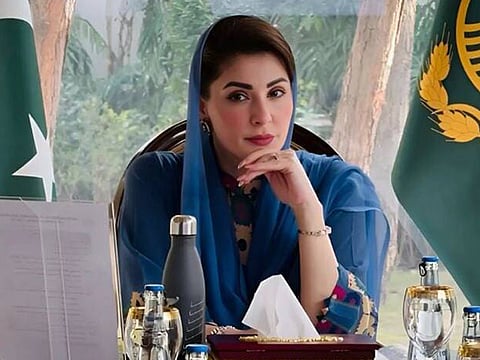
Pakistan’s most populous province, Punjab is the country’s economic engine. Contributing nearly 60 per cent of national GDP, it serves as the backbone of both industrial production and food supply. The province accounts for a significant proportion of Pakistan’s agricultural output and is also home to key industries from textiles to manufacturing – making it a central driver of exports, employment and growth.
Leading Punjab is Chief Minister Maryam Nawaz, Pakistan’s first woman to hold the office. Her administration has placed digitalisation and institutional reform at the centre of its policy agenda, focusing on digital public services, improved transparency and broader inclusivity.
At the same time, new initiatives are under way to boost long-term economic capacity, from agricultural modernisation programmes to cleaner public transport systems and policies aimed at expanding opportunities for women.
Given Punjab’s scale and economic importance, reforms in the province carry significance beyond its borders. In this interview, Nawaz sets out her strategy for expanding opportunity, engaging international investors and supporting Pakistan’s long-term development.
Punjab offers opportunities across a range of emerging and high-growth sectors.Maryam Nawaz, Chief Minister - Province of Punjab
What is your vision for Punjab Province?
As Pakistan’s first female chief minister, my vision is to redefine what governance means in Pakistan. Public service must go beyond administrative management, reflecting a commitment to dignity, equity, fairness and opportunity for every citizen. Punjab requires a governance model that is responsive, transparent and capable of meeting the aspirations of its people. For this reason, digital transformation lies at the centre of my reform agenda.
Across Punjab, we are harnessing technology to make governance more accessible, transparent and efficient. Digital platforms are enabling citizens to interact with the state in ways that are simpler, faster and more equitable. Through E-Payment Punjab, for example, citizens can now pay taxes and government fees securely and transparently through digital channels.
Technology is also transforming the internal functioning of government. The Electronic Filing and Office Automation System has streamlined official correspondence and decision-making processes, improving both efficiency and administrative accountability. The digital land records system ensures secure and tamper-resistant records of land ownership – an essential reform in a province where land administration plays a central role.
Governance must ultimately be judged by its impact on people’s lives. I feel a profound responsibility to ensure that governance expands opportunity, safety and dignity for women. Initiatives such as the E-Bikes Scheme, the Virtual Women Police Station, Violence Against Women Centers, Working Women Hostels, the Female Ambassador Program and digital skills training for young women across rural Punjab represent important steps toward building a more inclusive and enabling society.
How critical is the province to the national economy?
Punjab lies at the heart of Pakistan’s economic stability. The province produces more than half of Pakistan’s wheat supply and remains a major producer of rice, contributing nearly $4 billion to national rice exports. Punjab also accounts for 85 per cent of the nation’s mango production, 98% of its potatoes and 64 per cent of all vegetables grown in Pakistan. These figures underscore Punjab’s central role in ensuring both domestic food security and the growth of high-value agricultural exports, particularly to markets in the Middle East. On the industrial side, Punjab accounts for more than 60% of Pakistan’s textile base, a sector that generates $17 to $19 billion in annual exports.
Punjab is also home to one of the world’s leading clusters for surgical and medical instruments, with more than 25,000 exporters serving markets including the UAE, Saudi Arabia, Europe and beyond. Long recognised as Pakistan’s primary production hub, the province is now transitioning toward a value-added and innovation-driven economy by strengthening our capacities in minerals and salt-based industries, food processing, packaging, renewable energy components, electric vehicle assembly, gemstone processing and footwear – industries with significant commercial potential in global markets. Punjab also possesses substantial export potential in high-value leather products and sports goods.
What opportunities would you highlight to UAE partners and investors?
For international partners, particularly from the UAE, Punjab offers opportunities across a range of emerging and high-growth sectors. These include halal meat and dairy production, post-harvest logistics and cold-chain infrastructure, electric vehicle assembly ecosystems, precious mineral processing, salt-based industrial estates and integrated industrial parks within special economic zones (SEZs). These sectors represent commercially viable industries that closely align with the UAE’s long-term strategic priorities and its expanding global investment footprint.
Q: What steps have you taken to enhance investor engagement?
When I extended an invitation to companies from the UAE to visit Punjab, I did so with full confidence in the direction our economy is taking. Punjab today hosts 22 SEZs – the highest concentration in Pakistan – with nearly 60% developed through private-sector leadership. These zones offer ready-to-use industrial land, a one-time exemption from customs duties on machinery imports and a ten-year income tax holiday, providing investors with a strong foundation for establishing operations.
What truly distinguishes Punjab, however, is our model of investor facilitation. Through fully automated Business Facilitation Centers and a zero-time-to-start operating policy, investors can obtain approvals, permits and no-objection certificates under a single roof, while the Punjab eBiz Portal delivers fast, fully digital approvals that significantly reduce administrative barriers. This approach reflects a broader commitment to building a business environment grounded in consistency, predictability and transparency.
Why is now the moment for investors to consider Punjab Province?
Pakistan has entered a period of renewed stability, and Punjab is ready to translate that stability into long-term economic opportunity. International partners are increasingly confident in Pakistan’s economic outlook. Punjab is reinforcing this positive momentum through digitalised public services, streamlined regulatory frameworks and comprehensive governance reforms.
The rise of the UAE as Pakistan’s largest foreign investor is deeply encouraging, yet it represents only the beginning of a deeper phase of economic collaboration. Punjab today offers significant opportunities across a wide range of sectors. Above all, the province is home to a well-trained and increasingly competitive workforce, providing UAE investors with a productive, adaptable pool of talent capable of supporting large-scale industrial expansion and long-term economic partnerships.


