Suthra Punjab (Clean Punjab) sets new benchmark for climate-smart urban governance
Pakistan’s unveils world’s largest unified waste management system
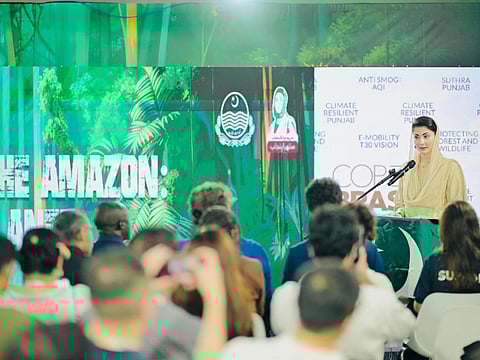
Punjab, Pakistan’s most populous province, has unveiled the world’s largest unified waste management system under its flagship initiative, Suthra Punjab (Clean Punjab), setting a new benchmark for climate-smart urban governance.
The province now manages over 50,000 tons of waste daily through a fully integrated, technology-driven ecosystem. The system leverages 30,000 vehicles, 150,000 sanitation workers, and 6,600 geo-tagged waste enclosures, monitored in real time via RFID-enabled weighbridges, IP cameras, and AI-powered Vehicle Tracking & Monitoring Systems.
Payments to contractors and performance evaluations are now entirely KPI-driven, ensuring transparency and accountability, while citizen engagement is enabled through a robust Complaints Management System. The initiative has created 150,000 formal sanitation jobs with fair wages, uniforms, and safety standards.
Punjab is also converting waste into economic and environmental value. Key projects include a 25 MW waste-to-energy plant, composting hubs, a 5 MW solar park at a rehabilitated dumpsite, and carbon-market-ready landfills in partnership with UNEP and GGGI. These initiatives collectively reduce 60,000–90,000 tons of CO₂-equivalent emissions annually.
Most of the province’s waste management technology and machinery are locally designed, fostering indigenous innovation and technical expertise. The systems comply with ISO standards and have received independent verification by SGS, earning Punjab global recognition as a model of self-sustaining, data-driven circular transformation.
Suthra Punjab is proving that innovation is not limited to the developed world. In fact, the Global South can lead the race in delivering large-scale, technology-enabled public services that are efficient, inclusive, and climate-resilient.
Reflecting the vision of Chief Minister Punjab, Maryam Nawaz Sharif, Suthra Punjab places clean cities, dignified sanitation work, and climate resilience at the heart of public service reform — demonstrating how strong political leadership can translate sustainability goals into measurable outcomes.
As Punjab’s Minister for Local Government stated at COP30 in Brazil:
“When governance goes digital, waste becomes wealth — and communities become climate-resilient.”
Suthra Punjab demonstrates that strategic investment in technology and governance can turn urban waste challenges into lasting climate and economic opportunities.


