HONOR Robot Phone: A moving camera that could redefine smartphone filmmaking
HONOR unveils Robot Phone with a moving gimbal camera, AI features and ARRI imaging tech
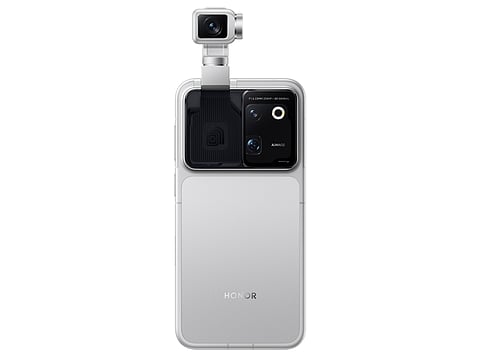
The world’s first HONOR Robot Phone combines a mechanically moving gimbal camera, AI-powered features and an ARRI imaging collaboration to explore new possibilities in mobile photography and video creation.
Smartphone cameras have become increasingly advanced, but the HONOR Robot Phone takes a different approach. At first glance, it looks like a conventional smartphone. That changes when its gimbal camera rises from the rear housing, activates and begins tracking a face across the room.
During a hands-on demonstration, the camera’s ability to follow moving subjects and respond to changes in its surroundings highlighted how physical movement could transform the smartphone photography experience.
A Gimbal camera that does more
The Robot Phone’s defining feature is its integrated mechanical gimbal, which introduces physical camera movement and stabilization into a smartphone. According to HONOR, the system uses a precision-engineered titanium mechanism and supports motor speeds of up to 360 degrees per second.
During testing, the camera continued tracking a subject even when another person briefly obstructed the view, reacquiring the face shortly after the obstruction cleared. Its responsiveness demonstrated the potential of combining mechanical movement with intelligent subject tracking.
The gimbal offers extensive movement across three axes, while dedicated modes allow users to capture smooth 90-degree and 180-degree rotations with a single tap. These automated movements could make creative video techniques more accessible without requiring additional camera equipment.
Bringing cinematic control to smartphones
The Robot Phone also features an imaging collaboration with ARRI, the professional camera and cinematography company. A key element is support for ARRI LogC3, a logarithmic video format designed to preserve image information and provide greater flexibility during post-production.
Creators can process footage on the phone or use professional editing software such as DaVinci Resolve, with access to ARRI colour presets for further grading.
Rather than relying solely on cinematic filters, this approach introduces a more flexible video workflow for creators who want greater control over colour and the final look of their footage.
Designed for everyday use
Despite its moving camera mechanism, the Robot Phone maintains an integrated design with a metal unibody construction, rounded edges and a 6.31-inch OLED display.
The screen features a 120Hz refresh rate and a high peak-brightness rating, while the overall design aims to balance the camera’s unconventional hardware with everyday smartphone usability. Real-world testing will ultimately determine how the device performs in different lighting conditions and during extended use.
AI that takes action
Beyond imaging, the Robot Phone introduces AI designed to execute tasks across applications through natural-language instructions.
For example, users can ask the phone to check the next day’s weather, set an alarm accordingly and message a friend. The focus is on completing tasks rather than simply providing answers.
The concept could make everyday interactions more efficient, although its usefulness will depend on how reliably it handles complex instructions and multi-step requests.
A new perspective on mobile imaging
The most distinctive aspect of the HONOR Robot Phone is not simply that its camera moves, but how that movement changes the way users capture video. Mechanical tracking, automated rotations and the ARRI imaging collaboration combine to explore possibilities beyond those of a conventional fixed smartphone camera.
Questions remain around long-term durability, battery consumption and performance in challenging real-world conditions. Nevertheless, the Robot Phone presents an intriguing vision of mobile imaging, where the camera becomes an active part of the smartphone experience rather than just a sensor on its back.
For mobile filmmakers and content creators, it offers a compelling glimpse of how smartphone cameras could evolve beyond traditional photography and software-based stabilisation.


