Bunkker contributes to a quiet infrastructure revolution in the Gulf
Private protective systems are becoming a real estate fundamental in the region
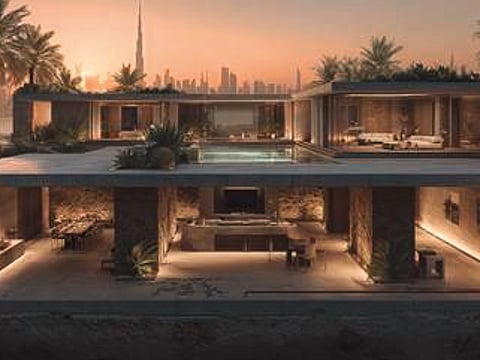
The Gulf residential market has long been defined by what is visible — architectural scale, material quality, locational prestige. What is changing, steadily and structurally, is the weight now being placed on what cannot be seen.
BUNKKER, Europe’s specialist in private protective infrastructure operating across Qatar, the UAE, and Saudi Arabia, has been tracking this shift from the inside. The company designs and delivers fully integrated protective infrastructure for private residences and strategic facilities across the region — and the demand it is seeing reflects a market in genuine transition.
Across the Gulf’s premium property segment, integrated safe rooms, subterranean shelters, and compound-level continuity systems are moving from the periphery of residential design toward its core. The shift is not driven by fear. It is driven by a more sophisticated understanding of systemic risk, and by the recognition that operational continuity is an asset class in its own right.
The numbers behind the trend
The data reflects this evolution clearly. The global market for high-end private protective infrastructure is projected to reach $8.2 billion by 2028, with Gulf markets accounting for an estimated 23 per cent of total demand — a disproportionately high share relative to population, and a direct reflection of the region’s concentration of ultra-high-net-worth individuals and strategic private assets.
Within the GCC, permit applications for subterranean residential structures grew by 67 per cent between 2022 and 2024. Demand for integrated safe room installations across Dubai, Doha, and Riyadh has more than doubled over the same period. These figures do not capture the full picture — a significant portion of installations in this segment are handled with a level of discretion that keeps them outside standard reporting frameworks — but they are directionally unambiguous.
Why the Gulf, and why now
The Gulf presents a specific and compelling case for this category of infrastructure investment.
At a structural level, the region’s dependency on centralized systems creates inherent vulnerabilities that no perimeter security measure can address. With over 90 per cent of potable water supplied through desalination, energy grids serving dense urban populations from centralized nodes, and summer temperatures that routinely exceed 45°C, the consequences of infrastructure disruption are disproportionately severe compared to other global markets.
Layered onto this is a geopolitical environment that has grown measurably more complex over the past decade — not in ways that generate daily anxiety, but in ways that inform long-term asset protection decisions among family offices, senior executives, and high-net-worth principals managing significant exposure across the region.
The result is a client base that thinks in terms of continuity rather than reaction. The question being asked is no longer how to respond to a threat, but how to ensure that operations, assets, and family safety remain intact regardless of what happens outside the property boundary.
From retrofit to design principle
Perhaps the most telling indicator of this market’s maturation is where the conversation is now happening.
Three years ago, protective infrastructure was predominantly a retrofit discussion — an addition considered after a property was complete, often prompted by a specific event or concern. Today, among architects and developers operating at the top of the Gulf market, it is increasingly a design-stage conversation. Structural integration from the outset allows for more precise engineering, better concealment, and significantly higher performance across all system parameters.
This shift has created demand for a specialized category of operator: not a security contractor, but an infrastructure engineering partner with the technical depth to work across the full project lifecycle — from initial structural assessment and system design through to certified installation, commissioning, and long-term operational maintenance.
It is precisely this model that BUNKKER has built its Gulf operations around — end-to-end infrastructure delivery, engineered to EN 1522/1523, NATO AEP-54, and FEMA P-361 standards, and designed to integrate without compromising the architectural identity of the properties it serves.
An asset class taking shape
What is emerging in the Gulf is not a niche. It is the early formation of a recognized asset category — one in which operational resilience is treated with the same rigor as structural quality, energy performance, or smart-home integration.
For developers and investors operating in the ultra-premium segment, the implication is straightforward: buyers at this level are beginning to conduct due diligence on continuity infrastructure as a standard component of property evaluation. The ability to offer it — designed in, certified, and operationally verified — is shifting from a differentiator to an expectation.
The Gulf has consistently led on infrastructure ambition. Private protective systems are the next frontier of that tradition. And the market, quietly and with characteristic precision, is already moving.


