Bright Riders School nurtures academic excellence and future readiness
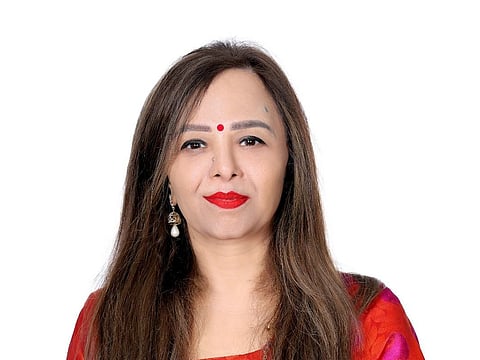
In conversation with Rachna Prakash, Principal, Bright Riders School Abu Dhabi
How is your school rethinking teaching and learning so that students develop not only academic strength, but also adaptability, problem-solving abilities and the confidence to navigate uncertainty?
Every morning, parents entrust us with what matters most to them, their children. With that trust comes a responsibility not only to teach, but also to help young people understand themselves, recognise their strengths, develop sound judgement, and gain the confidence to make meaningful choices about their future.
At Bright Riders School, this responsibility prompts us to continuously examine how learning is designed, delivered, and experienced. Rethinking education begins with listening. We regularly seek feedback from students, parents, teachers, and other stakeholders through surveys, consultations, student leadership forums, parent engagement initiatives, and structured review processes. These conversations help us understand aspirations, identify emerging needs, and shape meaningful improvement.
We also pay close attention to educational research, assessment data, inspection recommendations, and changing societal expectations. Data, in our view, is not something to defend against; it is something to learn from. It helps us reflect, refine our practices, and make informed decisions about curriculum and pedagogy.
This has led to several enhancements in recent years, including a stronger focus on reading literacy, inquiry-based learning, structured benchmarking, student leadership, innovation, and communication. Recognising that success in life requires more than academic achievement, we have also introduced a comprehensive Career Guidance and Career Education Framework from Kindergarten to Grade XII, ensuring that students gradually develop self-awareness, goal-setting skills, career literacy, and an understanding of the opportunities available to them.
We believe that good schools are built through collaborative leadership. Some of our most meaningful initiatives have emerged from conversations with students, teachers, and parents. When people feel heard, they become invested in the journey, and schools become stronger learning communities.
Our goal is not simply to prepare students for examinations. It is to help them develop the adaptability, resilience, critical thinking, and confidence that will serve them throughout their lives.
Many schools speak about future-ready learning, but translating that into the curriculum requires concrete change. How are you redesigning classroom experiences, subject integration and assessment methods to ensure students are developing skills that remain relevant in a fast-changing global economy?
Schools have always prepared children for the future. What has changed is the pace at which that future arrives. While subject knowledge remains important, the ability to apply that knowledge thoughtfully and creatively has become equally significant.
At Bright Riders School, we are gradually redesigning classroom experiences to place greater emphasis on inquiry, application, collaboration, reflection, and problem-solving. Students engage in research, presentations, debates, project-based learning, innovation challenges, and experiential activities that require them to analyse information, evaluate perspectives, and apply concepts in authentic contexts.
We are also strengthening interdisciplinary learning. The challenges our students will encounter as adults will not arrive neatly packaged as mathematics, science, or social studies.
Assessment is evolving alongside instruction. While examinations remain important, they are increasingly complemented by projects, exhibitions, presentations, portfolios, and performance-based tasks that allow students to demonstrate communication, creativity, leadership, collaboration, and problem-solving.
A particular focus for us has been the development of an entrepreneurial mindset. By entrepreneurship, I do not simply mean starting a business. I mean nurturing initiative, resourcefulness, resilience, and the confidence to act on ideas. We want our students to approach the world with curiosity and purpose, prepared to contribute, innovate, and respond constructively to change.
What specific initiatives has your school introduced to help students better understand emerging industries, evolving career opportunities and the expectations of higher education institutions worldwide?
Children do not make important life decisions in a vacuum. The quality of their decisions is often shaped by the quality of the conversations, experiences, role models, and opportunities they encounter along the way.
For this reason, career education is not an isolated programme at Bright Riders School. It is a deliberate and sustained journey that begins early and evolves with the child. We have developed a structured Career Guidance and Career Education Framework from Kindergarten to Grade XII that progressively introduces students to self-awareness, strengths identification, goal setting, career clusters, emerging industries, higher education pathways, internships, mentorship, and professional skills.
To complement this framework, we introduced BRS Advantage, a weekly webinar platform through which students interact with university representatives, scientists, entrepreneurs, innovators, and professionals from diverse sectors. These conversations help students gain insight into higher education pathways, scholarship opportunities, industry expectations, and emerging fields of study.
Students also participate in university fairs, networking events, and higher education expos, including those organised by Gulf News and other educational partners. Such experiences allow them to engage directly with institutions and admissions representatives from around the world.
Exposure also comes from within our own community. Parents frequently visit the school to speak about their professions and life experiences, helping students connect classroom learning with the realities of the world beyond school. Internship opportunities facilitated through our Career Counsellor, ADEK initiatives, and external partnerships further enrich this process.
Our objective is not to steer students towards particular careers. It is to help them understand themselves, broaden their horizons, and make informed decisions when opportunities present themselves.
Career guidance is increasingly moving beyond university counselling into long-term life planning. How does your school support students in making decisions about higher education, career pathways and skill development?
Parents often ask us which career their child should pursue. My response is that before we talk about careers, we must help children understand themselves.
This belief underpins our Career Guidance and Career Education Curriculum, which spans Kindergarten to Grade XII. The curriculum begins with age-appropriate exploration of interests, strengths, values, and aspirations, and gradually progresses towards career exploration, professional communication, internships, mentorship opportunities, university readiness, and future planning.
As students mature, they are encouraged to reflect not only on what they wish to study, but also on the kind of life they wish to lead, the impact they hope to make, and the values that will guide their decisions. These conversations are supported through counselling sessions, career assessments, university guidance programmes, internships, and interactions with professionals from diverse fields.
Career planning at Bright Riders School is viewed as a partnership between the school, families, universities, industry, and the wider community. Parents play an especially valuable role by sharing their experiences and helping students gain authentic insights into different professions and pathways.
Our Career Counsellor works closely with students and families to support informed decision-making, while partnerships with ADEK, universities, alumni, and industry professionals ensure that students benefit from a broad network of expertise and guidance.
Our aim is not simply to help students gain admission into universities. It is to help them develop the self-awareness, confidence, and perspective required to make thoughtful decisions about their future.
Extracurricular programmes are now considered an integral part of student development. How are sports, arts, innovation programmes, entrepreneurship initiatives or leadership opportunities being designed to strengthen competencies that are valuable for future careers and real-world success?
Some of the most enduring lessons children learn do not emerge from textbooks or examinations. They emerge from experiences that allow them to create, perform, collaborate, lead, serve, and engage with the world around them.
One initiative that reflects this philosophy particularly well is BRS Spectrum, our community learning platform organised under the theme "Together as One: Year of the Family Edition." Spectrum was designed as a celebration of learning in its broadest sense, bringing together students, parents, educators, professionals, entrepreneurs, artists, and community members.
What made the initiative special was that students were not merely spectators. They were organisers, performers, volunteers, anchors, stall managers, media coordinators, and leaders. Through these roles, they developed communication skills, teamwork, accountability, leadership, problem-solving abilities, and confidence in authentic settings.
Students showcased their talents through music, dance, instrumental performances, cultural programmes, and creative arts. Through the Kaushal Bodh exhibitions, they presented projects on hydroponics, scientific toy making, home automation, puppetry, sustainability, and other skill-based initiatives. Entrepreneurial stalls provided opportunities to engage in planning, budgeting, marketing, customer interaction, and value creation.
Spectrum also connected students with inspiring role models. Scientists from ISRO shared insights into space science and research. Medical professionals, entrepreneurs, martial arts experts, and specialists from diverse fields offered students a glimpse into different professions and life journeys. These interactions encouraged curiosity while helping students appreciate the many possibilities available to them.
What was particularly significant was the involvement of the wider community. Parents, professionals, entrepreneurs, and educators contributed not as guests but as partners in learning. I strongly believe that schools do not educate children in isolation. When students are surrounded by a community willing to share its expertise, experiences, and aspirations, learning becomes richer, more authentic, and more relevant.
The event also raised funds for the Red Crescent. For our students, this was a reminder that achievement and success carry a responsibility towards others. Acts of service help young people recognise that education is not only about personal advancement but also about contributing positively to the communities of which they are a part.
Academic success will always matter, and schools have a responsibility to help students achieve their potential. Equally important, however, is helping young people develop integrity, empathy, resilience, and a sense of purpose. If our students leave school understanding their strengths, respecting the strengths of others, and feeling confident in their ability to contribute positively to society, I believe we will have served them well.


