Abu Dhabi anchors capital through scale and stability
Capital strengthens its financial ecosystem by attracting institutional capital
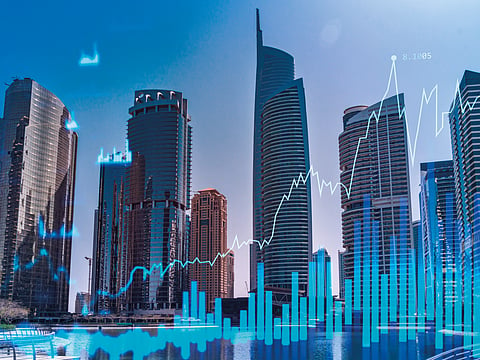
Abu Dhabi’s capital markets are entering a phase defined not by rapid spikes, but by deliberate expansion anchored in scale, credibility, and long-term alignment with global capital flows. As financial centres compete to attract institutional investors, the emirate is quietly shaping a market environment that balances opportunity with stability, creating conditions where capital is not just deployed, but retained.
This shift is being driven by a blend of structural depth, sovereign-backed confidence, and an increasingly sophisticated range of financial instruments. The result is a market that feels less reactive and more strategic, where global investors find consistency, transparency, and the ability to plan over longer horizons.
Institutional confidence drives market expansion
At the core of Abu Dhabi’s rise as an investment hub is its ability to attract institutional capital at scale. Sovereign-backed listings have played a defining role in building credibility, signalling strength and long-term intent to global investors. These listings are not simply large in size; they are structured to reflect stability, governance, and clarity in earnings visibility, all of which are essential for institutional participation.
This has led to a market dynamic where large funds, pension institutions, and asset managers are increasingly comfortable allocating capital with a multi-year perspective. The presence of such investors enhances market depth, reduces volatility, and supports more efficient price discovery. It also creates a virtuous cycle, where consistent inflows encourage further listings and diversification.
Liquidity, often seen as the lifeblood of any financial market, has become more sustainable as a result. Rather than being driven by short-term retail surges, trading activity is supported by steady institutional engagement. This stability is particularly significant in times of global uncertainty, where markets with deeper institutional backing tend to absorb shocks more effectively.
ESG instruments redefine capital allocation
Another defining feature of Abu Dhabi’s capital market evolution is the integration of environmental, social, and governance considerations into financial products. ESG-linked instruments are no longer peripheral offerings; they are becoming central to how capital is structured and deployed.
Green bonds, sustainability-linked sukuk, and other ESG-aligned instruments are attracting a new class of investors who prioritise long-term impact alongside financial returns. This aligns closely with global investment trends, where capital is increasingly directed towards assets that meet both performance and responsibility benchmarks.
The appeal of these instruments lies in their dual value proposition. They provide investors with exposure to stable, well-regulated markets while supporting broader sustainability goals. For issuers, they open access to diversified pools of capital, often at competitive pricing, while reinforcing commitments to responsible growth.
Positioning for long-term global capital
This shift is also influencing corporate behaviour. Companies seeking to tap into ESG capital are adopting more transparent reporting standards, improving governance frameworks, and aligning operations with sustainability benchmarks. Over time, this raises the overall quality of the market, making it more attractive to global investors who demand accountability and long-term vision.
Abu Dhabi’s growing role in global capital flows is not accidental; it is the result of a deliberate strategy to position the market as a reliable destination for long-term investment. This involves more than just attracting capital; it requires creating an ecosystem where investors feel confident about regulatory consistency, market access, and economic resilience.
One of the key advantages lies in the emirate’s ability to offer stability in a world marked by volatility. Strong fiscal foundations, diversified economic activity, and a clear regulatory framework provide a level of predictability that institutional investors value highly. This is particularly relevant in an environment where geopolitical and economic uncertainties continue to shape global investment decisions.
At the same time, the market is evolving to meet the expectations of modern investors. Digital infrastructure, real-time data access, and streamlined trading processes are enhancing accessibility, making it easier for global participants to engage with the market. These improvements are not just technical upgrades; they are essential components of a competitive financial ecosystem.
The interplay between scale and stability is what ultimately defines Abu Dhabi’s positioning. Large, high-quality listings provide the scale needed to attract global attention, while a stable operating environment ensures that capital remains anchored over time. This balance is critical in building a market that is not only attractive in the short term but sustainable in the long run.
As global capital continues to seek destinations that offer both opportunity and resilience, Abu Dhabi is steadily strengthening its role as a hub where long-term investment strategies can thrive. The focus is not on rapid expansion alone, but on creating a market that grows with purpose, supported by depth, discipline, and a clear alignment with global financial trends.


