
Living with trigeminal neuralgia
She’s often in immense pain, but Kerri is determined not to let it get the better of her
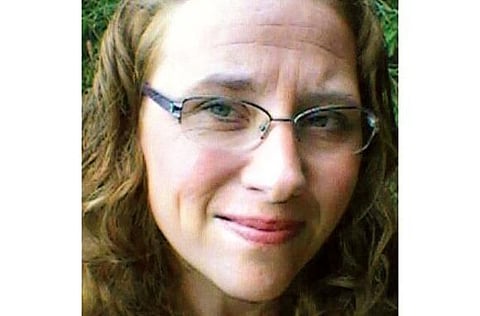
There are days when I dread a kiss on the cheek from my kids. How can any mother say that? If you were me, you’d say the same. I can guarantee it. That’s because I have a condition that is so painful it is known as the ‘suicide disease.’ A shocking 50 per cent of sufferers kill themselves because they can’t live the pain. Although I would never do that, I live in fear of an excruciating attack every day, which could be brought on by eating, a cuddle or just a peck on the cheek from one of my family members.
It all started seven years ago in March 2007. I was eating dinner at the table with my husband Kym and our children, Aleisha, then nearly six, and twins, Taylor and Hayden, almost three. I suddenly screamed as a bolt of the most intense pain I’d ever experienced shot down the right side of my face. I jumped out of my chair in shock. Then the pain hit me again in a crushing wave.
It was so strong, it took my breath away and I collapsed.
“Kerri, what’s wrong?” Kym yelled, panicking as the kids began to cry.
Clutching my face, I tried to speak, but I couldn’t. Talking made the pain worse, and just breathing sent judders to a small area on the right-hand side of my face. All I could do was clutch my face as silent tears streamed down.
Kym rushed me to Lyell McEwin Hospital in Adelaide, South Australia. All the way, I groaned and writhed in agony. “This is worse than childbirth,” I managed to gasp. By the time we got to hospital the pain had subsided a little.
Despite their verdict, the doctors decided to keep me under observation in hospital – “Just in case,” they said. But they couldn’t figure out what it was and seemed as baffled as me. Four days later a doctor gave me painkillers and sent me home.
I was so worried about what had happened that I went straight to my GP. Fortunately, he was very experienced. “I’ve seen this once before,” he said when I described my symptoms. “You’ve got type 1 trigeminal neuralgia.”
“What’s that?” I said, worried.
Back home, I looked up my condition. “Kym, you better come look at this,” I said, tearfully pointing at the screen. He looked over my shoulder and gasped as he read trigeminal neuralgia (TN) described on many different websites as the ‘suicide disease’ because it caused one of the most extreme forms of pain known to humans.
“Some websites say up to half of sufferers kill themselves,” I wept. I’d only had one attack so far and it had been excruciating. We were both devastated and scared. Almost nothing was known about TN; no known causes, no cure – nothing. In fact only around 1 in 15,000 people get it, and that’s with differing levels of severity.
So, I had no choice but to sit tight and wait three months for my appointment with the neurologist.
In actual fact, I lived in terror, constantly expecting another attack.
When I saw the neurologist, he confirmed my diagnosis and I began taking different types of medication to find one that would work for me. “It’s trial and error to find a combination that works,” he said.
Nothing stopped my attacks. Sometimes I got two or three shocks to the face and that was it. On other occasions, I got almost continuous waves of pain for hours on end.
I could be cooking dinner for the kids when a surge of pain would crush my face and I’d have to grip the countertop to stop myself falling to my knees.
I couldn’t sit around the house feeling sorry for myself and dwelling on the pain so I got myself a job as a security officer at vineyard.
One day I had an attack at work. “What do I do?” a colleague asked, panicked, as I writhed in pain, unable to speak. Thankfully, the pain came and went fairly quickly and I told him what had happened. Like most people he’d never heard of my condition.
My boss was very supportive and would always arrange for someone to be on standby if I wasn’t well.
I made sure everyone knew about my condition after that by printing out information and pinning it up at work. “When I’m having an attack it looks like I’m dying, but it’s not going to kill me,” I reassured them.
Over time though, my attacks got worse, more painful and more frequent. The medication still wasn’t controlling them. But I was starting to discover certain innocuous triggers that set me off. I was brushing my teeth in the bathroom one morning when searing pain engulfed the right side of my face and I collapsed. So I learnt that, during a period of the flare-ups, just brushing my teeth could trigger an attack so I would use mouthwash instead.
Another time an attack started as I brushed my hair. Eating and swallowing could start them too.
Even the pressure of a gust of wind on my cheek could bring me to my knees. I was walking across a shopping centre carpark once when a breeze made it feel like my cheek had been caved in.
But, worst of all, was discovering a kiss from my kids could trigger an attack. One night I was putting Aleisha to bed. “Love you Mummy,” she said and kissed the right side of my face.
I stifled a scream of absolute agony. “Love you,” I grimaced, tears springing to my eyes.
My little girl burst into tears. “I hurt you, Mummy,” she cried. I shook my head, but she didn’t believe me. It was heartbreaking.
But I couldn’t stop brushing my teeth, eating, swallowing or going outside. And there was no way I was going to stop my children kissing me.
I could go months without an attack, and life would feel normal for a while, but the knowledge they’d return always niggled.
Kym got good at spotting the early signs. He’d see me stifling my pain and at the first wince of discomfort, he’d bundle me and the kids into the car and get me home.
By 2010 the pain had become so bad my consultant suggested surgery. They’d resisted before because they wanted to give the medication time to work. Now I begged them to go ahead with the operation.
“It’s called microvascular decompression,” the surgeon said, before explaining they’d make an opening behind the ear and then place a Teflon shield between the nerve and the blood vessel.
“I’ll do anything if it stops this pain,” I replied. Nothing could be worse than what I was going through. There were risks I’d be left with numbness in my face, but given the pain I was in, that was a small price to pay. The doctor said surgery worked in most cases and could be effective for up to 10 years or more.
“You can’t go on living like this,” Kym said. So in November 2010 I went through with the six-hour operation under general aesthetic.
I suffered from a diminished blink reflex and numbness on the inside of my mouth and part of my tongue.
But, it was a success. I wasn’t in pain any more. “I feel like I’ve got my life back,” I wept in relief to Kym.
But 18 months later, in the first half of 2012, I was standing in a friend’s kitchen when a familiar, excruciating pain shot through my face. Luckily Kym was with me.
It got so bad that I went to the hospital repeatedly for nerve blocks – a procedure where aesthetic is injected straight into the area where the pain is. But even that didn’t take all the pain away, and morphine didn’t help either.
The only time I was pain free was when I slept. And I needed medication to do that. It all became too much and eventually I was unable to move because I was in so much pain. I could understand why so many sufferers became so desperate but I needed to get better for Kym and my kids. So I carried on. There was no other option, I refused to let this condition ruin my life.
Now I live in hope of a cure or some amazing medical advance, but I’m still in pain. Right now my attacks last anywhere from two minutes to five hours and they can come on for days every couple of weeks, or sometimes every few months.
Recently, I took the kids swimming at an indoor pool. It was very humid and the moisture on my skin set off an attack. I sat it out until the kids had enjoyed a good swim before I said, “Come on, we’ve got to go, Mummy’s not feeling well.”
That’s a normal day, but at least I’ve found the strength to carry on and not lay in bed. I’m so sad that I miss out on time with the children, but I try to make the most of every moment I have with them.
“Mum, go to bed, I’ll cook dinner,” she says if she sees me in pain. She’ll put pizza on or even cook a whole roast dinner. I want to do these things for the children and I hate that she has to, but we don’t have a choice. This is our life. Thankfully it’s not a genetic disease, so the kids aren’t at risk.
It breaks my heart that a kiss from my kids can cause me more pain than I felt bringing them into the world. But I’m still here and feel lucky with my lot. I’m not going to let this disease beat me.


