
Transform Your Home: Embrace editing over decluttering for a calmer space
A smarter home reset reduces friction by aligning every room with how you live today
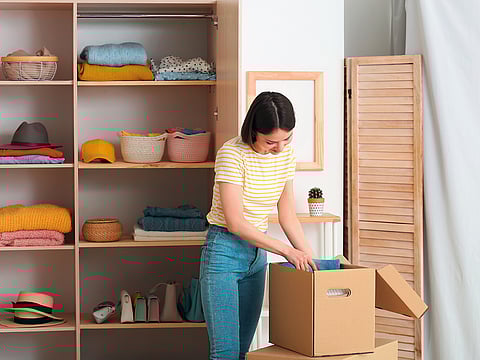
Walk into most homes and the problem is rarely volume. It is friction. Too many choices in the morning wardrobe. Too many objects competing for attention on a shelf. Too many tools in a kitchen drawer that slow down the simple act of cooking dinner. The language of decluttering has taught us to purge. What it rarely teaches is how to edit. For a calmer home you don’t need to own less, but you have to remove what gets in the way of how you actually live.
Designers and behavioural experts increasingly frame the home as a system rather than a storage unit. The question shifts from “Do I need this?” to “Does this support my day?” That small reframing changes everything. It removes guilt. It removes drama. It replaces bin bags with intent.
Design psychologist Sally Augustin, whose work regularly appears in international interiors titles, believes clutter is often misdiagnosed. She explains that people focus on volume when the real issue is cognitive load. “Objects demand attention,” she says. “When a space contains too many visual cues, the brain works harder to process them. That effort creates fatigue long before you realise it.”.
Decision fatigue in the wardrobe
Few rooms create more friction than the wardrobe. Studies cited by publications like Real Simple and The Atlantic continue to link excess choice to decision fatigue. When every morning begins with too many options, mental energy drains before the day starts.
Stylist and author Allison Bornstein describes the wardrobe as a working archive rather than a collection. “Your clothes should reflect how you live now,” she says in a recent Architectural Digest interview. “Not who you were five years ago. Not a fantasy version of yourself.”
Editing the wardrobe means identifying what earns repeat wear. Pieces that require effort, tailoring anxiety, or constant adjustment quietly undermine confidence. Bornstein notes that friction often hides in fit. “If you hesitate every time you put something on, your body is telling you something,” she says.
Workflow over storage for a kitchen
Kitchens attract clutter under the guise of preparedness. Extra gadgets promise efficiency. Duplicate tools suggest ambition. The result is often the opposite.
Research highlighted in Bon Appétit and The New York Times Magazine links visual clutter in cooking spaces to reduced motivation to cook. When counters feel crowded, the kitchen shifts from invitation to obstacle.
Interior designer and author Deirdre Sullivan frames kitchens as movement maps. “A good kitchen supports flow,” she explains in a recent lifestyle feature. “If you have to move three objects to reach what you use daily, the space works against you.”
The editorial approach asks a single question. What do you cook most often? Tools that support that answer stay visible and accessible. Everything else moves out of the main workflow. Storage becomes purposeful and cooking regains ease.
Living room a pause space
The living room often carries the emotional weight of the home. It hosts rest, conversation, entertainment, and overflow. Mail piles appear. Random objects land. Visual noise builds quietly. Environmental psychologist Lily Bernheimer writes in House & Garden that living spaces need clarity of role. “When a room tries to do everything, it ends up supporting nothing particularly well,” she notes.
Editing here means removing objects with no clear relationship to rest or connection. Decorative pieces remain when they anchor the space emotionally. Items that belong elsewhere find new homes. The room regains its pause function. Bernheimer believes this clarity affects nervous system regulation. “Spaces that signal rest help the body downshift,” she says. “That response is physical, not aesthetic.”
Recovery comes first for the bedroom
It’s said that bedrooms often reflect personality rather than purpose. Photos, books, decor, and clothes all compete for attention. Sleep suffers quietly.
Sleep research frequently referenced in wellness and interiors coverage shows that visual calm improves sleep onset. Articles in Wallpaper and Dezeen highlight how reduced visual input helps the brain transition into rest.
Neuroscientist and sleep researcher Dr. Rachel Salas explains the connection simply in a recent feature. “The brain responds to cues,” she says. “When a room signals activity, rest becomes harder to access.” Editing the bedroom focuses on recovery. Items that stimulate thought step back. Soft textures, clear surfaces, and consistent lighting take priority. Personal objects remain when they soothe rather than stimulate.
When the result feels more supportive, sleep improves and mornings begin differently.
Editing works better than decluttering
Decluttering carries moral weight. Editing carries clarity. Experts note that people resist purges because they feel punitive. Editing feels intelligent.
Sociologist Tracy McMillan Cottom, writing about domestic spaces and decision-making, argues that environments shape behaviour more than intention. “People rarely fail because they lack discipline,” she writes in a recent essay. “They struggle because their surroundings demand too much from them.”
The editorial lens removes judgement. Objects leave quietly when they no longer serve the present. Nothing is wasted. Nothing is shamed. Design writer and curator Michelle Ogundehin captures this shift in a Financial Times lifestyle column. “Editing acknowledges evolution,” she writes. “Homes change because lives change. The goal is coherence, not reduction.”
Every room in this approach returns to the same question. What is this space supposed to support in my life right now?
The answer determines what stays. It determines placement and visibility. This method adapts as life shifts. A new job changes the wardrobe edit. A growing family changes the living room. Recovery periods reshape the bedroom. Editing remains ongoing. It removes friction without erasing personality and the home starts working again.


