
Ease, Confidence, Repeat: The new rules of dressing the modern Dad in 2026
Menswear in 2026 prioritises comfort, confidence, and everyday practicality
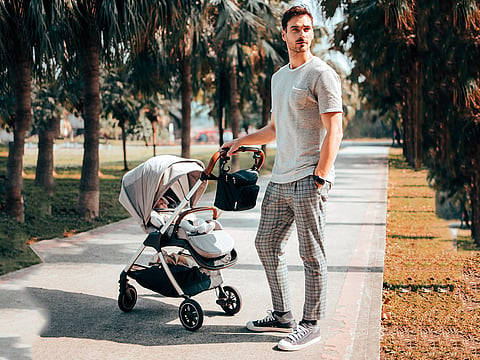
Something has changed in menswear. The idea of a “dad wardrobe” doesn’t sit in a separate corner of life, waiting for weekends or school runs. Clothing is following the rhythm of modern fatherhood instead. Days stretch, plans change, and outfits have to move through all of it without feeling like they belong to different versions of the same man.
What makes this interesting right now is how practical dressing has begun to look intentional again. Nothing feels styled or forced, just naturally put together because the pieces work well with each other.
The new dad uniform (20s–30s)
This is the phase where time feels tight and unpredictable at the same time. One minute it is work calls, the next it is a stroller outside a café, and somewhere in between there is an attempt to feel human again.
Clothing starts acting like a system here. The best wardrobes rely on pieces that can move through different parts of the day without needing a full change.
Oversized tees are everywhere, but the ones that work keep structure at the shoulder and fall clean through the body so they never drift into loungewear. Utility overshirts end up doing most of the work because they fix an outfit quickly without much thought. Chinos and straight denim become the base of almost everything, replacing anything too tight or overly detailed. Sneakers move towards simplicity, usually leather or canvas in muted tones that sit easily with everything else. Bags become part of the outfit rather than something carried separately, often crossbody or compact backpacks that sit close and move easily through crowded days.
The real win here is clothing that does not need attention once it is on.
The midlife reset (40s–50s)
This is where wardrobes either settle into habit or start to feel more refined without any dramatic change in direction. The difference usually shows up in fit and restraint rather than new categories of clothing.
Shirts return to focus, especially linen and cotton versions that sit comfortably on the body and hold their shape through long days. Blazers appear in softer construction, unlined or lightly structured, the kind that work across offices, dinners, and everything in between. Polo shirts feel sharper when the collar sits properly and the fabric has enough weight to carry itself. Trousers begin doing more of the visual work, especially when cut clean and paired with simple footwear, whether those are minimal sneakers, or loafers that feel relaxed rather than formal.
Colour palettes settle into something more grounded at this stage. Neutrals, muted blues, soft greens, and earthy tones replace anything too loud or seasonal. The wardrobe starts feeling more connected, where individual pieces sit easily together without effort.
The classic layer (60+)
At this stage, style feels settled in the best way. There is a clear sense of what works, and less interest in change for its own sake.
Cotton shirts in soft shades form the base, often worn open at the collar or layered under lightweight knitwear. Sweaters replace heavier layers, adding comfort without bulk. Trousers sit in relaxed straight or pleated cuts, offering ease of movement while keeping shape. Footwear stays understated, usually leather loafers or minimal sneakers that blend into the outfit rather than lead it. Jackets become lighter and more functional, chosen for how they sit on the body rather than how they appear on a hanger.
What stands out here is familiarity. Nothing feels experimental. Everything feels familiar in the best way, as if it has already been tested over time and simply stayed because it works.


