
The hands of time
How to turn back the hands of time
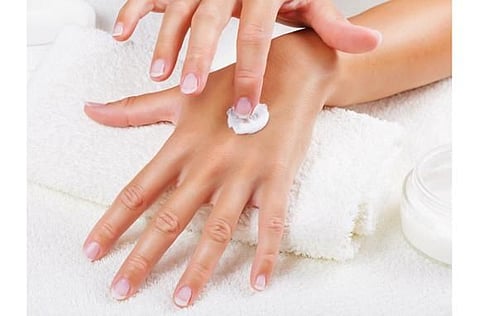
Despite how well we may have held back the years on our faces with high-quality skincare treatments and a healthy diet, there is one area that is practically guaranteed to betray us – our hands.
And annoyingly, they are probably the part of us – second only to our face – that are almost always on show. Waved around to emphasise a point or say hello, grasped by our children or stroked by our loved ones, our hands – and all their imperfections – are often in full view.
Fortunately though, there is hope for our time-ravaged mitts. Myriad products and treatments are available to help prevent the ageing process and life in general giving away our age through our hands, with some even promising to turn back time.
But it’s fair to say that anti-ageing hand care doesn’t quite get the prominence it deserves. We’re all used to the beauty industry telling us about our crow’s feet, frown lines, sagging jowls and under-eye baggage, but we’re not so clued up about what effect ageing has on our hands and more importantly, what we can do to put the brakes on.
Dr Dennis Wolf from The Private Clinic of Harley Street, London, reveals it’s all about recognising the first signs of ageing on the hands, which is evident from a change in skin texture and something women can expect to see from their 30s and 40s onwards.
“The changes will generally depend on the individual, their lifestyle, genetic make-up and environmental factors,” he says. “On the whole we start losing adipose tissue [fat] in our hands from our mid-30s to 40s onwards. The first signs of change may be the smoothness of the skin – it may show more wrinkles – and veins will start to appear because of loss of fat and also a loss of elasticity in the veins, which then become more visible and appear enlarged.”
Just as with the ageing of facial skin, Dr Wolf cites sun exposure as the main contributor to hand ageing – a key point in this region with our scorching hot summers.
“Regularly moisturising your hands, in the same way you do your face, is also advisable,” he adds, “But unfortunately sun exposure has a delayed effect and we only really see the damage in later years. This damage is to the DNA of the skin cells and is irreparable.”
Nadia Ivanova Briggs, founder of The Cure Beauty Spa, Dubai Media City, agrees. “Your hands need as much protection as your face,” she says. “Use factor 15 on them before you leave home and reapply it as soon as your hands feel dry.
“I also think gloves are a hand’s best friend – day or night! When you are driving, for example, your hands are exposed to the sun’s rays even more than your face. Gloves will protect them from the UV rays.”
Nadia recommends light cotton gloves in the summer – saying they will be ‘irreplaceable’ in the car when the temperatures peak.
“We can work to prevent ageing though,” she says, advising women to always use a suitable sunscreen and take antioxidants too. “And of course, have treatments.”
Maricar and her colleague, Luche Abatayo, from Pastels salon, Ritz Carlton, Dubai Marina branch, suggest treatments that naturally promote cellular repair and increased blood flow to the hands, along with regular maintenance procedures, such as a spa manicure. Salon treatments plus daily care of your hands at home will all add up to softer and hydrated skin.
“Some regimes we follow – such as having manicures – can cause deterioration to the skin around our fingers,” Luche says. “We can help protect the hands and nails at home with products containing rice brand oil, almond oil, tea tree and vitamin E – they will all help soften and protect the skin around the nails keeping them healthy.”
For those who are open to more extreme measures, at his London clinic, Dr Wolf treats age spots with IPL (intense pulsed light) photo rejuvenation.
“Fat transfer treatment takes about one-and-a-half hours and is more expensive than fillers, but there are some significant benefits,” he says. “Firstly, it offers a longer term solution – once transferred, the fat will act like any other body fat and remain in place unless the patient loses weight generally, whereas fillers tend to need to be re-administered every 12 to 18 months.
“It is also a totally natural filler – it is fat from your own body and therefore there is next to no chance that your body will react or reject it.”
So from taking simple steps for mitts you’ll be proud to hold up high, to the most innovative (and invasive) treatments, there is a hope for us wanting to point with pride. Now let’s have a show of hands to see who’s happy with that!


