
Hollywood sound effects guy reveals the tricks of his trade
How the sound of snapping bone, rustling bear fur and walking is recreated
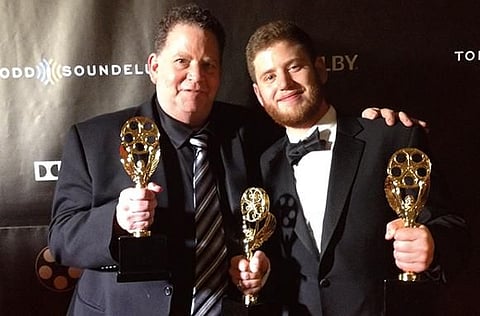
How did you get into Foley, Gregg?
It was kinda by accident. I was right out of the California Institute of The Arts and I started a sound-editing company, and one thing we did was Foley. I started doing that, learning as we went, and when I sold the company after about five years I started getting calls from my old competitors asking me to do Foley work for them. I figured I’d do that until I figured what I wanted to do next and I guess I never figured it out because I’m still doing Foley.
How does it all work?
Foley is a process of recording sound effects and footsteps live, synced to pictures as the picture rolls. Where a sound editor will take a pre-recorded effect and edit it to make it fit the picture, what Foley artists do is custom perform those sounds.
Where do you do it?
On a Foley stage, which is a custom-built recording studio that has all these different surfaces built into the floor. There’s a dirt pit and gravel and sand and hard wood and planky wood and cement and linoleum, and it’s filled with thousands of props – every imaginable everyday item is in there.
Why don’t they just use the sounds that are picked up during the shooting of the movie?
When they are filming a scene the sound recordist on set is primarily concerned with recording the dialogue, but yes, they will also record different sounds, like if a guy drops a pan on the floor. But a lot of things aren’t picked up well – like footsteps. There’s two reasons why Foley is still being used today: one is that by replacing every single sound, the sound mixer has the ability to control the levels of everything that happens so that when they are doing the final mix with the music and the dialogue they can adjust everything.
And the second?
Foreign language versions. If we shoot something here in Hollywood and it’s in English, when they strip that dialogue soundtrack out all the sounds that were recorded with it are gone, which is where what we’ve recorded comes in.
What unusual things do you use for some commonly-heard sound effects?
One of the things that everyone gets a kick out of when I’m working on something like The Walking Dead is that all the gory stuff is often done with a chamois leather, a calfskin thing you’d use to wash your car. It retains this incredibly gushy sound that we use for all kinds of things like ripping hearts out of bodies, even medical surgery scenes. We also use celery stalks for breaking bones – that or uncooked sheets of lasagne.
What kind of films do you like working on?
The horror films are a lot of fun, and I really like comedies. If we’re doing a dramatic thing you have to be pretty true to what is expected, but in a comedy you can go over the top and even add sounds that will get a laugh on their own.
Is there a particular sound that’s always foxed you?
That’s a very good question. The one that comes to mind is when someone gets hit in the head. That’s always very tricky – not if it’s a comedy because you can get away with being ridiculous, but if it’s a serious piece that’s one thing I don’t even know what it actually sounds like. And I’m not about to find out!
What’s your best memory of working on The Revenant?
We were asked to do what I consider the most critical and memorable scenes, including the bear attack scene and the one where he cuts open the dead horse and crawls inside. The most difficult part of that scene was when it was the morning, and everything was frozen, and he had to get out. So trying to create the sound of frozen hide cracking and breaking open was a challenge.
How about the bear attack?
We were on that for two full days: that’s a good example of breaking things down and doing layer upon layer upon layer. We were recording tracks of just the bear’s fur and then the claws and then the bear’s feet. It got very deep and intense. We didn’t do the bear itself: that would not be done on a Foley stage, it would be done by the sound designer, and what he used for that I couldn’t tell you but I guarantee it was more than just bear growls.
It must sometimes feel – even when you spend three or four weeks on a film, as you did with Suicide Squad – that you’re just a tiny part of the process.
Oh, forget about shooting and everything that goes into the production, just my world that I’m in which is postproduction sound goes way beyond Foley. We’re just one element of the soundtrack. It’s an intense process, and sometime a lot of what you create just won’t get used. Other times they will rely heavily on it, like they did in Breaking Bad, which I did from the pilot to the end.
How was it working on that?
The Foley was a critical element of that series and because of that it’s one of the pivotal projects of my career. It was an astonishing project for me and my crew, creatively. We were relied on and every episode was handled like a small feature film. There’s very little music in that show, so everything we did was way up front.
Would it be true to think that even several years after that show finished, you could still get into Walter White’s character in terms of how he walked?
Oh, absolutely. They all have their own style and you learn how they walk and you get their shoes just right. In fact, the shoe I used for Walter White I now refer to as “The Walter Shoe”. Some characters are very easy to walk, some are much more difficult, they’re unpredictable in what they do and you have to learn these things.
Finally, do you ever get a slap on the back from the stars – or have they long since moved on to their next project by the time you’re involved?
Well, we generally don’t have much contact with the stars but it’s not always so. During season one of Breaking Bad some of the stars were down the hall doing their “looping”, where they replace dialogue, and I saw Aaron Paul who played Jesse Pinkman. I was out in the hall and I said, “Hey, I do your feet!” and he wanted to see how we did it. He came back and watched us work and we got some pictures together.


