
Book review: In <em>If It Bleeds</em>, horror master Stephen King can’t quit the supernatural
Stephen King's new collection of stories features a familiar template – clear description, expositional talk – and typical King conceits
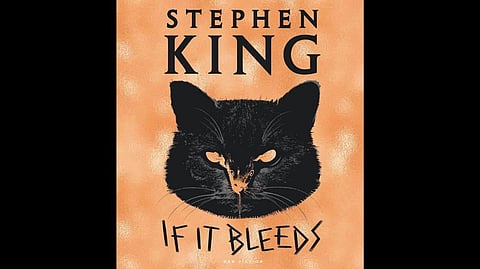
Stephen King announced his retirement from fiction 18 years ago. “You get to a point,” he told the LA Times in 2002, “where you get to the edges of a room... You can go back where you’ve been, and basically recycle stuff.” He has since written, alone or in collaboration, more than 20 fictional works. The conclusions are there to be drawn.
The title story in If It Bleeds, his latest collection, is led by gumshoe Holly Gibney. We first met her – smart but unstable! – in the novel Mr Mercedes (2014), when she hunted a killer down.
As King’s debut ‘hard-boiled’ story, Mr Mercedes was decently received. And his shift was overdue: despite the king-of-schlock image, many of his ‘horror’ novels were always mysterious, conspiratorial or built around dirty crime. But King cannot quit the supernatural, any more than he can put down his old fountain pen. Gibney’s most recent outing was The Outsider (2018), in which she trailed another murderer: this one a shape-shifting creature that killed to feed on the trauma it caused. One foot in one genre, one foot in another: not a stable mix.
Detective stories are games of control – the patient use of reason to unravel a complicated plot – while horror is about withstanding the uncontrollable.
If It Bleeds, the longest story of this new quartet, is hamstrung in just this way. Gibney is based in Philadelphia, but you know she’ll be visiting Maine. When she’s putting the pieces together – there’s been a mass murder, and another ‘outsider’ may be to blame – King’s prose has the whippy movement of the hard-boiled at its best.
The template is familiar – clear description, expositional talk – and after millions of bestselling words, King can do that with elan. But when the ‘outsider’ actually appears, the creepiness doesn’t build; after painstaking procedural work, the weirdness is crass. Two sets of rules are in conflict here, and one is too cool to disturb.
The other stories, meanwhile, are typical King conceits. A boy thinks he’s being texted by his dead mentor; a struggling writer makes a pact with a supernatural rat; a man’s death is narrated in reverse.
King’s afterword confirms the suspicion that these tales weren’t tightly designed. “Stories go where they want to,” he shrugs, which echoes his book On Writing (2000): “Why worry about the ending anyway? Why be such a control freak? Sooner or later every story comes out somewhere...” I like to travel as well, but it’s nice to have a destination in mind.


