The book that convicted him: How Keffe D's memoir sealed the Tupac case
Compton Street Legend was published in 2019. Prosecutors say it made the case possible
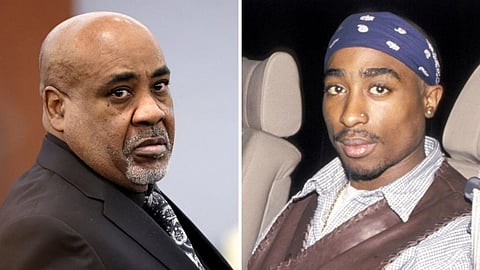
Dubai: Duane "Keffe D" Davis was convicted of first-degree murder on Monday over the 1996 killing of Tupac Shakur. The most damaging witness against him was a book he put his own name on seven years ago.
Compton Street Legend was published in January 2019, a 228-page memoir carrying a subtitle that reads like a charge sheet: street-level accounts of the Tupac and Biggie murders, Death Row origins, Suge Knight, Puffy Combs and crooked cops. In it, Davis walks through the night of 7 September 1996 and places himself in the Cadillac from which the fatal shots were fired.
Prosecutors built their case on it. Chief Deputy District Attorney Marc DiGiacomo has said that without the book, Davis probably would never have been prosecuted at all.
Everyone else is dead
The reason the memoir mattered so much comes down to arithmetic. Of the men in that Cadillac, Davis is the only one still alive. His nephew Orlando Anderson, long alleged to have fired the shots, was killed in a separate gang shooting in 1998. The other two occupants are also dead.
Former Clark County district attorney David Roger set out the problem before the trial began. The book, he said, was going to be the focus of proceedings, because it functions as Davis's own admission and there is nobody else left to testify to what happened.
Prosecutors paired it with recorded statements Davis gave for a 2018 BET docuseries and multiple on-camera interviews in which he described the same events.
The immunity that did not hold
There is a detail underneath all this that explains why the book existed in the first place. Davis had spoken to authorities in California under a proffer agreement, which gave him limited immunity in exchange for information.
That agreement covered what he told investigators. It did not protect him from prosecution in Nevada if he confessed to involvement in Shakur's murder. Because he had been talking under that protection, he supplied details that only someone present could have known, and then repeated them commercially in print.
The defence: it's fiction
Michael Sanft, representing Davis, spent the trial arguing that his own client was not to be believed.
The memoir, the defence said, was exaggerated for money and notoriety. Sanft told the court that too much weight was being placed on statements made purely for entertainment. He also questioned how much of the book Davis actually wrote, since it was co-authored, and pointed out that nothing in it had been independently corroborated after three decades.
Davis himself told a Las Vegas television reporter from jail that he did not write the book.
Judge Carli Kierny rejected a defence bid to have it excluded, ruling the memoir admissible.
Read back in court
In closing arguments, prosecutor Binu Palal told the jury that Davis had spent nearly eighteen years telling police, television interviewers, YouTube channels and readers that he was responsible for Shakur's death, and asked them to take him at his word.
Sanft read from the memoir too, as part of his argument that it was unreliable. At one point he spoke the N-word aloud while quoting a passage, prompting people watching in an overflow courtroom to recoil.
The jury took under three hours. Davis, 63, will be sentenced on 13 October and says he intends to appeal.


