Why financial talent will shape UAE wealth management
Skilled advisers, not just capital, will define next frontier, says Capital Haus founder
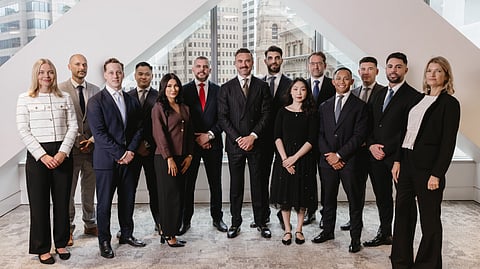
Dubai has already proved it can attract capital, founders, financial firms, and international attention. A more demanding phase is now taking shape. A wealth centre does not become sustainable simply because money arrives. It becomes sustainable when it has enough skilled professionals to understand that wealth, advise the people behind it, and turn complex issues into clear decisions.
The scale of the opportunity is evident. Dubai International Financial Centre reported a workforce of 50,200 financial services professionals at the end of 2025, after creating 4,122 jobs during the year. It also counted more than 500 wealth and asset management companies. Those figures demonstrate strong momentum, but they also highlight the next pressure point. As the market expands, competition for experienced advisers, portfolio specialists, researchers, investment professionals, and senior leaders is likely to intensify.
Need for high-calibre talent
For Brendan Gow, Founder and Executive Chairman of Capital Haus, the future of wealth management in the UAE will depend less on how many firms enter the market and more on the calibre of the people working within them. Products can be replicated. Technology can be purchased. Human judgement, commercial awareness, and the ability to build lasting relationships take far longer to develop.
Capital Haus has grown from serving a small Australian client base into a financial services group managing about $1.2 billion for about 7,000 clients, supported by a team of around 65 people. Its services span private wealth, portfolio management, funds management, stockbroking, corporate advisory, research, accounting, and media.
The significance of that growth lies not only in the numbers but also in the organisational challenge behind them. Every additional capability requires professionals who can work across disciplines without turning the client experience into a series of disconnected conversations.
Varied needs
The UAE brings this challenge into sharper focus. Clients arriving in Dubai may include founders, family businesses, senior executives, investors, and institutions with interests across several markets. Their needs rarely fit neatly into a single service category. A portfolio decision may be linked to the sale of a business. A liquidity event may raise questions about succession. A family office may require investment research, corporate insight, and effective communication across generations.
This is why financial talent should be understood as more than a recruitment issue. The market needs relationship managers who listen before making recommendations. It needs portfolio professionals who can explain risk without hiding behind jargon. It needs researchers who can distinguish meaningful signals from noise. It also needs leaders who can bring these functions together and maintain service standards as their teams expand.
Dubai has already recognised the economic importance of developing financial expertise. The Dubai Financial Experts Programme was created to strengthen the capabilities of UAE nationals through executive education, global mentorship, and exposure to innovation in finance. The broader message is significant: the UAE is not relying solely on imported expertise. It is also investing in national talent that can shape the industry from within.
Combination of technology and human expertise
Gow's view also challenges a common assumption about technology. As digital tools become more capable, some firms may begin to treat human expertise as less important. The opposite may prove true. Technology can organise data, accelerate analysis, and improve access, but it cannot fully replace judgement, empathy, context, or accountability.
The strongest model for wealth management in the UAE is therefore likely to combine digital capability with professionals who recognise when the numbers do not tell the whole story.
Capital Haus has also treated research and communication as part of the talent equation. Its in-house media division, IHM, reflects the belief that financial firms increasingly need people who can explain markets and ideas clearly. In a crowded industry, communication should not be confused with promotion. Used responsibly, it can help clients and partners understand how a firm thinks before deciding whether to trust it.
Building genuine capability
The competition for talent will therefore involve more than salaries. Experienced professionals are also likely to value strong leadership, autonomy, career development, effective systems, and a culture in which client outcomes matter. Firms that recruit quickly without creating those conditions may increase headcount without building genuine capability.
For Capital Haus, the opportunity in the UAE is tied to a deeper set of questions. Can a financial firm attract professionals with international experience while developing strong local knowledge? Can it combine investment expertise, relationship management, research, technology, and communication without sacrificing clarity? Can growth produce better advice rather than create more layers between advisers and their clients?
Capital moves quickly. Capability compounds slowly.
Dubai has already established itself as a serious destination for global wealth and financial services businesses. Its next competitive advantage may be determined by the professionals trusted to support that growth.
Gow’s argument is ultimately a practical one: the future of wealth management in the UAE will not be secured by products alone. It will be built by people capable of turning opportunity into enduring value.
This content comes from Reach by Gulf News, which is the branded content team of GN Media.