Global Learning Partner Summit shines light on capability building and partnerships
Summit host The Knowledge Academy signs MoUs with regional partners during the event
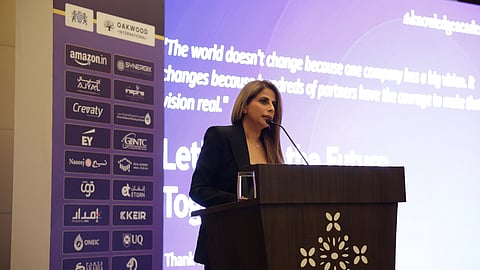
The ballroom of The Fairmont on Palm Jumeirah became a crossroads of ambition recently when senior leaders from across the GCC’s professional training and learning ecosystem gathered for the Global Learning Partner Summit to align around a shared belief: that the future of workforce development in the region will be shaped by partnerships, not silos.
The summit was hosted by The Knowledge Academy, the world’s largest provider of training courses globally, with a presence in 490+ locations, across 190 countries. As market leaders, the academy has successfully trained over 2 million delegates.
The gathering in Dubai included executives from training organisations, learning partners and resellers, enterprise L&D heads, and representatives from both public and private sector institutions.
“Our success has never been about just being the biggest; it’s been about our partners,” said Barinder Hothi, Co-founder and Group Managing Director, The Knowledge Academy, setting the stage for the summit’s tone. It was a point speakers touched upon consistently – that ecosystems outperform individuals.
If there was a single thread running through the summit, it was the shift from transactional training to capability-building. As organisations across the region grapple with AI adoption, digital transformation, workforce mobility, and new leadership demands, learning is no longer a peripheral activity. It is fast becoming critical infrastructure.
“This summit is about alignment on market direction, alignment on opportunity, and alignment on how we grow together,” she said. In a world where reskilling and upskilling must happen at speed, collaboration is no longer optional.
That sentiment was echoed by Amrita Hothi, Middle East Sales Manager at The Knowledge Academy, who spoke about how the industry is evolving.
“The partners growing 40-50 per cent year-on-year didn’t add more products or suddenly get better salespeople. They changed when they had the conversation,” she said. Instead of asking clients what training they need right now, successful partners are asking a far more strategic question: What skills will your teams need next year?
The difference, Amrita explained, is profound. Early, structured planning transforms learning from last-minute firefighting into a predictable, high-impact process – one that benefits clients, learners, and partners alike. “When you stop selling courses and start selling certainty, you move from being a vendor to becoming infrastructure,” she said.
A regional moment for collaboration
The summit’s broader context was unmistakable. The GCC is in the midst of unprecedented transformation, driven by national visions, cross-border collaboration, and mega projects that demand world-class skills.
Barinder placed the discussion firmly within that regional narrative. “The UAE represents ambition without limits. It’s a country that transformed vision into reality. And that is exactly what partnerships can do when done right,” she said.
Highlighting growing cooperation across GCC nations – from digital infrastructure to logistics corridors – she made a compelling case for why no transformation succeeds in isolation. “These projects require millions of skilled people. They require continuous upskilling at scale. No nation transforms alone, and no partner ecosystem succeeds alone,” she said.
The figures behind that ecosystem were striking. Today, The Knowledge Academy works with more than 3,000 partners. In the past year alone, over 100,000 professionals were trained globally, with 5,000 companies in the GCC reached entirely through partner networks. Channel revenues have grown 48 per cent year-on-year – a testament to the power of local expertise combined with global infrastructure.
Dilshad Hothi, CEO of The Knowledge Academy, reflected on how the learning industry itself has changed.
“Since Covid, employee expectations have shifted significantly. Collaboration, not competition, is what drives sustainable growth and tangible value today,” he said, pointing to increased public–private cooperation and the growing role of learning providers in national readiness agendas.
With the GCC training market projected to exceed $1.5 billion, the opportunity is significant; but so is the responsibility. As the summit made clear, the next phase of growth will belong to those who can move from selling courses to building capability, from reacting to planning, and from operating alone to growing together.
For Mahmood Al Balooshi, Head of Oman National Training Institute, and one of the delegates at the summit, the distinction between a vendor and a learning partner is not academic but operational.
“When we work with The Knowledge Academy, it gives us sustainable business for the future,” he said. “We prefer to work with strong, strategic partners rather than short-term vendors.”
Al Balooshi shared how executive-level and HSE programmes delivered in partnership with The Knowledge Academy have produced tangible outcomes across his organisation. “What we received was professional and practical, and it reflected directly on workforce performance,” he noted, adding that further initiatives are planned in the coming year.
His remarks reinforced a recurring theme of the summit: trust, built over time, is what enables scale.
That trust was formalised during the summit through the signing of several Memoranda of Understanding (MoUs) between The Knowledge Academy and regional learning partners and institutions such as Oman National Training Institute and Gulf Business Network Training Center and Etqan Training Centre in Saudi Arabia. These agreements support multi-year workforce development initiatives, and enable access to globally accredited programmes for thousands of learners.
The summit also celebrated partners who have exemplified excellence across collaboration, innovation, operational maturity, and public–private engagement.
This content comes from Reach by Gulf News, which is the branded content team of GN Media.