
How water flossing really works
Water flossers clean differently, using focused water pressure instead of string
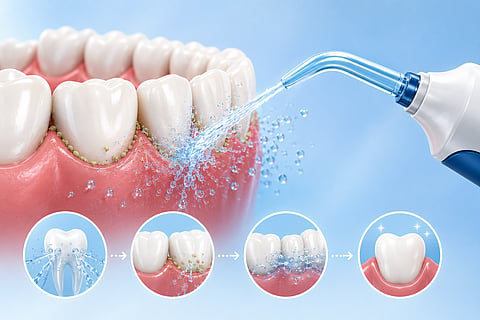
A stream of water may seem too gentle to replace a length of string, yet water flossers work through a different principle altogether. Instead of scraping against the sides of the teeth, they combine carefully controlled water pressure with rapid pulsations that flush food debris and disturb plaque around the gumline and between teeth. According to Waterpik's, the pulsating action is an important part of the cleaning process rather than simply spraying water. The result is a cleaning method that feels very different from traditional floss, while aiming at many of the same hard to reach areas.
What it is and who it's for
A water flosser, sometimes called an oral irrigator, pumps water through a narrow tip that you guide along the gumline and between teeth. Unlike string floss, which physically wipes the tooth surface, a water flosser relies on pressure and pulsation to rinse away loose debris and disturb plaque in places a toothbrush cannot easily reach.
Many dentists recommend it as part of a complete oral care routine rather than a substitute for brushing. Some people also find it easier to use than string floss, particularly those wearing braces, bridges or other dental appliances where threading floss can take longer. If you have persistent gum or dental concerns, seek advice from your dentist about the best routine for your needs.
What to look for
Pressure adjustment matters more than maximum power. Beginners often appreciate starting on a lower setting before increasing the pressure as they become comfortable. A selection of interchangeable tips can also make one device more versatile for different users or dental appliances.
Waterpik Cordless Advanced 2.0
Waterpik remains the brand with the strongest clinical record in this category, and its cordless models carry the American Dental Association Seal of Acceptance. This rechargeable model combines adjustable pressure settings with the company's pulsating water technology in a waterproof cordless design that is easy to store or pack for travel. It suits buyers who want established clinical backing together with straightforward daily use.
COSLUS C30 Water Flosser
The COSLUS C30 is aimed at shoppers looking for an affordable cordless option without giving up adjustable cleaning modes. Multiple pressure settings let new users begin gently before increasing intensity, while the rechargeable design makes it convenient for everyday use at home or away. Its emphasis is practical flexibility rather than premium extras.
H2ofloss Cordless Water Flosser
H2ofloss focuses on giving users a wider choice of nozzles and cleaning modes in a portable format. That makes it a sensible fit for households where different family members may prefer different spray patterns or pressure levels. A cordless design also keeps bathroom storage simple while maintaining the convenience expected from a modern rechargeable water flosser.
Verdict
The biggest difference between string floss and water flossing is not which one uses more force, but how they clean. String floss physically wipes the sides of the teeth, while a water flosser uses controlled pressure and pulsation to flush around the gumline and between teeth. Choosing the right tool often comes down to comfort and consistency, because the routine you maintain is usually the one that delivers the greatest benefit over time. Among these models, the Waterpik Cordless Advanced 2.0 stands out thanks to its ADA recognition and long clinical track record.
Gulf News earns a commission on purchases made through links in this article, at no extra cost to you. Our editorial team selects products independently.


