Forecast for more snow sees flare-up in plane, train fares
US airlines warn of ripple effect of new storm
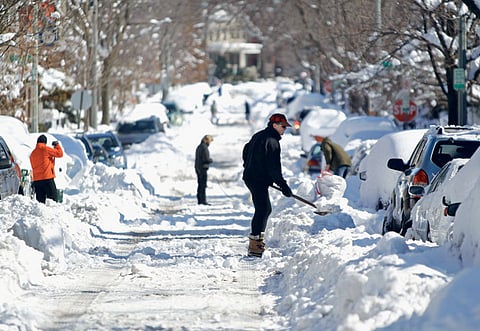
Washington: A $20 (Dh73.4) cab ride to the airport skyrocketed to the "snow rate" of $100 in Washington D.C., and those travellers who could get to the airport or train station still had to haggle or wait in long lines to escape the snowbound region.
The most pressing matter: get out before more snow falls.
"I'm done with city, urban snow life," said Chris Vaughan, a Washington resident who was able to re-book a flight to go skiing in Utah. He dodged the pricey cab fare by having a friend drop him off at the airport — in exchange for a bottle of wine.
The region saw nearly 90 centimetres of snow in some areas. One scientist said if all the snow that fell on the East Coast were melted, it would fill 12 million Olympic swimming pools or 30,000 Empire State buildings. Philadelphia and Washington each need just a little more than 23 centimetres to give the cities their snowiest winters since 1884, the first year records were kept.
Meteorologists were predicting the snow would continue until today. Between 30 and 45 centimetres was forecast for Philadelphia, the sixth-largest US city and a travel hub — which could cause a ripple effect of travel problems for the rest of the Northeast. Airlines warned travellers more flights would be cancelled, and the new storm was expected to hit a wider area, affecting New York and Boston.
The storm closed schools and some 230,000 federal workers in Washington had two days off. Power was still out for tens of thousands of homes and businesses.
Clean-up costs
Officials say it will be several days before they know just how much the cleanup will cost. Maryland had already spent $50 million of the $60 million budgeted to keep the snow clear. In D.C., officials said they were over their $6.2-million snow budget even before the storm started. And Pennsylvania officials said they had already spent half of their $245-million winter operations budget before the storm hit. In West Virginia, about 72 per cent of the $54-million snow and ice removal budget, or roughly $39 million, had already been spent before the first flake fell.


