The road to riches
With a nearly double-digit growth rate, India is on its way to becoming one of the world's fastest-growing economies
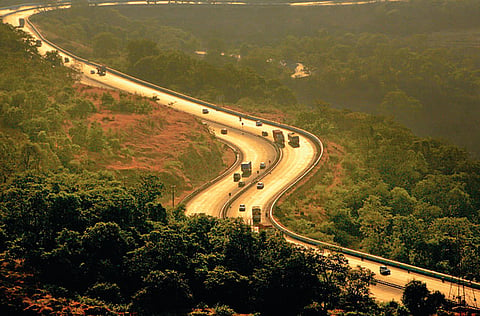
Global retreat imparted only a modest slowdown on India. With activity driven more by domestic than overseas demand, the economy is once again heading for nearly double-digit growth. That’s an elephant in the global room that no observer can miss.
In the last quarter of 2009-10 (ending March) GDP growth reached 8.6 per cent, pushing the overall figure for the measured year to a better-than-expected 7.4 per cent. That followed a slowdown to 6.7 per cent in the previous year. Not so bad when many countries were struggling with what economists unblinkingly call negative growth.
Prior to the downturn India had recorded an average 9 per cent in the three preceding years. Government sources now expect a full recovery over the next two years — reaching 8.75 per cent in 2010-11 and 9 per cent in 2011-12. This makes the crunch sound like a mere hiccup.
This prognosis is essentially supported by the International Monetary Fund (IMF), which only last month said in its latest World Economic Outlook that “growth is expected to accelerate to about 9.5 per cent in 2010, as robust corporate profits and favourable financing conditions fuel investment, and then to settle to 8.5 per cent in 2011”.
Again, numbers not to be ignored, and plenty enough that the fiscal stimulus and relaxation of monetary policy that did much to support domestic demand through the world retrenchment is likely to be scaled well back.
Strong services sector
Apart from that support, continuing growth has been promoted by a large and relatively stable services sector (accounting for nearly 57 per cent of GDP), which has benefited from India’s thriving status as the world’s outsourcing hub.
According to research undertaken by McKinsey & Co, the Indian technology and business services industry has had an unprecedented impact on the Indian economy. Between
1998 and 2008, it quadrupled its contribution to India’s GDP from 1 per cent to 4 per cent.
Overseas companies are increasingly tapping into the rise in India’s well-educated and substantially English-speaking labour force. While low-value process outsourcing, such as call centres, continue to dominate, the fastest growth now is in companies offering highly skilled work, including information technology, medical, engineering and even legal. Last year it was reported that the Anglo-Australian mining company Rio Tinto had outsourced aspects of its legal work to a group in Delhi specialising in trademarks and patents, which also acts for clients such as Microsoft.
Return to normal levels
India’s industrial sector is undergoing a more turbulent time. Sharply up for the full year 2009-10 at 9.3 per cent (while accounting for 28.5 per cent of GDP), the latest production figures (for May) showed a slowdown. Market analysts commented that the movement reflected a return to “more normal levels”, after the post-crisis pick-up.
The third leg to India’s economy provides the greatest uncertainty. Agriculture and related industries account for about 16 per cent of GDP but 60 per cent of all jobs. As 60 per cent of the country’s cultivated areas are dependent entirely on rainfall to water crops, the poor monsoon season last year hit farmers hard. Growth for the year amounted to only 0.2 per cent. Reports about this year’s July-August monsoon season, however, are encouraging.
India’s government is counting on that boost to agricultural output to tame inflation that hit 10.2 per cent in May, driven partly by a 16.5 per cent rise in food prices. The fact that annual headline inflation remained in double digits for the fifth straight month has led to expectations the central bank will raise interest rates again. The Organisation for Economic Cooperation and Development (OECD) has suggested that the Reserve Bank of India (RBI) may have to tighten policy through this fiscal year and next.
Managing deficits
An inevitable side effect of the steps taken by the government to underpin growth is the fiscal deficit, which reached a record high 6.6 per cent of GDP in the last financial year. The government’s forecast is 5.5 per cent for the current year, the narrowing to come from a combination of weaker expenditure growth, greater revenues from the acceleration of growth itself, the reversal of indirect tax cuts, and the revival of the privatisation programme, as well as the one-time sale of G3 licences, which generated more than $15 billion (Dh55.09 billion).
Equally, faster growth has resulted in a widening of the trade deficit. Broker Citigroup Global Markets says India’s trade deficit may increase by 20 per cent to $123 billion in the current year. Trade Secretary Rahul Khullar said recently that India’s $13 billion current account deficit (equivalent to 1.5 to 2 per cent of GDP) was manageable and will be covered by capital inflows. It’s a fair gap to cover, the deficit being the biggest since 1981, one price of relative success.
Attracting Foreign Direct Investment
The general consensus is that so far India has not reached its potential as a destination for Foreign Direct Investment (FDI), which would help the balance of payments. Despite its efforts to liberalise the foreign investment regime, there remain comparative impediments such as unwieldy bureaucracy, a critical infrastructure deficit and diverse operating environments with regulations varying from state to state.
There is certainly work yet to do on this front. Yet a combination of further economic and investment reforms, along with gradual improvement in infrastructure, could turn on the FDI taps.
Improvement in infrastructure
Completion of projects such as the upgrading of the capital’s airport shows what can be achieved. The inauguration last month of a new ultra-modern airport terminal building for New Delhi airport as part of a $2.6 billion modernisation of the whole site has provided an international gateway more fitting for a country emerging as a global superpower. The airport privatisation programme, which has seen India’s four biggest airports put under private investor control, has transformed the flying experience for many Indians and international travellers alike. Bengaluru and Hyderabad, the country’s main IT hubs, also opened new airports two years ago, It may be difficult to overestimate the challenges facing India, not least in respect of combating poverty. But the same can be said for the country’s potential, as it is expected by some to be the world’s fastest-growing economy before the end of this decade.
In the global room where the mood is decisively gloomier than it used to be, it becomes even harder not to notice where the weight of expectation is becoming focused.


