Every drop counts for Kabul residents
Supply systems across the country were damaged due to decades of war and civil strife
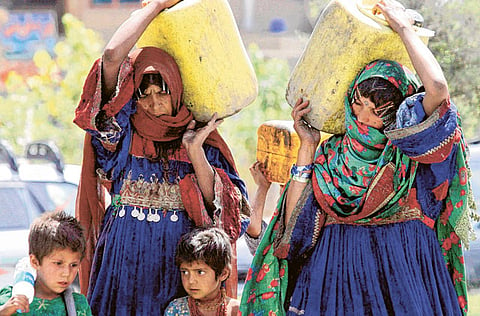
Kabul: As well as the raging war against the Taliban, residents of the Afghan capital loathe one more aspect of their lives — their appalling daily struggle for water.
Most water supplies in and around Kabul have either become dry or are on the verge of becoming so, and the erratic potable water supply isn't helping the city's 3.5 million people either.
A natural lake called Col-e-Hashmat Khan in southern Kabul was once a favourite bird hunting spot, now it is gradually turning dry. It is today surrounded by mud houses, shops and huts. Locals use it for washing and quenching thirst.
"Water cannot come to our home so we come here to get the water," said Dil Agha, an Afghan teenager, who fetches water from a well in a slum in southern Kabul.
The 13-year-old boy who lives with his family in a nearby hill told the Xinhua news agency that they face an acute shortage of drinking water.
"It costs me too much to buy water and take a shower at home. It is very difficult to carry water to my home. I come here in scorching hot weather to take water home."
According to media reports, only 48 per cent of the country's 26 million population have access to safe drinking water, and just 37 per cent of them can use improved sanitation facilities.
Eighty per cent of the population in Kabul live in unplanned settlements where they lack access to potable water and improved sanitation facilities.
Besides, natural water sources are increasingly becoming contaminated.
Rich people use purified water bottles, while the poor live on contaminated water supplied through underground pipes.
Contaminated
Water supply systems across the country were damaged due to decades of war and civil strife in Afghanistan.
In most Afghan villages, there is no pipe water supply, and residents, mainly women, have to travel miles daily to fetch water, Xinhua reports. Drought and protracted war also added to environmental problems. Air pollution has contributed to underground water contamination.
Head of the Afghan Environment Directorate Mustafa Zahir said 68 per cent of Kabul's underground water is contaminated.
"Living conditions will become impossible within the next seven years if the air pollution continues in Kabul and other major towns," he said during a seminar in Kabul.
Although there are no official statistics, it is believed that some eight million Afghans live in poverty and survive on just one dollar (Dh3.67) a day.


