Drought displaces thousands in rural Syria
Number of food aid beneficiaries in Syria expected to reach 300,000
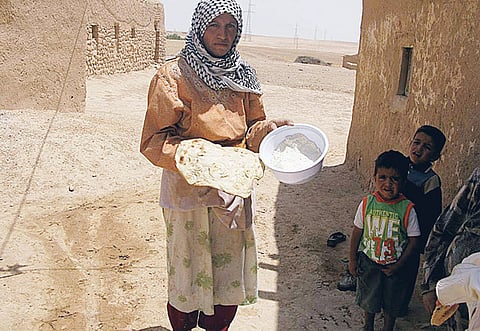
Dubai: The third successive drought in Syria, the worst in many decades, is displacing tens of thousands of people and leaving more hungry.
For the second consecutive year the UN World Food Programme (WFP) is distributing food aid to hundreds of thousands of people in the rural northeast region of Syria, where the drought of 2009 severely affected small-scale farmers and herding families. However, the number of beneficiaries this year has multiplied, said Silvana Giuffrida, WFP Syria Country Director a.i. (alternatively, Deputy Country Director).
This year, the number of aid beneficaries is expected to reach 300,000 compared to nearly 200,000 who received emergency food assistance last year, she said.
This year "as the drought persists, WFP launched a new emergency response [designed under UN Syria Drought Response Plan 2009], addressing the nutritional deficiency of 300,000 people among the most severely affected households in Al Hasakeh, Al Raqqa and Deir Ezzor governorates," she told Gulf News, referring to the northeastern region of Syria.
The new emergency response is designed to address the impact of previous years' rainfall failure and to cover nutritional needs during the lean period, she added.
"Food assistance will be provided to prevent further reduction in quantity and quality of food consumption to guarantee a sufficient food intake of the population. In addition, supplementary feeding will be given to 6,000 children below 5 years and 2,000 pregnant and nursing women," Giuffrida said.
Under the WFP project, families will receive a two-month food ration that includes rice, bulgur, oil, wheat flour, chickpeas and salt. UN officials said this region has been hit by the third consecutive drought since 2006 — described as the worst in the past 40 years. Some press reports estimate the number of inhabitants of the region at 1.3 million.
According to the Government and two UN assessment missions in 2009, Giuffrida said, "the rural population directly affected by the drought has lost almost all sources of livelihood and faces extreme hardship. Up to 80 per cent of those severely affected live mostly on a diet of bread and sugared tea, not enough to cover both caloric and protein daily needs required to pursue a healthy life".
The direct consequences of the drought include "alarming school drop-out rates in some areas and massive internal displacement towards urban centres".
Already 65,000 families have left their villages in the affected region since the beginning of 2009, UN figures show.
Meanwhile, WFP's is trying to assist families that still live in the region and encouraging those who moved out to return to their villages, at least women and children.
However, a fund shortfall has forced the UN agency to reduce the number of targeted people from 300,000 to nearly 190,000.
WFP has so far received $8.2 million (Dh30 million) out of the $22 million required to meet the immediate needs of the population.
In figures
- $22m - required to meet the immediate needs
- 65,000 - families have left their villages
- 6,000 - children to be given supplementary feeding


