Direct talks face huge barriers, says Mubarak
Egyptian President Hosni Mubarak appeals to all sides involved in the Palestinian-Israeli direct talks
Dubai: Egyptian President Hosni Mubarak appealed to all sides involved in the Palestinian-Israeli direct talks, which begin in Washington on Thursday, to work towards their success by overcoming psychological barriers and by building trust.
US President Barack Obama's "determined involvement has revived hopes [to achieve a permanent settlement] and there is a need to seize this opportunity," Mubarak wrote in an opinion article in the New York Times which appears in Gulf News on Thursday.
"The biggest obstacle that now stands in the way of success is psychological: the cumulative effect of years of violence and the expansion of Israeli colonies have led to a collapse of trust on both sides," Mubarak said. "For the talks to succeed, we must rebuild trust and a sense of security."
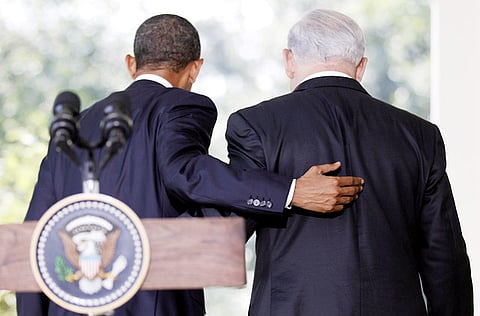
Obama set the tone for the talks on Wednesday, hosting Israeli and Palestinian leaders at the White House as he targets agreement within an year's time on a two-state solution.
Call to shun provocations
Obama met first with Israeli Prime Minister Benjamin Netanyahu, and was later meeting with Palestinian President Mahmoud Abbas. After separate sessions with the leaders of Jordan and Egypt, the five men were to gather for dinner.
On his part, Mubarak stressed the need for shielding the peace process from further violence. He voiced Egypt's readiness to resume its efforts to resolve "many difficult issues surrounding Gaza", including mediating a prisoner exchange between Israel and Hamas, ending Israel's blockade, and fostering a reconciliation between Hamas and Fatah.
"Palestinians cannot make peace with a house divided," stressed Mubarak, whose country was the first to sign a peace treaty with Israel in 1979. Both Mubarak and Jordan's King Abdullah II are attending the talks.
"Israel should make no mistake: Colonies and peace are incompatible, as they deepen the occupation that Palestinians seek to end," Mubarak said. "A complete halt to Israel's colony expansion in the West Bank and [occupied] East Jerusalem is critical if the negotiations are to succeed."
Apart from colonies, occupied East Jerusalem is a sensitive issue in the talks. Palestinians say it is the capital of their future state.
But Israeli officials on Wednesday gave conflicting statements on the issue. An aide to Prime Minister Benjamin Netanyahu stressed yesterday that occupied Jerusalem will remain the "undivided capital of Israel" after Israeli defence minister Ehud Barak suggested a division of the city was a possibility.
With inputs from AFP


