Iraq cleric's followers vote on PM
Al Sadr considered potential kingmaker in two-horce race for Iraq's premier
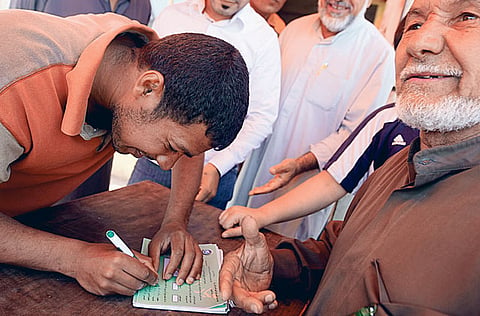
Baghdad: Iraqi supporters of a powerful anti-American cleric turned out yesterday for a special vote on which candidate the potential kingmaker should support for prime minister.
Moqtada Al Sadr has withheld his backing from both big winners in the March 7 election, saying he wants his supporters to make the choice for him. This weekend's vote has no legal authority, but the Shiite cleric's support would give a major boost to the chosen candidate's efforts to get sufficient parliamentary support to form a government.
"We need security and support from the government," said Sabah Hassan, 63, who said he hopes his vote yesterday in Baghdad will help bring stability to Iraq after years of war. "The election process is the best thing in the world."
A coalition led by secular challenger Eyad Allawi, a Shiite who drew on deep Sunni support, eked out a two-seat lead over a mainly Shiite bloc led by Prime Minister Nouri Al Maliki. That gave a pivotal role to Al Sadr, whose hardline, religious Shiite party won at least 39 of the 325 parliamentary seats to become the largest bloc within the Iraqi National Alliance, a Shiite religious coalition that placed third in the race. While the Sadrists ostensibly belong to a Shiite religious bloc which has supported Al Maliki in the past, they have a deep-rooted animosity for him after he jailed thousands of their supporters and routed their militias in Basra and eastern Baghdad.
The referendum — the latest political manoeuvring to stem from the razor-thin election results — would give the Sadrist leadership an excuse not to support Al Maliki and openly back another candidate under the guise of following what the people want.
The voting to decide whom Al Sadr should support was set for yesterday and today at Al Sadr offices, mosques and other sites across the country.
Al Sadr and his supporters have hated Al Maliki since US-Iraqi forces crushed Al Sadr's powerful militia in 2008. The Mahdi Army, as the force is called, once led bloody uprisings against American forces and were blamed by Sunnis for some of the worst sectarian violence in 2006-2007.
Al Sadr rose to prominence after the 2003 US-led invasion, forging a political dynasty based on the network and prestige of his father, a leading Shiite cleric killed by Saddam Hussain in 1999.


