Foundations of former regime intact ahead of polls
Civil politicians and army haggle over future as polls draw near
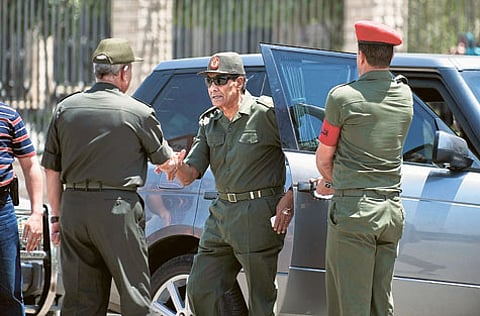
Cairo: Near the rock-strewn scene of an anti-army protest, Islamist, liberal and other politicians sat with ruling generals this month to haggle over Egypt's future after its first presidential vote since Hosni Mubarak's fall.
At stake in the Defence Ministry meeting, held just hours after 11 people were killed in another flare-up marring Egypt's transition to democracy, was who would write a new constitution and what powers would Mubarak's successor have.
No clarity has emerged.
When voting starts on May 23 and 24 in a presidential race that broadly pits Islamists against men who at one time or another served under Mubarak, Egyptians still won't know the next head of state's permanent job description.
"It's a poker game," said Ahmad Saeed, head of the liberal Free Egyptians party, describing the talks he attended on May 2 between political party leaders and military ruler Field Marshal Mohammad Husssain Tantawi, who is also defence minister.
The closed-door bargaining is a far cry from the adrenaline-fuelled street protests that toppled Mubarak in just 18 days.
Fifteen months later, the revolt that gripped the world and inspired Arabs has stumbled under the transition managed by the generals who took charge when Mubarak, a former air force commander, was forced out.
Sporadic street protests still flare, but change is now being dictated by a tortuous tug-of-war between the civilian politicians and the army, a pillar of Mubarak's rule which is set to remain a major power broker long after it formally hands over to a new president by July 1.
Faces of the 13 presidential candidates beam down from banners and posters across the nation of 82 million. They promise change. But the election will not mean a swift end to turbulence, even though it will add a new political player.
The grinding pace has left liberal-minded activists who inspired the revolt fuming at the unfinished work of dismantling Mubarak's legacy. Islamists grumble that their sweeping parliamentary election mandate is being ignored. Many Egyptians are simply tired of the turmoil that has hammered the economy.
"The revolution hasn't failed ... But it hasn't been completed yet. God willing, we will complete it. Maybe it will take five years," said Ahmad Gaber, 23, who was protesting against the army outside the Defence Ministry this month.
Yet the Egyptians are enjoying a kind of politics unthinkable in Mubarak's day. Last week, the two presidential front-runners, former Arab League chief Amr Mousa and moderate Islamist Abdul Moneim Aboul Fotouh, faced off in an unprecedented US-style presidential debate.
"History in the making. Egyptians head home to watch their first-ever presidential debate. Change has come," wrote Minoush Abdul Meguid on Twitter, shortly before the marathon four-hour show began on Thursday evening and ended well after midnight.
The uprising has also reshaped Egypt's ties with the region and the West. The US now openly talks to the Muslim Brotherhood and other Islamists, groups it long spurned.
Israel watches warily as presidential candidates criticise — but still promise to respect — the peace treaty signed with Egypt in 1979. Mubarak's allies, meanwhile, fret that popular unrest will spill over to their monarchies.
Yet the foundations of the state that shored up Mubarak's rule remain firmly intact.


