Terror is a tactic, not an opponent
Gordon Robison writes: Al Qaida's Bin Laden may be gone, but the ideology he represented is far from defeated
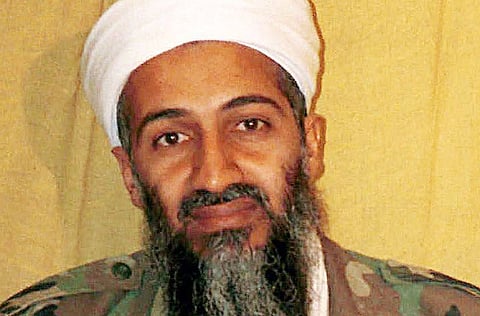
On my Facebook page yesterday one friend after another was declaring it a great day for America. I hope they will pardon me for a view of Osama Bin Laden's death that is, perhaps, a bit more nuanced.
Bin Laden is gone, but the nihilist distortion of Islam he came to embody is far from dead, a fact that the crowds celebrating yesterday outside the White House and at Ground Zero in New York seem not to have grasped… not yet, at least.
This is not to say that the event should not be celebrated. But celebrated as a small, mainly symbolic, victory in a conflict America seems likely to be locked into for another generation.
Americans often speak of a ‘post 9/11 world.' It is a phrase that puts the US and its troubles at the centre of world history, and Americans travelling abroad are often a bit shocked to discover that the events of September 2001 are not necessarily central to other nations' sense of self. The phrase ‘everything changed on September 11' has been repeated so often that it is widely accepted in the US as a simple statement of fact.
From that perspective Bin Laden's death seems a seminal event — one likely to make everything in life a bit better, mirroring the way in which September 11 itself seemed to make everything a bit worse.
It is worth asking, however, what — beyond this particular emotional release for Americans — is really likely to change? Bin Laden's death may do little to ease Obama's political life over the coming months. Indeed, in some ways it may make things more difficult for him, particularly with his own base. The US government and military have long seen the West's role in Afghanistan as one of enabling stability: a long-term process focused on fighting the Taliban while helping to build Afghan institutions.
Two imperatives
For many ordinary Americans however, Afghanistan has always been about one thing only: getting Bin Laden and, in so doing, realising some form of closure where September 11 is concerned. With Bin Laden gone, domestic pressure to end the Afghan mission is likely to build rapidly, particularly among Obama's Democratic base. The same can also be said for many of America's allies in Afghanistan's International Security Assistance Force.
The result may be a president torn between two imperatives: On one side a security establishment urging not only continued involvement in Afghanistan but seeking more troops to fill the gaps left behind by its allies as they draw down. On the other a domestic political climate in which many will ask why we are still fighting a war they regard as ‘won,' an especially awkward question as the country moves into a presidential election year.
As for Al Qaida itself, for a number of years now the conventional wisdom among people who track Al Qaida has been that the organisation has changed and evolved in significant ways in the decade since September 11. The Al Qaida of 2001 was a centralised, hierarchical organisation. After the American invasion of Afghanistan and the fall of the Taliban much of the group's leadership was killed or dispersed, yet Al Qaida still managed to launch a series of attacks both large and small. It did so by becoming less centralised, less hierarchical — by becoming the opposite of what it had once been. By the middle of the decade it was common to describe Al Qaida as a kind of franchise operation: more a source of inspiration and ideology than of personnel, logistics or ideological know-how. In the process Bin Laden himself went from being an operational leader to something more akin to a ceremonial head of state.
Today's Al Qaida is still capable of causing great suffering (and may, some analysts believe, have reconstituted at least some of its central structure). A bombing in Marrakesh last week that killed 16 people was said by both Moroccan and western experts to bear many of Al Qaida's hallmarks. The same could be said of the sectarian attacks that have recently been on the rise in and around Baghdad.
The whole problem with the Bush administration's ‘war on terror' rhetoric (which the Obama administration has worked hard to distance itself from) was the impression it created that a ‘war' against terrorism can be won. Terrorism is a tactic, not an opponent.
That is why the crowds outside the White House and at Ground Zero may be in for a rude awakening. In the long run, the death of Bin Laden is likely to mean relatively little. Bin Laden may be gone, but the ideology he represented is far from defeated. Americans should be allowed some pleasure at what is certainly a victory in the narrow sense of the term, but it would be a mistake to believe that all that much is going to change. One can only hope that when that particular reality sinks in the shock is not too great.
Gordon Robison teaches political science at the University of Vermont.


