Regional health care bill to touch $125b by 2015
Mena infrastructure still far behind developed countries
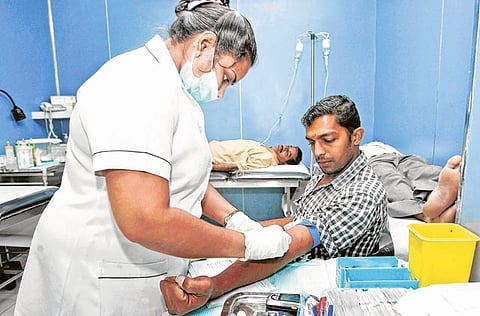
Abu Dhabi: Expenditure on health care in the Middle East and North Africa (Mena) is expected to reach $125 billion (Dh459.1 billion) by 2015 amidst rising demand for health care services, a report by Al Masah Capital showed.
"Health care spending in the Mena region totalled $65.6 billion (4.3 per cent of GDP) in 2009 and demand for health care would rise due to high population growth, increased life expectancy, lower mortality rates, the prevalence of lifestyle related diseases, an aspiration for better quality health care services and the growing awareness of health insurance," revealed the report.
Several factors are driving the growth of the health care market in the region. Its population, currently at around 214 million, is projected to reach 233 million by 2015 and 272 million by 2025, the report says.
It has a shortage of about 200,000 hospital beds and it lacks adequately qualified medical professionals such as dentists, nurses and midwives, the Al Masah report showed.
Trailing the West
According to a World Health Organisation (WHO) report published last year, the Mena region had 3.5 dentistry personnel and 28.4 nurses and midwives per 1,000 population, which is nearly 79 per cent and 71 per cent lower, respectively, compared to the United States.
"The health care infrastructure in the region is far below that of the developed economies. For instance, the ratio of hospital beds and the number of physicians per 10,000 people in Mena and the GCC is poor compared to the US," the WHO report said.
The report also showed that health care expenditure in the Mena region is low both in terms of percentage of GDP and on a per capita basis. The region spends 4.3 per cent of its GDP on health care whereas the US spends 16.2 per cent, Canada 10.9 per cent and the UK 9.4 per cent.
There are currently 109 active health care projects underway in the region.
James Ferriar, marketing adviser at the Abu Dhabi Health Services Company (Seha), said existing health care infrastructure in Mena is insufficient.
"We are upgrading and integrating medical records to improve the health sector's performance to reach world class levels," he told Gulf News.
"Giving doctors and medical staff the ability to take notes, access clinical information and manage schedules while on the move means they can make decisions more quickly, with obvious benefits to patients."
Liesel Papke, conference director at International Quality and Productivity Centre, said: "The health care industry is under extreme pressure to improve efficiency levels, to ensure patient safety and drive down costs; therefore, we need to provide an optimal context for stimulating innovative technology for it."
- $65.6b - total health care expense in the region in 2009
- 4.3% - percentage of GDP spent on health care in the region

