On the road to recovery
After a rather dismal period last year, the Indian real estate market looks all set to pick up pace
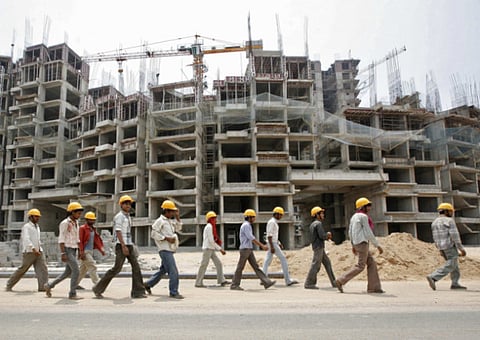
The real estate sector in India has started showing signs of recovery following a period of weak growth last year. Depreciation of the Indian rupee, inflation, a modest GDP growth and rising fiscal deficit fuelled panic in the market and damaged investor confidence. As the Manmohan Singh government completes its constitutional term in May, and India prepares itself for the next general elections, there are expectations from the new government for decisive action that will resurrect the economy.
Anuj Puri, Chairman and Country Head, Jones Lang LaSalle India, says the results of polls will have a bearing on the market sentiment, determining whether the market will gather momentum, grow at the current rate or decline further.
Need for reforms
Based on the analysis of realty experts, whether the Congress-led United Progressive Alliance (UPA) government is re-elected or a new party comes to power, one can reasonably expect the real estate sector to shrug off some of its challenges and move towards a far healthier horizon.
“The general election, due this year, is likely to have a positive impact on India’s property sector. The market is looking for an investor- and reform-friendly government, which is open to global as well as domestic investment opportunities,” points out Anshuman Magazine, Chairman and Managing Director, CBRE South Asia Pvt. Ltd, a leading real estate services firm, adding, “Post elections, the new government will not only have to drive the economy with a defined vision and competent economic management strategy, but also spearhead reforms in a number of areas to drive faster growth.”
Changes in FDI policies
Experts feel that the new government must initiate more reform measures in the area of foreign direct investment to spur growth in the realty space. “To enable the Indian real estate sector to meet its massive capital requirements and capitalise on the opportunities for large-scale real estate developments, the sector needs investor-friendly, streamlined policies from the government,” says Puri.
Elections to step up realty?
A flight to quality has emerged as a key trend in India’s office realty space. Relocations and consolidations by medium and large companies to better quality spaces at cheaper rentals in suburban and peripheral locations are also expected to add substantially to the total transaction volume. “Rentals are expected to remain largely stable except for some micro-markets, where supply and vacancies are low. The information technology (IT) and information technology enabled services (ITES) sector will continue to be the largest demand driver in the real estate sector. Investment activity in leased office assets by large institutional investors is expected to remain strong given the relatively high yields that India offers foreign investors,” explains Dutt.
Residential segment
Tata Housing will launch at least three or four more projects by the end of 2013–14 and will continue to expand its presence across the ten metros and emerging cities. It is set to launch projects across consumer segments in Maharashtra, National Capital Region (NCR), Chennai, Bhubaneswar, Himachal Pradesh, Bengaluru and Kolkata.
Big ticket investments
Property experts are especially upbeat about the long-term prospects for the commercial property segment in India. “With valuations lowering in India’s real estate market in recent times, global private equity firms have been investing in the sector’s income-generating, core commercial assets. Such Grade A leased office space investments are likely to continue into the next year,” says Magazine. “We will see increased investments in the office markets of Gurgaon and Noida in the NCR, and Bengaluru’s Whitefield and Outer Ring Road micro-markets,” adds Magazine. Chennai, Pune and Gurgaon are also expected to see investments in special economic zones; while housing investments are anticipated across India’s top metropolitan cities of Delhi NCR, Mumbai, Bengaluru and Chennai.
Quality residence
The demand for quality residential development will continue to remain strong this year. “With a shortage of around 24.7 million units and 70 per cent of it in the affordable housing space, we see this growing at healthy rates in the next three to five years,” says Banerjee. “For luxury housing, the demand will now be driven by the changing lifestyle and aspirations among young Indians. Overall, we see the sector expanding by 30 per cent compound annual growth rate in the next decade,” Banerjee adds.


