More than merely sushi
Who says Japanese food is all about raw fish cut up in different sizes? As it turns out, it forms just a small part of the cuisine from this beautiful island country
Street eats
For the more adventurous, the streets of Japan are a welcome playground. Take the popular street food takoyaki, for instance. Typically filled with octopus, tempura scraps, pickled ginger and green onion, it is smeared with sauce and mayonnaise and sprinkled with dried bonito. Takoyaki was first popularised in Osaka, where a street vendor invented it in 1935. It is now available in most supermarkets in Japan and even has speciality restaurants dedicated to it.
Okonomiyaki, another popular dish from Osaka, is a savoury yam flour pancake stuffed with shredded cabbage, green onion, seafood, vegetables or cheese. The Japanese love for the dish is evident in Okonomi-mura, an okonomiyaki food theme park located in Hiroshima that houses 26 okonomiyaki restaurants. Interestingly, it is a type of the more commonly known teppanyaki, which is food cooked on a large iron griddle.
Foreign influences
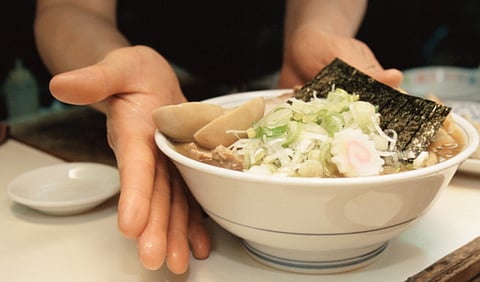
Wheat noodles in a meat-based broth, ramen, synonymous with Japanese food today, is most likely of Chinese origin. In 1958, instant ramen noodles were invented by Momofuku Ando, the Taiwanese-Japanese founder and chairman of Nissin Foods and it was named the greatest Japanese invention of the 20th century in a Japanese poll. So enamoured were they with the dish that the Japanese opened a ramen museum in Yokohama in 1994.
Japan has also given the world wasabi-coated peanuts and peas, perfect accompaniments with sundowners and tea. Already the snack of choice to many nationalities all over the world, they are even grown fresh in parts of the UK, reports London-based food consultant Hiroshi Kazume, a Japanese exhibitor at the recent Speciality Foods Festival in Dubai World Trade Centre.
Traditional food
Japanese food emphasises on using fresh, seasonal ingredients and the simple seasonings of soy sauce and dashi (broth), fish and kelp stock.
The Japanese custom of serving things in separate dishes emphasises the importance placed on presentation. “No Japanese, however humble, would think of serving food on just any old plate, relying on flavour alone to please,” wrote Tsuji. Thus, it follows that foods should not come in contact with each other or else they would be considered unfit for consumption.
If you are lucky, someone will invite you for a luxurious, traditional Japanese kaiseki (multi-course) meal in some of the revered by-invitation-only kaiseki establishments in Japan. Some of these restaurants only accept fresh banknotes and in serial order. Go prepared. 7


