August 15, 2001: World’s fastest computer is unveiled
ASCI White was officially unveiled by scientists aiming to simulate nuclear tests the government has promised not to carry out for real
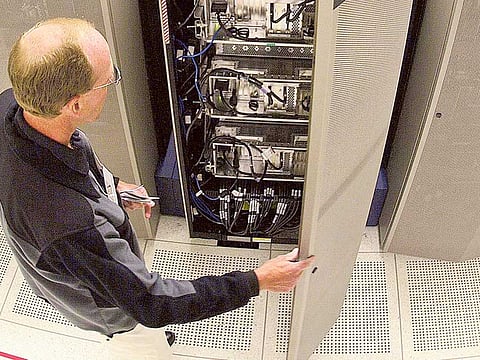
2001 — A United States government laboratory unveiled the most powerful computer in the world, programmed to simulate the explosion of a nuclear bomb. ASCI White, a $110 million (Dh404.58 million) computer squeezed into enough refrigerator-sized units to fill a couple of basketball courts, was officially unveiled by scientists aiming to simulate nuclear tests the government has promised not to carry out for real. The beast, built by International Business Machines Corp (IBM) from off-the-shelf processors with a souped-up version of its commercial operating system, AIX weighs as much as 17 full-sized elephants, takes as much cooling as 765 homes, and can do in a second what a calculator would take 10 million years, IBM claimed.
Other important events:
1824 Liberia is founded by freed American slaves.
1834 South Australia Act passed by Britain’s Parliament, allowing for establishment of colony there.
1843 Tivoli Gardens, one of the oldest still intact amusement parks in the world, opens in Copenhagen, Denmark.
1914 The Panama Canal is officially opened.
1945 Korea is liberated from 35 years of colonial rule with Japan’s defeat.
1947 India gains independence from Britain.
1947 Great Britain’s first nuclear reactor at Harwell, Oxfordshire, begins operation.
1950 A magnitude 8.4 earthquake kills 200 people in Assam, northeast India.
1962 The Netherlands and Indonesia settle West New Guinea dispute.
1965 British group The Beatles play live to 55,000 fans in Shea Stadium, New York.
1969 The Woodstock Music and Art Fair opens in upstate New York.
1975 Bangladesh’s founding father, Shaikh Mujibur Rahman, is assassinated.
1994 Guerrilla mastermind ‘Carlos the Jackal’ is captured in Sudan, ending two decades on the run from the West’s security agencies
1995 Fifty years after the Second World War ends in the Pacific, Japan apologises for a conflict that killed millions of people.
1997 Jennifer Murray and Quentin Smith complete their helicopter journey round the world in 97 days.
1998 A car bomb in Omagh, Northern Ireland, kills 29 people and injures 370.
1999 An armed group kills 29 people in south-western Algeria in the worst violence.
2000 A group of 100 separated family members from North Korea arrives in South Korea for temporary reunions with relatives they have not seen for 50 years.
2002 Dresden suffered its worst flooding in more than a century and receding waters in Prague began to reveal the damage wrought on the Czech capital.
2008 Leftist Fernando Lugo becomes Paraguay’s president, ending six decades of one-party rule.
2010 Popular Saudi Labour Minister and poet Gazi Al Gosaibi dies after a prolonged illness.
2011 Attacks in more than a dozen cities across Iraq kill 66 people.
2012 Australia’s highest court prohibits tobacco companies from displaying their logos on cigarette packs, instead images of the ill-effects of the smoking will be shown.
2013 Christchurch’s cardboard cathedral officially opens, replacing the neo-Gothic structure destroyed in a 2011 earthquake.


