Connection: If you’ve nothing to hide, you’ve nothing to fear
We knew that the US is very protective of its interests, but WikiLeaks gave us a view of how passionate they are in doing so
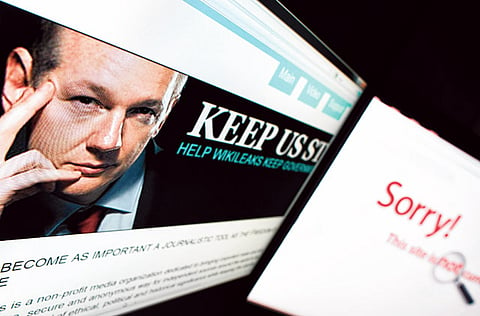
I know that the subject is very, very serious but there's also a funny side to the WikiLeaks story that has recently stirred controversy. Every personality mentioned in the leaked documents is afraid to go public to either confirm or deny their authenticity.
They never imagined that with advanced technology any information is at risk of being accessed.
We already know that the United States is very protective of its interests and the documents gave us a view of how organised and passionate the Americans be in doing so.
The Americans are completely right in advancing their interests, but the problem lies with other countries which — as the documents indicate — were too submissive to the detriment of their own interests and peoples.
WikiLeaks started publishing the supposed State Department cable messages on November 28.
The website and its partners have so far published less than one per cent of the documents that WikiLeaks claims it possesses.
As of Monday, the site had published 1,344 cable messages, with the oldest dated 1966 while the latest was sent only last February.
Julian Assange, the Australian founder of WikiLeaks, promised to publish all 251,287 documents, which means 249,943 telegrams are yet to come out, or 99.4 per cent of the documents are yet to be leaked out.
Not all however, are classified as secrets.
The materials that have surfaced brought out disturbing scenes and details of how the United States practices its brand of diplomacy.
The leak's effect was massive enough to send US Secretary of State Hillary Clinton out on a charm offensive to avert or fix ruffled feathers and strengthen ties with its allies.
In an article for the newspaper The Australian, owned by Rupert Murdoch, Assange wrote: "Do not kill the messenger for revealing uncomfortable truths."
He claims that "WikiLeaks deserves protection, not threats and attacks," and that "democratic societies need a strong media — and WikiLeaks is part of the media."
WikiLeaks' samba music was created by Nick Santoro and published at Sonic Disobedience in tribute to WikiLeaks and press freedom. Excerpts of the lyrics:
What's next, Wikileaks?
What's next, Wikileaks?
What's next?
Our freedom of press, our freedom of speech?
The walls have ears
Is your conscience clear?
If you've got nothing to hide, you've got nothing to fear
The walls have ears
and the coast isn't clear...
Listen to the whole thing here: http://www.sonicdisobedience.blogspot.com/
TOP TRENDS
Google UAE
Google has announced its annual 2010 Zeitgeist, a report on trends based on global searches, as well as searches conducted in the United Arab Emirates where Gulf News emerged first place as the most popular news site and 6th most popular category (overall), just below YouTube, Facebook, Yahoo mail, Hotmail and Gmail.
Gulf News was also ranked number one among the English language online newspapers by Forbes magazine in October 2010.
Twitter
1- Gulf Oil Spill 2- FIFA World Cup 3- Inception 4- Haiti Earthquake 5- Vuvuzela 6- Apple iPad 7- Google Android 8- Justin Bieber 9- Harry Potter & The Deathly Hallows 10- Pulpo Paul
Facebook
1- HMU (Hit me up= call or text me) 2- World Cup 3- Movies 4- iPad and iPhone 5- Haiti 6- Justin Bieber 7- Games on Facebook 8- Mineros/ Miners 9- Airplanes 10- 2011
- Sources: Google, Facebook, Twitter
Advertisers are looking to ebooks, testing ad formats
With the sales of e-books in high and increasing number of readers, the enthusiasm is growing for advertising in electronic books. The information at WSJournal warns that advertisers are about to invade one of the last places of media that is still free from advertising. Several formats are being studied, such as video, text or graphics that appear once the user starts reading or on the edges of its digital pages. The acceptance by authors and readers is still a mystery.
- Source: WSJ
Playboy on iPad and the iPhone but without the sleaze?
Playboy was among the first to reach the internet in 1994. And it would have been an early debut on iPad if it were not for the conservatism of its creator, Steve Jobs. "They criticise the product, so simple," said the magazine's founder, Hugh Hefner, interviewed in an article published by Folha. "They need to be more tolerant. I believe the future is obviously for more censorship and repression. Currently, there is only a revised application for the iPhone, which can be seen on the iPad, but no naked women. It's like Hefner back to the 50s, when the US boycotted its mail distribution. Society became more liberal, but at the same time it is a constant battle," says Hefner. "There's still politically correct in America that perpetuates these taboos."
- Source: Folha de S.Paulo


