How cross-border SEZ can drive Malaysia-Singapore economic boom
Regional partners eye cost-effective hubs, making this zone a beacon for a bright future
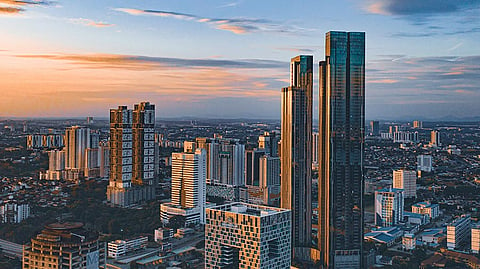
Malaysia and Singapore last week signed a deal to establish the Johar — Singapore Special Economic Zone (JS-SEZ). The two nations, already close economic partners seek to develop a new economic growth area centred on one of the busiest interstate land crossings in the world.
The JS-SEZ, is modelled after China’s Shenzhen Special Economic Zone which Singapore launched in association with China in January 1979. Shenzhen has proven to be the catalyst for China’s growth into an industrial powerhouse for the world.
The JS-SEZ, on Shenzhen model, will provide tax breaks and ease the transit of goods and people between Malaysia’s southernmost state of Johor Baharu and Singapore, which are separated just by 1 kilometre of causeway.
Covering an area of 3,500 sq km, nearly five time the total area of Singapore and twice the size of Shenzhen, the SEZ will be a key driver of cross-border trade and economic collaboration, leveraging Singapore’s advanced logistics, infrastructure and Malaysia’s cost-effective manufacturing capabilities.
Promote and facilitate investments
Under the agreement, Malaysia and Singapore will promote and facilitate investments in 11 economic sectors from Singapore and other countries.
To incentivise prospective investors and talent the two countries will work towards passport-free immigration clearance across the Causeway. They also plan simplified business approvals and abundant supply of renewable energy.
The JS-SEZ will also be served by upgraded public transport connectivity that includes a rapid transit system linking northern Singapore to Johor Baharu, promising to carry up to 10,000 passengers per hour in both directions once completed in 2026.
Malaysia and Singapore are aiming to attract high-value investments into Johor in sectors ranging from manufacturing and logistics to tourism and energy transition, Malaysia’s Economic Minister Rafizi Ramli told reporters. Both will set up and manage separate infrastructure funds to support companies looking to set up in the area, added Minister Ramli.
Top trading partners
As key trading partners Malaysia and Singapore have a strong and long-standing economic relationship. Singapore is consistently Malaysia’s top export destination and second largest trading partner globally, while Malaysia is one of Singapore’s top trading partners within ASEAN; this partnership is further strengthened by significant investments, particularly in the Johor-Singapore region, with a focus on sectors like electronics, manufacturing, and logistics, facilitated by initiatives like the JS-SEZ.
Optimism apart there are voices of caution. The onus would fall on Malaysia to meet expectations from Singapore for doing business, said Adib Zalkapli, managing director at Singapore-based Viewfinder Global Affairs, a geopolitical and public policy advisory firm. Narrowing of the regulatory gap between the two jurisdictions will not be easy, adds Zalkapli.
There is full political and economic will within the two countries for the project to succeed. The fact Singapore itself and China, the principle regional economic partner is looking to relocate to more cost-effective places the JS-SEZ seems poised for a bright future.
Sajjad Ashraf served as an adjunct professor at the Lee Kuan Yew School of Public Policy, National University of Singapore from 2009 to 2017. He was a member of Pakistan Foreign Service from 1973 to 2008 and served as an ambassador to several countries.


