Empowering women: Why environment matters more than intent
Real progress comes from institutions that enable women to lead, innovate and thrive
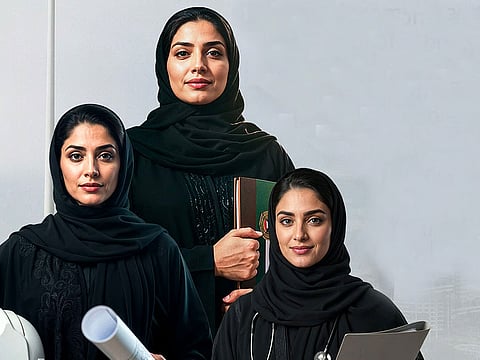
Women have always played a central role in shaping communities, strengthening families, and advancing social and economic progress. Yet the critical question is not whether women contribute to development, but whether the environments around them allow their full potential to flourish. Empowerment does not occur in isolation; it grows from the societies, institutions, and opportunities that support women’s ambition, leadership, and creativity.
When societies recognise women’s contributions, value their ideas, and support their aspirations, empowerment becomes a natural outcome rather than a separate objective. In this sense, the progress of women is not defined solely by individual determination, but by the collective commitment to building environments where talent, leadership, and creativity can thrive.
Institutions that create opportunities
Through years of engaging with women across different roles, sectors, and countries, I have seen determination emerge even in the most challenging circumstances. Yet lasting empowerment cannot rely only on individual resilience; it depends on institutions that create real opportunities within society. When institutions remain closely connected to the realities of people’s lives, they are better positioned to respond to their needs and provide meaningful pathways for growth. In doing so, institutions become more than administrative bodies. They act as drivers of development and anchors of societal stability.
This understanding guides the work of NAMA Women’s Advancement. Since its inception, NAMA has focused on strengthening the ecosystem that enables women to realise their full potential. We work to create conditions in which women can innovate, lead, and fully participate in shaping economic and social progress. This vision is guided by Sheikha Jawaher bint Mohammed Al Qasimi, Chairperson of Sharjah Family & Community Council, and Chairperson of NAMA, whose leadership continues to inspire initiatives that promote inclusion and sustainable development.
Holistic framework
Through its initiatives, NAMA has supported the advancement of women in over 35 countries. These efforts are grounded in a holistic framework that recognises the interconnected nature of empowerment. NAMA’s work is structured around four core pillars: health, education, livelihoods, and women’s status in society. Together, these pillars provide the foundation for long-term progress, ensuring that empowerment extends beyond individual success to create sustainable societal impact.
What this approach recognises is that empowerment is rarely the result of a single intervention. It emerges when education opens doors to knowledge, when economic opportunity provides independence, when healthcare supports well-being, and when societal attitudes recognise women’s contributions. Institutions that address these dimensions together create the strongest and most enduring pathways for women’s advancement.
National framework
In the UAE, women’s advancement has been supported by a national framework that promotes opportunity across sectors. Through forward-looking policies, institutional support, and a clear commitment to inclusive development. Today, Emirati women contribute across fields ranging from entrepreneurship and innovation to science, governance, and the creative industries. This progress reflects a national vision that recognises women not simply as beneficiaries of opportunity, but as active partners in shaping the country’s future.
Empowerment is the result of sustained efforts to build environments where women’s contributions are recognised and their potential can thrive. When these conditions exist, women’s impact reaches far beyond individual achievement, strengthening communities, institutions, and the future of society.
Mariam Al Hammadi is Director-General of NAMA Women’s Advancement


