Education: Time to reassess, refocus and redefine
Empowerment is about being able to reach your full potential
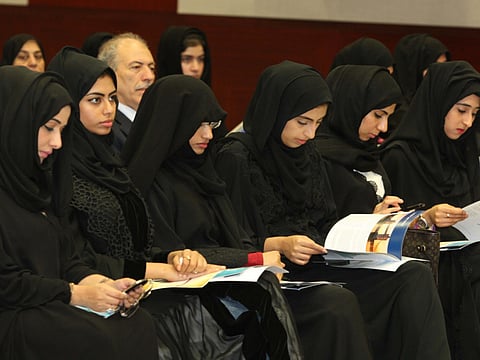
The global community, a vast majority of national societies and experts from multiple disciplines are more aligned on the beneficial and transformative effects of education on the lives of individuals and their communities than almost any other intervention. For those people subject to the crippling effect of inequality, education is touted as the panacea, lifting them out of poverty, away from high mortality rates and saving them from violence. I am part of this consensus. But, and this is a big but, what we mean by education and its practical application need to be reassessed, refocused and redefined.
Reassessed because what does not enjoy the same overarching consensus as the power of education is the need for education, and the investment in it, to be about more than access to primary school. It is about continuing into secondary school and beyond. To be truly transformative, to reach the hardest to reach, to make sure we support those adults who have never had an education and have already fallen through the cracks, education must be about life-long learning.
Refocused because education is not simply about mathematics and literacy. It must also initiate students — to use the jargon of global development — into “21st century skills”. That means things such as citizenship, leadership, confidence and self-esteem. And it must address the challenges people face in the 21st century — for example, the issue of body confidence for girls.
Redefined because although the Unesco definition of education encapsulates three key pillars — formal, non-formal and informal. Formal education tends to overshadow other possibilities. Action plans are consequently narrowed and funnelled into supporting education in school-based, formal settings, from which naturally follows the policy, the funding and the effort. Yet non-formal education can, and already does in many instances, play a role in surmounting what are often seen as intractable challenges such as gender-based violence, conflict and sustainability.
Independent research suggests that to reach her full potential, a girl must have five things by the time she is 12: Five friends; a girl-only space to meet them; a slightly older female role model; citizenship rights; life skills such as health information, and savings.
Empowerment at the centre
Yet since the Beijing Declaration almost 20 years ago, the inroads into ensuring education is delivered to its full effect have been superficial compared to the task remaining. To live up to the expectations set in Beijing, I believe we not only have to reassess, refocus and redefine education, but we must, if empowerment is to be our end goal, place empowerment at the centre of education. And rather than the governments, the NGOs, the experts and those providing funds deciding what is important and what works, we must look to the people seeking education for answers.
In the guiding movement, we constantly ask girls and young women what matters to them. The most recent testament to this was the selection process of the new chief executive of the World Association, with a panel of young women involved in the interview process and the appointment of Anita Tiessen, who will join us in April from Unicef. Imagine a Fortune 500 company getting customers to interview prospective CEOs!
Imagine if we could put empowerment on people’s required reading lists. For me, and for Girl Guides and Girl Scouts around the world, empowerment is about being able to reach your full potential. And here, I think, is the addition to the usual conversation about empowerment — it is about being able to support and transmit those skills, opportunities and attitudes to the people and communities around you, through leadership, citizenship and with confidence.
Imagine a world full of great and committed teachers, of opportunities to learn from your peers on topics that are important and could make a difference to your life, in ways that make sense to you and are delivered in safe spaces. Then imagine a world where girls get married and have children later, gender-based violence is eradicated, families are healthier, poverty unheard of and a sustainable way of life is enjoyed by all. Let’s change the way we think about education. Invest in it more broadly. And we will not have to imagine this brave new world. We will be living in it.

