Chavez is not immortal
Venezuela president's illness has other implications for the people. The man's fragility has been exposed from under his red jacket
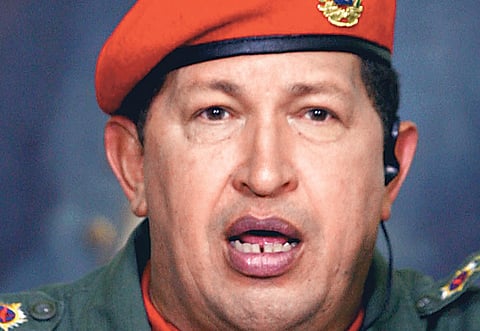
Hugo Chavez's announcement that Cuban doctors had found and removed a cancerous tumour, coming after weeks of speculation about the Venezuelan president's absence from public life, touches a particular chord for Cubans.
For decades, the health of the Cuban president was information cloaked in secrecy. It was the least transparent topic in our national life, until reality forced disclosure about the physical state of our ruler.
On July 31, 2006, a proclamation announcing the sudden illness of Fidel Castro was read. I remember that night, when my phone seemed on the verge of exploding because all my friends called to confirm that they had heard the news.
The next day, the streets of Havana were surprisingly empty. Those who were out tended to speak in whispers and avoided looking each other in the eye. Many of us, who had been born and grown up under the rule of one man, were in shock.
Some were filled with sadness; others — the great majority, I must confess — with relief. Then came the many months when we were administered doses of medical news in tablespoon-size updates.
Sometimes foreign visitors would announce they had seen the commander-in-chief. A Non-Aligned Nations summit held in Havana that September named, in absentia, the olive-green-clad convalescent as its leader.
To us, however, he never appeared. Speculation grew and grew about whether he continued to breathe or had gone to swell the pantheon of historical figures. But the official media maintained its silence, interspersed with some triumphalist phrases about his recovery.
Few dared to say aloud that the health of our ruler couldn't be treated as a state secret. Nearly three years inched by like this before the patient himself confessed, in one of his Reflections of Fidel published in the newspaper Granma, that he had been on the brink of death.
Thus, we discovered that those who had had access to him and who reportedly said such things as "He's walking in the countryside and through villages," "He looks like he will live to be 120" or "His state of health is enviable," had been lying to us.
Political trick
Only then did we know how we had been cheated, the victims of a political trick to keep us under his paralysing influence. Accustomed as we are to reading medical reports upside down and lacking confidence in benign diagnoses, the convalescence of Hugo Chavez had not gone unnoticed in our country.
As with Fidel Castro, Cuban media sought to allay concerns about Chavez. Until recently, details of his condition had not been made public. The secrecy surrounding the surgery performed on Venezuela's president reinforced our feeling that information was being concealed. As was the case five summers ago, the official reports play at distraction and understatement.
Chavez's illness has other implications for us. The man's fragility has been exposed from under his familiar red jacket.
The degree of economic dependence binding Havana's Revolution Square to the Miraflores Palace in Caracas suddenly seems more perishable than it did just a few weeks ago.
Now, long-term forecasts have to be reformulated: How many had dared to consider that the other commander would not be eternal, either? Over the past few weeks, panic has gripped fat-necked bureaucrats, officials who control the subsidies that come from Venezuela and entrepreneurs who resell a portion of the hundred thousand barrels of oil sent to us by what we like to call our ‘new Kremlin'.
They are all holding their breath, hoping that, as soon as possible, he will be signing agreements, speaking to the cameras, governing by force of presidential decrees.
To quell the speculation about Chavez's presence in our country, the official media recently published a brief note mentioning an intestinal abscess. There was no word of the cancer Chavez disclosed recently.
Now, Chavez is also a target for our rumours. Thus, we have come to know that in the span of history he — like Fidel Castro — is mortal, ephemeral and transient.
Yoani Sanchez is a writer in Cuba and winner of the 2010 World Press Freedom Hero award. She is the author of Havana Real: One Woman Fights to Tell the Truth About Cuba Today.


