An ode to the rose
World needs more love for sure and what best can represent that feel, other than a flower
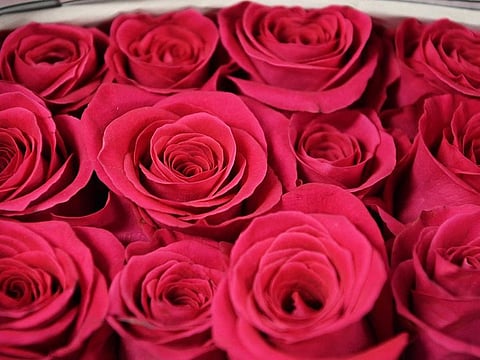
A version of Greek myth that had transcended time, tells how a teardrop of Aphrodite created the first ever rose on earth, as she mourned her mortal lover Adonis`s death.
Another version of this story no less fascinating either, enumerates how she had injured herself by a thorn of a white rose, and how few drops of blood falling on milky white petals turned the flower into blood red. Many say that is the first red rose on earth making it a symbol of love until death.
Undoubtedly, roses are the most enduring symbol of romance and love, gratitude and friendship. Perhaps no other flower in human history has been bestowed with so much affection, recall and symbolism than a rose. With another Valentine`s Day midst pandemic, the story of rose evokes a telling.
Fossil evidences date presence of rose on earth 35 million years ago. No wonder, rose has always been a part of human history, revered and admired to no end.
Transforming into a flower
In Greco — Roman mythology Chloris breathes life into a dead nymph`s body transforming her into a flower. Other deities joined her in this act of resurrection, Dionysus added an irresistible aroma, Aphrodite blessed the flower with magical beauty, naming her rose. She then dedicated rose to Eros, her son. Till today visual depictions of Eros has few essential elements including flute, lyre, torch, dolphins, rooster and a rose.
Today More than 150 species of roses bloom all over northern hemisphere, from farthest in Alaska to Morocco, Tunisia. China has been attributed as the earliest cultivator of the flower enmassé 5000 years ago. In Middle Eastern countries Syria, Iran, Iraq rose was cultivated in plenty during Roman era.
They were considered as sources of fine perfumes, used for aroma therapies (like rose water baths), confetti at celebrations and sometimes as medicinal remedy. Even today many swear by the benefits of Gulkand, or rose petal conserve said to have been discovered by early Syrians.
That said Middle Eastern imagination of rose primarily stood for matters of heart.
A sight of rose was said to have an emotive effect on ancient Arabs. Perhaps this was the genesis of the fabled nightingale story of Arabian Tales, how beauty of a white rose made a bird croon.
The story describes how the bird`s overwhelming love for rose compelled it to hug the plant, unknowingly hurting itself. As the sharp thorn pierced through its little singing heart, blood drops fell on the white rose, transforming it into red, forever.
A story makes the lovelorn perhaps miss a heartbeat, even today.
The fabled nightingale — rose friendship would go on to influence Persian literature and art later.
The symbolism found posterity through Persian lyric poetry or ghazal writings by Hafez. Written in 14thcentury ‘Divan of Hafez’, is a brilliant piece of Sufi writing, an anthology of mystical love poems. Invoking the divinity to rose, Hafez writes; “How did the rose ever open its heart and give to this world all its beauty? It felt the encouragement of light against its being.”
Rose would later form an integral element of Sufi and Islamic cultural representations.
Christianity meanwhile had associated rose with Virgin Mary`s virtues.
War of Roses
Hardly did one speculate that it would morph into partisan symbols of crusade in 15th century England leading to the term “War of Roses”. Interestingly, literature never forgot rose.
The charm was lost as symbol of violent politics was restored duly by 16th century poet, actor, dramatist William Shakespeare in his legendary Rome and Juliet where red rose acts as the symbol of pure, intense love until death and after. The romantic tragedy added a milestone in the colourful history of rose with Shakespeare’s love for rose continuing well into the literary, artistic movements of the next century.
Around the same time, Rose had set the artistic imagination of the impressionist painters ablaze.
Almost every impressionist painter had works with rose in their centrality.
Édouard Manet (1832-1883) better known as Manet painted roses all his life. His unforgettable ‘Moss Roses In A Vase’ was drawn an year before his death, while Claude Monet unforgettable for his garden series of paintings had more than one rose themed art work namely, ‘Garden At Saint Adresse’ or ‘The Artist`s House From Rose Garden’.
Timeless wouldn`t be an exaggeration an epithet for maverick post-Impressionist painter Van Gogh`s ‘Pink Roses’ (1890), painted in his signature style, bursting with desire and spontaneous rawness.
In the Indian subcontinent and Central Asia, decorative art of lattice or jali and pietra dura or parchin kari were at its highest. They adorned various monuments, mosques, palaces. Who can ever forget pietra dura roses and vine creepers on the walls of Taj Mahal. If Taj Mahal was an expression of mortal love where roses found their place, love for the divine too had rose as its emblem.
At which point in history, the rose got integrated to the narrative of Valentine, a Christian saint executed in Rome in 269AD is not easy to pinpoint. The original story of a martyr may have been slightly lost in time but today celebrations of Valentine’s Day would be incomplete without a rose, the lasting symbol of romance and love.
The world needs more love for sure and what best can represent that feel, other than a magical rose!
Nilosree is a filmmaker, author most recently Banaras Of Gods, Humans And Stories


