Military will have to accept people's verdict
The newly elected Egyptian parliament should be the deciding authority
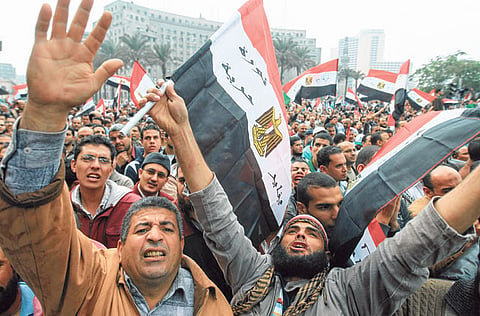
Doubts about the willingness of Egypt's military to accept a new democratically elected government are clouding the prospects for a successful election next week. What should be a momentous day when Egypt goes to the polls for its first ever free elections may not work out as expected. In the past nine months since the revolution toppled the Mubarak regime, the generals have kept a firm grip on the levers of power and have not permitted the dismantling of the power structures that have been built up over decades of authoritarian rule.
The groups of young people who led the protests in February have failed to take a political lead, letting the much more organised Muslim Brotherhood set the election agenda. But the bizarre combination of this Islamist movement and the military establishment both wishing to encourage the marginalisation of the young people can backfire, as the strong protests against the military intransigence in Tahrir Square have shown.
It is wrong that only a week ahead of Egypt's first free elections, the military is already trying to manage the main priority of the incoming democratically elected parliament, which is to agree to a panel to write a new constitution for Egypt. The present interim rulers, the Supreme Council of the Armed Forces, has demanded a special political role for itself as the protector of the constitution, and asked for provisions that would keep the military budget secret and give itself a veto over the body drafting the constitution.
These military leaders would be better off accepting that the new parliament should be the deciding authority. They should prepare to accept the people's verdict rather than seeking to pervert it using their own flawed mandate through which they were appointed by the deposed former president.


