Student-driven learning at the centre of the classroom experience at Delhi Private School Dubai
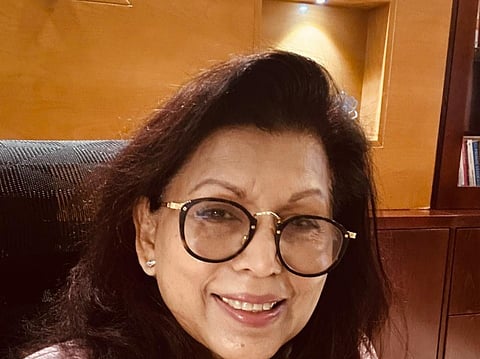
In conversation with Rashmi Nandkeolyar, Principal & Director, Delhi Private School Dubai
How is your school rethinking teaching and learning so that students develop not only academic strength, but also adaptability, problem-solving abilities and the confidence to navigate uncertainty?
We recognize the need for a fundamental shift in the protocols and method of teaching and learning. Student driven, inquiry-based learning, is the crux of our classroom processes. Several programs, which incorporate the 4 Cs are seamlessly integrated across subjects, such as project-based learning, design thinking, case studies, flipped learning and Harkness table. Our teachers are trained to offer a rich experience so that students learn deeply, independently and flourish in finding creative solutions, especially in real life contexts.
Many schools speak about future-ready learning, but translating that into the curriculum requires concrete change. How are you redesigning classroom experiences, subject integration and assessment methods to ensure students are developing skills that remain relevant in a fast-changing global economy?
Our living curriculum is constantly redesigned to reflect the needs of the future. This is reflected in not only what students study, but also how they study. We have recently incorporated subjects such as AI, computational thinking and financial literacy. Our classrooms are designed for personalised pathways of learning and offer opportunities for independent learning as well as collaboration.
Subjects are often integrated in the design of teaching and learning such as the cross-curricular linkage in several subjects. Art, Moral values, Reading skills are integrated in several subjects and assessment processes support real life scenarios through Design Thinking, Project Based Learning and case studies. Portfolios and open book tests are some other methods frequently used.
One of the most relevant changes has been the emphasis on competancy based learning as well as future skills development.
Measuring and encouraging a healthy disposition is another key change that is fundamental in our classrooms. A student must be able to self regulate, to be resilient in the face of failure, work in teams and yet be able to lead.
What specific initiatives has your school introduced to help students better understand emerging industries, evolving career opportunities and the expectations of higher education institutions worldwide?
Our school has implemented a unique skills-driven careers curriculum from KG -Grade XII. A range of structured initiatives is offered to inform students about emerging industries and global higher education expectations. We regularly organize student information sessions and host external webinars featuring university representatives and industry experts, helping students gain insights into upcoming fields and career trends.
Additionally, the school provides internship support both within the school environment and through industry collaborations, enabling students to gain practical exposure and understand workplace expectations. To ensure continuous access to information, updates about new-age careers, university requirements, and global trends are also shared through the school website, creating a well-informed student community.
Career guidance is increasingly moving beyond university counselling into long-term life planning. How does your school support students in making decisions about higher education, career pathways and skill development?
Our school adopts a holistic approach to career guidance by focusing on long-term planning rather than just university placements. We offer personalized career counselling for both students and parents, helping them make informed decisions aligned with individual strengths, interests, and aspirations. Students are guided on selecting relevant courses and skill-building opportunities that enhance their academic profile and career readiness. The school has also established tie-ups with institutions to provide short-term certification courses, enabling students to explore interests and develop future-ready skills. This comprehensive support system empowers students to confidently navigate their higher education and career pathways.
Extracurricular programmes are now considered an integral part of student development. How are sports, arts, innovation programmes, entrepreneurship initiatives or leadership opportunities being designed to strengthen competencies that are valuable for future careers and real-world success?
We keep a firm finger on the pulse of the world and the buzz of our students’ interests, when we design our co-curriculum. We consider the holistic development of every child a fundamental principle that guides our policies, processes and procedures. All students participate in a multidisciplinary annual event, showcasing leadership, teamwork and innovation in a plethora of disciplines. Each phase also trains and actively participates in art, music, dance and sports. We have also incorporated the Permah Pillars to ensure direction and meaning for our students’ holistic development. Indeed, community service, entrepreneurship, empathy and kindness are seamlessly interwoven into our students daily experience.
The attributes and accomplishments of a steller character, rich experiences and top notch future skills go a long way in building a fulfilling career and wellbeing in the future.


