Pakistan targets $60 billion export growth with strategic trade framework
UAE-Pakistan trade relations strengthen with new economic agreements
What have been your strategic priorities since assuming office?
When I assumed office at the Ministry of Commerce, it became clear that additional opportunities needed to be explored. With that in mind, we adopted a medium-term export target of $60 billion over the next five years. The foundation for this work was the Strategic Trade Development Framework initiated in 2021, which identified 13 sectoral councils. We expanded this framework by adding four additional councils, including IT and fisheries, to focus more specifically on areas with untapped potential.
These sectoral councils are led by the private sector. Each council represents the full value chain of its sector, including manufacturers, exporters, traders and importers. In the past, these councils typically prepared reports independently and submitted them to the government, often without direct engagement.
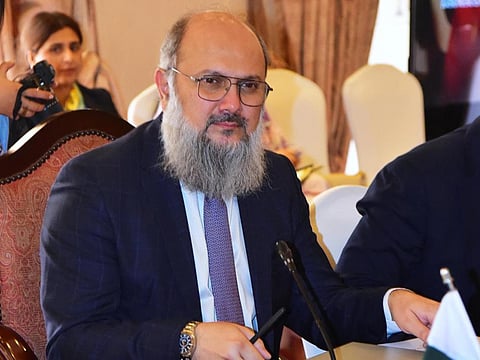
Pakistan and the UAE have a long-standing trade relationship.Jam Kamal Khan, Minister of Commerce
We changed that approach. I personally chaired detailed working sessions with all 17 sectoral councils. From these consultations, we compiled detailed assessments for each sector, covering domestic potential, global demand, priority markets, value-addition opportunities and challenges. This work provides a framework to guide future export growth, improve international compliance and raise product quality.
What advantages does Pakistan offer for UAE partners?
Pakistan and the UAE have a long-standing trade relationship, and business communities in both countries are familiar with each other’s commercial environments. One recent initiative has been the establishment of the Special Investment Facilitation Council, which aims to provide focused facilitation for specific investment opportunities.
Pakistan has also introduced a National Tariff Policy 2025-30, under which tariff rationalisation is planned over the next several years. This includes reducing duty structures across various sectors, which traders may wish to evaluate when considering medium-term opportunities. In addition, Pakistan’s policy rate has been reduced from 22% to around 11%, and energy pricing reforms are ongoing.
How do you plan to grow trade with the UAE?
Pakistan and the UAE have continued to engage at a high level to explore investment and trade opportunities, particularly in infrastructure and commercially viable projects.
Recent developments include UAE investment in port logistics in Karachi, and expanded activity by DP World. These partnerships are intended to support logistics, transit trade and regional connectivity. Cooperation also extends to ICT, telecommunications, digitisation initiatives and knowledge transfer in ease of doing business.
Pakistan is nearing completion of negotiations on a GCC Free Trade Agreement, as well as a Comprehensive Economic Partnership Agreement with the UAE. These agreements are expected to address tariffs and other trade-related components and could open additional opportunities for businesses in both countries.

