India and Arab world chart "New Growth Path" at historic IACCIA launch
Business leaders and diplomats highlight move toward innovation and SME growth
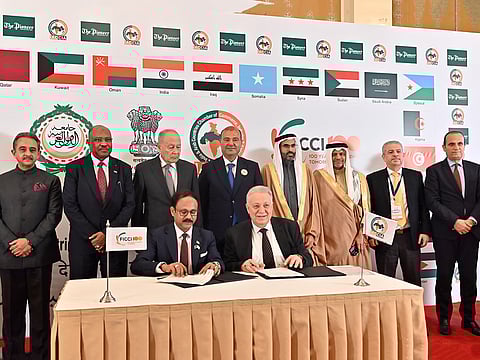
The economic corridor between India and the Arab world, one of history’s oldest trade routes, was formally reimagined for the 21st century this week with the official launch of the India & Arab Countries Chamber of Commerce, Industry & Agriculture (IACCIA).
In a keynote address that set the tone for the new chamber, Dr. Siddeek Ahmed, Co-Chair, Indo-Arab Council, FICCI, and Chairman & Managing Director, ERAM Holdings, outlined a "new growth path" for bilateral relations.
Speaking to an assembly of diplomats, industry captains, and policymakers, Dr. Ahmed argued that the historic trade ties between the regions are evolving into a dynamic strategic partnership driven by innovation, technology, and sustainable development.
Beyond oil and spices: A strategic shift
Dr. Ahmed’s address highlighted a critical pivot in the Indo-Arab economic narrative. While energy and commodities have traditionally anchored the relationship, he emphasized that the future lies in high-growth sectors such as renewable energy, digital infrastructure, food security, and advanced manufacturing.
"We are moving beyond the traditional buyer-seller relationship," Dr. Ahmed remarked during the launch. "The Arab world is no longer just an energy provider; it is a partner in technology collaboration and supply chain resilience. This closer engagement offers a 'strategic economic hedge' for Indian businesses navigating a volatile global market."
Diplomacy and mutual trust
The event was also a celebration of the deep personal and diplomatic bonds that underpin these economic ties.
Key figures, including Minister of State for External Affairs and Minister of State for Environment, Forest and Climate Change, Government of India Kirti Vardhan Singh and Secretary General of the League of Arab States Ahmed Aboul Gheit, underscored the necessity of this platform to navigate rising global tariff barriers and unilateral economic shifts.
Significance of the Launch: Sealing the deal
The establishment of the IACCIA marks a significant milestone in economic diplomacy. By institutionalizing business-to-business engagements, the chamber aims to reduce friction in trade and foster a climate of mutual trust.
For Dr. Siddeek Ahmed, the launch is a realization of long-standing advocacy for deeper integration. His call for a "new growth path" suggests that the next decade of Indo-Arab relations will be defined not just by the volume of trade, but by the value of shared innovation.


