Balancing Act: How globalisation and localisation shape the future of fintech
Chief Growth Officer at Payoneer shares the structural shifts in fintech & global commerce
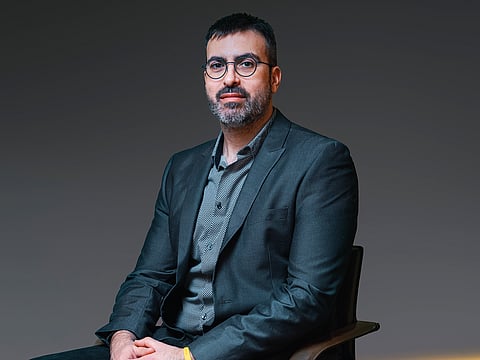
In a world shaped by geopolitical uncertainty, rapid technological advances and shifting trade routes, one paradox defines modern business: companies are more global than ever, yet their expectations are increasingly local. It is this tension between borderless ambition and grounded execution that Adam Cohen, Chief Growth Officer at Payoneer, believes is defining the future of fintech and global commerce.
“Globalisation and localisation,” says Cohen, “are happening at the same time.”
For more than two decades, Payoneer has been providing access to global commerce for businesses of any size in any location.
Businesses today can reach customers, vendors and talent almost anywhere in the world. At the same time, they expect to operate locally using familiar payment methods, real-time rails, trusted compliance frameworks and intuitive user experiences. This dual expectation, Cohen notes, has been building for years and remains very much a work in progress.
Beyond geography, Cohen points to two technologies quietly reshaping the foundations of financial services: artificial intelligence and stablecoins.
“At Payoneer, AI is already being applied across risk management, real-time support and customer insights.” The emphasis, Cohen explains, is not automation for its own sake, but the ability to scale good decision-making across a growing global customer base.
Stablecoins, meanwhile, are viewed through a distinctly pragmatic lens. “Stablecoins, when used responsibly, can significantly improve speed, cost, and settlement reliability,” he says.
The real challenge, he adds, remains the last mile, ensuring funds move reliably into businesses’ hands across diverse markets.
At the heart of Payoneer’s mission is a simple observation. “Talent is globally distributed, but opportunity still isn’t,” Cohen says.
For many SMEs, expanding beyond borders remains unnecessarily difficult. “Traditional banks were built to serve local businesses. They expect physical presence, local documentation, and fairly rigid operating models.” The result is friction at every stage - from opening accounts, accessing credit, getting paid, to paying suppliers and managing cross-border compliance.
Payoneer’s core focus is addressing these pain points. While it works with everyone from individual freelancers to platforms paying tens of thousands of businesses worldwide, SMEs remain central to its strategy.
“We help businesses when they’re just getting started, when they expand internationally, and as their needs become more complex,” Cohen says.
In fintech, innovation without trust is unsustainable. Cohen is unequivocal on this point. “We make no compromises when it comes to compliance,” he says. Payoneer invests heavily in risk management and works closely with regulators and banking partners to stay ahead of emerging challenges.
Risk is managed deliberately at leadership and board levels, ensuring clarity and accountability.
As fintech evolves, so too does its geography. For Cohen, the UAE, and Dubai in particular, has emerged as one of the world’s most significant incorporation and business hubs.
In markets like the UAE, Cohen stresses, technology alone is not enough. “Relationships and trust still matter a great deal.” Working closely with local banks, partners and ecosystem players allows Payoneer to combine global infrastructure with strong local relevance, a balance that is critical in the region.
Partnerships too have been central to Payoneer’s journey from the outset, be it across marketplaces, banks, technology providers and local ecosystem players. “We look for partners who are forward-thinking, customer-centric, and interested in building for scale,” Cohen says. He also believes the opportunity over the next decade is several times larger.
““Over the last 12 months, the company served approximately two million active customers and processed over $80 billion in transaction volume. We won’t get there alone, and we don’t want to.”
In the future, the expectations placed on financial services are only set to rise. “The companies that succeed will be those that truly understand the needs of global businesses and can support them wherever they operate, without forcing them into legacy models,” he adds.


