Class conflicts in modern Britain
The Casual Vacancy bears J.K. Rowling’s signature strengths despite the long-winded narrative
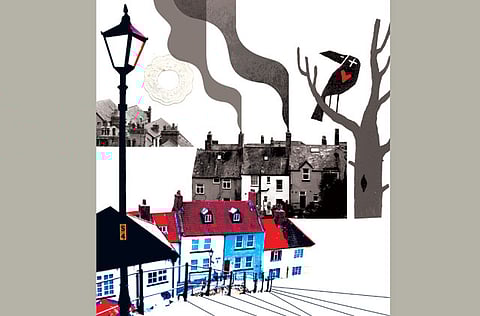
The Casual Vacancy
By J.K. Rowling,
Little, Brown, 512 pages, £20
She had said her next novel would be for adults and it seems J.K. Rowling has kept her word. Published five years after the release of the last “Harry Potter” saga, “The Casual Vacancy” is a sharp departure from the usual fantastical battles between good and evil.
The multicharacter narrative of ambition and rivalry set in an English village, Pagford, recounts the chaos sparked when Barry Fairbrother suffers an aneurysm in the car park of a local golf course and dies. The unexpected death of the cheerful, popular and eternally optimistic parish councillor leaves a vacancy in the governing body. The story revolves around who will get the vacant council seat. The main dispute between the opposing factions, who want to fill in Fairbrother’s position, concerns the Fields, the run-down housing project on the edge of town. Should it be considered part of Pagford or the neighbouring town of Yarvil?
In fact, the central conflict in “The Casual Vacancy” is essentially one of class — the haves pit themselves against the have-nots. It is also about the intricate web of alliances that bound the 16 members of Pagford Parish Council, and of course paralysing generational divides the loss of innocence.
Things take a turn for the worse when the local election is sabotaged by Stuart Wall, Andrew Price and Sukhvinder Jawanda, all children of existing council members. The teenagers ruin their parents’ ambitions, unveiling their dark secrets, mired in hypocrisy and lies, through anonymous posts on the parish council’s website, using the name The_Ghost_Of_Barry_Fairbrother. Andrew reveals that his father Simon, who made his house a fortress against the world where his will was law and who put himself up for election because he heard that there were opportunities for corruption, had bought a stolen computer. Sukhvinder follows, posting that her mother, Parminder, had been in love with Fairbrother, and Stuart claims his adoptive father Colin Wall, deputy head of St Thomas school and a close friend of Fairbrother, had molested a child.
These troubled, profane and contemporary teenagers, unlike Harry, Ron and Hermoine, are themselves caught up in their own school- and relationship-related dramas, especially Sukhvinder Jawanda — she is the only brown person in her class and Stuart “Fats” bullies her, calling her “the great hermaphrodite, the bearded-dumbell” because of her hairy skin.
The gritty and darkly humorous tale illustrates that the idyllic yet fractious English town is more menacing than its pretty façade with its characters set on a collision course — from the affluent lawyer Miles Mollison and delicatessen owner Howard Mollison, both of whom want to close down the Bellchapel Addiction Clinic and push the Fields out of Pagford’s jurisdiction, to the heroin-addict and occasional prostitute Terri Weedon and her daughter Krystal, part of a ramshackle clan living in the Fields.
Krystal is not a central character, but Rowling focuses on her traumatic life. The leader of girls’ rowing team and Fairbrother’s pet, Krystal is raped by a drug dealer, her three-year-old half-brother Robbie falls into the river and drowns while she gets intimate in a park with Fats, and finally she kills herself, deliberately overdosing on her mother’s heroin. The book ends as it opens, with a death and funeral. But death is perhaps the book’s most adult element, and one that also loomed over Harry Potter’s world.
Though the 500-page tome makes for a vivid, interesting read, the plot does not feel tightly knit. Also the lack of easily likable characters and lustful imagery might be a little off-putting.
It is likely that nothing Rowling publishes will ever match the success of the Potter books, which sold 450 million copies around the world, and “The Casual Vacancy” might not be a hit with the hardcore fantasy readers who have grown up with Harry Potter and are now book-loving adults. But to be fair, Rowling, the world’s most successful living writer, should be free to write about what she wants after years of writing magical tales, and deal with the world as it is, not as we wish it were.
After all, its explicitness and use of expletives isn’t anything today’s teen hasn’t already experienced or not know about in the broader culture.
“The Casual Vacancy” is not a masterpiece, but, despite being long-winded, Rowling holds the reader’s attention for most of the novel. She does not lose her narrative gifts by stepping outside her usual realm — it is a big change for Rowling, perhaps a real gut-check, to write a book that is this adult, and so it will be for Potter lovers if they can get past the absence of obvious magic in “The Casual Vacancy”.


