
How UAE storytellers use film and digital media to preserve culture and identity
Ali Al Hammadi explores how UAE storytellers shape culture and global perception
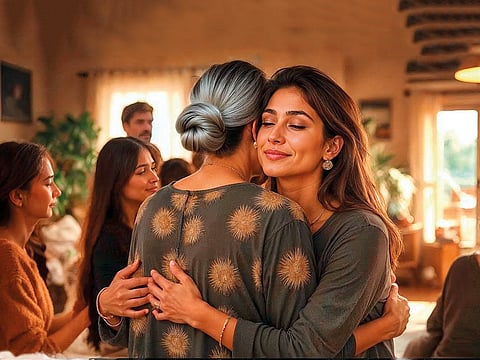
In a world shaped by constant change, storytelling continues to hold its ground as a powerful way to make sense of it all. It reflects who we are, captures what we feel and, at times, connects people across cultures through shared experiences. Whether on screen, through documentaries or across digital platforms, stories have the ability to pause the noise, offering clarity, perspective and often a sense of comfort in moments that are difficult to define.
Across the UAE, this role is taking on new depth. Filmmakers, actors and creative leaders are increasingly crafting narratives that are rooted in the region’s culture and identity while resonating with audiences far beyond it. As the country’s creative landscape evolves, storytelling is no longer viewed as entertainment alone, but as a meaningful tool for expression, dialogue and cultural preservation. In shaping these narratives, creators are not only reflecting the UAE as it stands today, but also influencing how its stories are understood both locally and on the global stage.
Seen together
Speaking to Gulf News, Meera Al Midfaa, actress from Al Eid Eiden, points to the deeper emotional role storytelling plays in moments of uncertainty.
“In times of tension, there’s a need for steadiness, nuance and humanity. Sometimes the most powerful thing we can offer is a presence, in characters who are navigating uncertainty with dignity, restraint and grace.
“But what that does to the human psyche goes deeper than comfort or distraction. What happens when someone watches a performance and thinks, ‘that’s what I’ve been carrying,’ is not just recognition, it’s a release. So much of what people experience in moments of fear or conflict lives beneath language and image, it sits in the body, in their subconscious, unarticulated.
“Storytelling gives form to that. It brings the invisible into something shared and seen, which in turn can create a kind of collective healing, as if the moment has been witnessed on their behalf. Now the performance becomes more than craft, a bridge between the inner world and the outer, and between the individual and the collective. What comes out of that togetherness is a reminder of our shared humanity.”
She adds that this responsibility becomes even sharper at a time when narratives can easily be misunderstood.
“In our line of work, when done well, the artist has the honour to project fragments of real people, real histories and real emotions. This is a responsibility and a duty. At a time when narratives can easily be misunderstood, truth becomes an undeniable force.
“Our culture is one that often expresses itself with restraint. There’s a depth and nuance in that which isn’t always visible, even to those who live among us. We must represent the specificity of who we are, our values, our subtleties and our contradictions with care and precision to embody the deeper truth of our identity.
“For this expression, there has never been a more relevant time than now, as it softens misconceptions and invites understanding, ultimately bringing about an expansion of awareness. Our art form is gifted with the ability to communicate reality in a distinct way. When we use that with sincerity and detail, we’re not just correcting narratives, we’re creating a record of who we are in our own voice. And, timelessly, it finalises our most ancient declaration: I was here.”
Making sense
Alwiya Thani, casting director and filmmaker, says storytelling has always helped people process uncertainty.
“Storytelling has always been one of the ways people make sense of uncertain times. When the world feels overwhelming, stories allow us to pause, reflect and see each other more clearly. As filmmakers, our role is not necessarily to provide answers, but to create space for empathy and understanding.
“A meaningful story can remind us that despite different backgrounds or beliefs, many of our fears, hopes and struggles are deeply shared. In that sense, cinema becomes more than entertainment, it becomes a bridge that encourages reflection, dialogue and human connection.
“The UAE’s film ecosystem has grown significantly in recent years, creating a dynamic environment for filmmakers to develop and share their stories. With stronger institutions, production opportunities and creative platforms, regional storytellers now have more support to bring authentic narratives to life.
“What makes this moment particularly inspiring is the spirit of collaboration. The UAE has become a meeting point where local talent and international creatives can work together, exchange perspectives and build stories that resonate both regionally and globally. It allows our stories to travel far while remaining rooted in our identity.”
Lived truths
Nadia Durry, Head of Documentary and Unscripted, says documentary storytelling brings audiences closer to lived realities.
“Documentaries have a unique ability to humanise complexity. Instead of presenting issues as headlines or statistics, they bring you into someone’s world, allowing you to experience their reality in a much more intimate and emotional way. That shift from watching something from the outside to experiencing it from within is what creates empathy. And empathy is usually where real understanding starts.
“For me, the power of documentary lies in its ability to hold nuance. It doesn’t have to simplify or take sides. It can present layered truths, contradictions and different viewpoints all at once, which is much closer to how the real world actually works.”
On why documentary filmmaking remains essential in preserving cultural narratives in the region, she says it captures both present realities and the journeys that shaped them.
“Documentary filmmaking helps preserve and showcase stories that might otherwise be overlooked or simply unknown, especially in a region evolving as quickly as ours. It captures not just where we are today, but how we got here, the people, traditions and shifts that shaped us.
“In the UAE specifically, much of the world only sees our recent growth, but there’s a much deeper history and cultural richness that often goes untold. Documentary allows us to show that fuller, more authentic picture. Ultimately, it’s about owning the narrative and telling our stories with depth and honesty.”
From here
Talal Al Asmani, Head of Local Content, says locally rooted stories are central to shaping a distinct creative identity for the region.
“Locally rooted stories are what give the industry its spine. Without them, you’re just replicating formats that already exist elsewhere. What we’re seeing now is a shift toward stories that feel specific to the UAE, whether through language, setting, social dynamics or the emotional realities of people.
“The more grounded a story is in its culture, the more universal it actually becomes. Audiences connect to authenticity, not generalisation. When we tell stories that reflect Emirati life honestly, with all its nuances and contradictions, we’re positioning the region as a source of original, exportable storytelling.
“Over time, these stories begin to establish their own creative language. Specific character types, themes and storytelling rhythms become recognisable, and that creates a kind of shorthand that future creators can build on. That’s how a collective identity forms, not just through individual projects, but through an accumulation of shared perspectives.
“That’s what ultimately defines a creative identity. Not scale, not budgets, but perspective.”
He adds that supporting emerging voices remains critical to keeping the industry open and evolving.
“It’s critical. If you don’t actively support emerging voices, you end up with a very narrow version of what the region looks and sounds like.
“New filmmakers bring different lived experiences, different ways of seeing the world and new approaches to expressing them creatively. That diversity is what keeps the industry evolving instead of becoming repetitive or stale.
“Support isn’t just about funding. It’s about access, mentorship, development time and creating an environment where people can take risks without being forced to imitate what’s already proven.
“If we want a sustainable industry, we have to keep widening the pipeline. The next wave of storytellers is what will define how the UAE is seen, both by itself and by the world.”
Global reach
Mahmoud Khalil, Head of Digital and Multimedia, says digital platforms have fundamentally changed how stories from the region reach global audiences.
“Digital platforms have completely changed the game for storytellers from this region. Before, if you wanted your story to travel, you had to rely on traditional systems, broadcasters, festivals, distributors and other gatekeepers to open that door. Today, that door is far more open. A story can start here in the UAE or anywhere in the Arab world and find an audience globally almost instantly through streaming platforms, social media, YouTube, TikTok, Instagram and even short-form vertical content.
“What is most exciting is that we no longer have to strip away our identity to be understood globally. In fact, the more specific and authentic the story is, the more it connects. Audiences today are looking for something real. They want voices, cultures and perspectives they have not seen a hundred times before.
“We are seeing that clearly in how regional content now travels. A film from the Arab world can spark conversation far beyond the region. A short scene, a trailer or even a single emotional moment can be clipped, shared and reinterpreted across platforms in a way that gives the story a second life digitally. Even from a marketing perspective, digital allows us to build audience interest long before release and create a relationship between the story and the audience before they even watch the full work.”
Beyond screen
On how technology is helping storytellers explore new ways of engaging audiences, Khalil says it allows stories to move beyond the traditional screen.
“In an increasingly digital world, technology gives storytellers the ability to connect with audiences in ways that go far beyond the traditional screen. It allows stories to live across multiple touchpoints, whether that is through social content, short-form video, interactive formats or digital campaigns that extend the emotional world of a project. The opportunity today is not just to tell a story, but to create a deeper and more continuous relationship between the story and the audience.
“At Image Nation Abu Dhabi, we saw this clearly with HOBA. The campaign was not only about promoting the film in a conventional way, but about building a digital presence around it that could draw audiences into its world. Through social-first storytelling, animated assets, platform-native content and visually driven campaign extensions, we were able to create engagement that felt immediate and organic.”
He adds that while tools continue to evolve, the core remains unchanged.
“What matters most is that technology should serve emotion, not overshadow it. Whether through campaign innovation, digital storytelling or AI-enabled workflows, the goal is the same: to help stories travel further, connect more meaningfully and stay alive in the audience’s mind long after the first interaction.”
Drawn worlds
Mohammed AlMaktoum, Development Executive (Animation), says animation opens up a different kind of connection with audiences.
“Animation offers a unique opportunity for storytelling because it can cross barriers that live action sometimes cannot. When we watch something, we often instinctively look for ourselves on screen, whether that is in how someone looks, speaks or lives. Animation shifts that. Because animated characters do not have to look exactly like us for us to connect with them, audiences can often relate more freely to a wider range of characters, emotions and experiences. That opens up space for stories that are culturally specific, but still feel universal.
“In our upcoming feature animation, for example, we explore Emirati and pan-Arab identities through our characters, using their behaviour, personalities and dynamics to reflect culture in a way that feels playful but truthful.”
On the opportunities ahead, he says the focus must remain on telling stories in an authentic voice.
“As the animation sector grows in the region, the most meaningful collaborations will be those that keep a strong local perspective at the centre rather than smoothing it away.
“The UAE now has the opportunity to begin discovering what that voice could be, through the kinds of stories we choose to tell and the way we choose to tell them. One of the biggest opportunities is simply trusting that our own stories are worth telling and will connect beyond the region.”
Story divide
Elie Boghos, Head of Physical Production, says there is a clear distinction between entertainment-driven and socially driven storytelling.
“Socially driven stories tend to emphasise emotional depth, real-life issues and meaningful messages. They aim to raise awareness, spark conversations and connect with audiences on a deeper emotional level. These projects don’t always need massive budgets, but they depend on strong storytelling, compelling performances and authenticity. Success is measured by impact and relevance rather than just box office figures.
“On the other hand, entertainment-driven projects are created for broad appeal and commercial success. They often require larger scale, higher budgets, star power, strong visuals, extensive marketing and wider distribution. Their primary goal is to attract large audiences and achieve strong returns.” He adds that while both formats matter, stories rooted in social themes often leave a more lasting impact.
“I personally lean towards supporting stories that delve into deeper social themes. These stories often stay relevant over time and offer meaningful ideas that audiences can reflect on long after viewing.
“At the same time, I understand why many producers opt for entertainment-focused projects. They tend to have broader commercial appeal and are often seen as safer investments.
“However, storytelling that engages with real social themes feels more compelling today. Even if such projects do not generate the highest profits, their long-term cultural value and the ability to communicate meaningful ideas make them worthwhile. Sometimes, content is created simply to share a message or reflect our culture and identity. These are the stories that endure.”


