
Home Decor: How metals are quietly transforming home interiors
Folded, framed or threaded, metals shape interiors with striking impact
When British-Canadian designer Philippe Malouin launched Bent Aluminium at Salone del Mobile in Milan last year, it didn’t feel like just another furniture drop, it felt like a fresh way of thinking about how metals can live within a home. Developed with Swiss manufacturer Lehni for Salon 94 Design, the collection brings together precisely folded aluminium, integrated storage, and bold nylon accents, pieces that feel refined and functional, yet still striking in a living space.
In a very different but equally compelling direction, American furniture designer Vivian Beer shapes steel and aluminium into fluid, sculptural forms that fit naturally into interiors, almost like functional art. Her work shows how metal furniture can ease into a space while still holding its own visually.
What’s coming through is a more intuitive way of using metallics, where a console, a shelving unit, or even a single standout piece can create a natural focal point within a room. Metal brings in contrast and a subtle edge, adding interest while still feeling easy within the overall space.
Bringing metallics home
Ever wondered how to bring these global metallic trends into your own space without going overboard? Start by thinking about how you want the room to feel. Metals naturally reflect light, so even a small addition can make a space feel brighter and more open. A brushed brass lamp tucked into a quiet corner, a chrome-edged mirror along a hallway, or a slim aluminium shelf can subtly lift the mood and give a sense of calm sophistication.
At the same time, metallics are becoming far more deliberate in how they’re used, and that’s reflected in the tones homeowners are choosing.
The rule we stand by is to choose one dominant metallic and allow one secondary tone as an accent, ensuring they share either a warm or a cool undertone to maintain harmony

“Warm antique brass and burnished gold are still leading the charge, but they’re nothing like the high-gloss, maximalist gold of the past decades. Today’s versions are lived-in, layered, and deeply intentional,” says Sayed Habib, Director, Danube Home.
That softer approach opens up room to experiment. Champagne gold has a light, understated charm, while rose gold has matured into a subtle, versatile staple that works beautifully in bedrooms and dressing areas.
“On the cooler end of the spectrum, pewter, graphite silver, and gunmetal are gaining serious traction among homeowners who want the metallic statement without the warmth, pairing well with concrete, linen, and stone textures,” Habib explains.
Repeating a metallic finish in two or three spots across a room helps create cohesion rather than a scattered feel. The real beauty is how these finishes now blend with a space instead of standing apart. As Habib says, “The real evolution? Metallics are no longer competing for attention. They’re collaborating with their surroundings.”
Functional design
With metallics already finding their place in accents and décor, the next step is letting them take on some of the heavy lifting in the room, both visually and functionally.
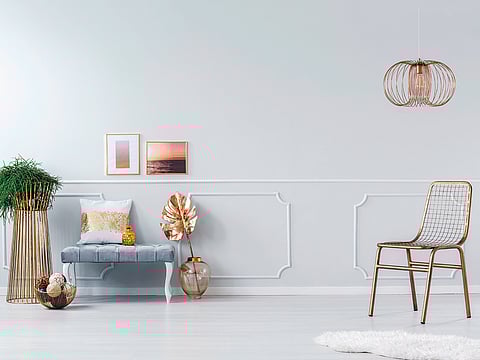
Furniture is where metals are really coming into their own. Consoles with clean aluminium folds, sleek steel-framed chairs, or side tables that double as sculptural elements can define a room while staying practical and approachable.
“Metallic-framed furniture like dining tables with powder-coated steel bases, bed frames in matte black iron, and shelving units with brass-tipped legs offer structural integrity that outlasts trends. Besides looking good, these pieces hold their form and finish through years of daily use,” says Habib.
Storage doesn’t have to be purely functional, it can shine too. Wire baskets in antique brass, metallic magazine racks, or copper-finished organisers bring order while adding texture and interest to a space.
Fixtures are evolving in the same way. “Stainless steel and brushed nickel aren’t just visually sleek; they’re extraordinarily durable and hygienic, making them ideal for kitchen countertops, sink fixtures, and bathroom fittings in busy family homes,” Habib adds.
When it comes to mixing metals, the key is balance. Pair warm and cool tones deliberately, like brass with gunmetal or bronze with steel, and repeat each finish across a few elements in the room to create harmony.
Let metals complement surrounding materials such as wood, stone, or textiles rather than compete with them. Even a single unexpected metallic accent can connect with other pieces, creating a sense of flow and cohesion throughout the space.
“Metallic accents are most effective when introduced as subtle, considered details rather than dominant features,” says a spokesperson from Al Huzaifa Furniture.
Metallic moments
If a full furniture refresh feels like too much, metallics still have plenty to offer in smaller doses.
“The easiest way to incorporate them without a full overhaul is through everyday touchpoints – hardware, lighting, and small accessories. Elements like cabinet handles, a well-placed lamp, or a refined tray can instantly elevate a space while remaining understated. We often view metallics as finishing touches – they don’t define the space, but they shape how it is experienced,” suggests the spokesperson from Al Huzaifa Furniture.
Textiles are another easy entry point. Cushions or throws with metallic threads, a rug with a faint sheen, or curtains that catch the light can introduce reflective quality naturally.
“We often tell customers: one metallic tone, three different textures. That’s the formula that makes experimentation feel curated rather than chaotic,” adds Habib.
Even a single wall with a soft metallic finish or textured wallpaper in gold, silver, bronze, or copper can bring a sense of luxury and glamour to a room.
The right approach is to use metallics with intention, allowing the space to breathe and complement the overall material palette.
Lighting offers another subtle route, for instance, floor lamps, chandeliers, or wall sconces in metallic finishes can act as a focal point in otherwise muted spaces. Wall art or a few standout objects also allow you to test different tones without committing to a full-scale change.
Getting it right
So, where do things usually go wrong? More often than not, it comes down to doing too much, too quickly. Bringing in too many metallic finishes within the same space can make it feel busy rather than balanced. Keeping a clear thread helps. Two or three tones, repeated across the room, tend to feel more connected and easy on the eye.
“The most frequent mistake we see is mixing too many metallic tones without a clear hierarchy. A room with chrome, brass, rose gold, and gunmetal all competing simultaneously ends up feeling restless rather than rich,” says Habib.
“The rule we stand by is to choose one dominant metallic and allow one secondary tone as an accent, ensuring they share either a warm or a cool undertone to maintain harmony.”
Another thing to watch is the finish. Too many high-shine surfaces can reflect light in a way that feels harsh over time. Mixing finishes, matte, brushed, polished, brings in a more relaxed, lived-in feel and keeps the space from looking overly polished.
And then there’s the question of scale. Metallics naturally draw attention, so they don’t need to be everywhere to make an impact. When every surface reflects light, the effect can feel overwhelming, and you lose the impact of that one well-placed piece.
“The right approach is to use metallics with intention, allowing the space to breathe and complement the overall material palette,” says the spokesperson from Al Huzaifa Furniture.


