The beauty of devotion
A selection from the Farjam Collection represents Islamic art in all its diverse glory
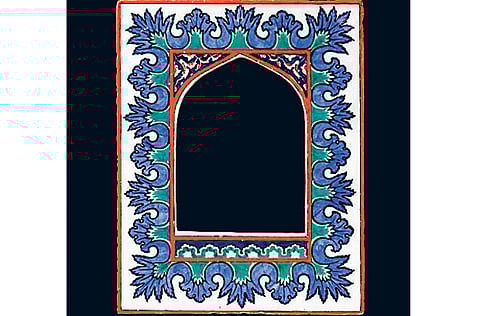
If you are passionate about Islamic art, the Farjam Collection will welcome you throughout Ramadan with an exhibition of 99 impressive art objects. Curated by students of Zayed University, The Story of Islamic Art in 99 Objects marvellously mirrors the rich history of Islamic art. Each piece on display narrates a unique story that documents the development of Islamic art.
Emilie Faure, collection and exhibitions manager at the Farjam Collection, says the aim of the exhibition is to narrate the story of art infused with the principles and spirit of Islam.
Telling a story, piece by piece
"The 99 objects weave a visual narrative of the development of various styles and techniques in Islamic art. With objects dating from the earliest days of Islam to the dawn of industrialisation, the exhibition focuses on the exceptional craftsmanship that has been intrinsic to Islamic art through the ages," Faure says. "All the pieces are drawn from Farhat Farjam's private collection and have never been on display for the public."
Regarding the role of Zayed University students in the exhibition, she says: "The students were keen to explore the cycle of patronage and usage that has been central to Islamic art over the centuries. As a result, the 99 objects were selected for their resonance in reflecting the lives of patrons, artisans, artists and owners through time. Each object tells its own story while also being part of a larger narrative that extends across a millennium.
"This exhibition marks the culmination of a full term of educational partnership between The Farjam Collection and Zayed University. We have been holding classes and workshops on museum studies for these students, with a focus on works from the private collection. This is likely to be the first of many more collaborations with educational institutions of calibre."
The significance of the number
Asked why 99 objects were chosen, Faure said: "The number 99 bears religious significance — it is associated with the 99 names of God."
The students selected pieces that represented key moments, styles and periods to tell the story of Islamic art. "The pieces in the first part of the exhibition focus on core religious themes and reveal the devotion of the people who commissioned and crafted them. The second part of the exhibition examines the works produced by the great Islamic empires. The great patrons of these courts commissioned some of the most exquisite objects in the history of Islamic art."
Asked about the origin of the objects — whether they are an outcome of a fertile artistic imagination or a collaboration of a number of artists, ancient or modern — she says: "The 99 pieces are diverse, covering different genres, media and forms of art. They include manuscripts, the Quran, calligraphy, textiles, ceramics, miniatures, metalwork, jewellery and arms. Covering a wide geographical area and stretching across time from the first century AH to the 14th century AH, the exhibition reveals the rich history of Islamic art."
The Story of Islamic Art in 99 Objects is on throughout Ramadan at The Farjam Collection, Dubai International Financial Centre.


