Apple Watch Series 12 and Ultra 4 launch in UAE with major health upgrades
Both watches add new heart sensing and readiness scores, with sales from September 18
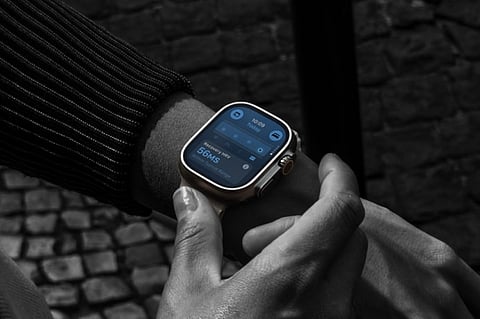
Dubai: Apple has introduced the Apple Watch Series 12 and Apple Watch Ultra 4, with UAE prices starting at Dh1,599 and Dh3,199 respectively, bringing new heart-rate sensing, daily readiness scores and faster charging across its latest smartwatch lineup.
Both models are available for pre-order now and will reach stores on Friday, September 18.
The Series 12 is offered in 42mm and 46mm sizes, while the Ultra 4 comes in natural and black titanium. Both use Apple’s new S11 chip and Health Sensing System, which the company says delivers its most accurate heart-rate sensing in a wearable.
Heart rate checked every five seconds
The new optical heart sensor uses larger, power-efficient green LEDs to measure heart rate every five seconds throughout the day on both models.
Heart rate variability, or HRV, is measured up to 24 times more often, with users able to see recovery HRV and overall HRV separately in the Heart Rate app.
Recovery HRV is intended to provide daily information on stress and recovery, while overall HRV provides a broader view that includes cardiovascular health.
Overnight vitals now incorporates recovery HRV measurements against a user’s personal baseline, while a daytime vitals view allows users to switch between daytime and overnight readings.
Apple said a study involving more than 1,000 participants compared its new heart-rate sensing system with leading wearables and found Apple Watch delivered the highest accuracy across the devices tested.
New readiness score looks at the day ahead
Series 12 and Ultra 4 also introduce readiness, which combines recent activity, training load, vitals and sleep scores into a daily score between zero and 10.
Users receive one of four recommendations based on that score, ranging from Recover and Pace Yourself to Ready and Go For It.
The score can change during the day when new information is recorded, including an intense workout or changes in daytime vitals.
Ultra 4 extends battery life to 50 hours
Battery life marks one of the biggest differences between the two models.
Apple Watch Ultra 4 provides up to 50 hours of everyday battery life and up to 84 hours in Low Power Mode. A 15-minute charge can add up to 18 hours of battery life.
Its Extended Workout mode provides up to 25 hours of outdoor workout tracking with full GPS and heart-rate readings, which Apple said is 25% more than the previous model.
Max Extended Workout mode stretches outdoor run, walk and hike tracking to as much as 45 hours while continuing to take GPS readings every second.
Apple said that duration is typically sufficient to complete a 100-mile race.
Series 12 retains up to 24 hours of everyday battery life and now provides up to 10 hours during an outdoor workout, a 25% increase from the previous model.
A 15-minute charge on Series 12 adds up to 12 hours of battery life, which Apple said is 50% more than its predecessor.
Step tracking gets redesigned
Apple has also redesigned its pedometer model using new machine-learning algorithms, with the S11 chip handling more accurate step counts throughout the day.
The company says Series 12 and Ultra 4 now provide the most accurate step tracking of any smartwatch.
A new Steps complication allows users to see their step count directly on the watch face.
Watches can listen for important sounds
The S11 chip also enables Sound Recognition, a feature designed to alert deaf or hard of hearing users when the watch detects sounds including sirens, alarms, doorbells or a baby crying.
Apple said the feature processes audio through a hardware-isolated Secure Exclave and does not create or store audio recordings. Raw audio used for processing is deleted after processing and is inaccessible to the operating system, apps, users and Apple.
Shazam is also integrated into the watches, allowing music playing nearby to be identified and displayed through the Music Recognition widget in the Smart Stack.
Series 12 gets new materials
Apple Watch Series 12 is available in dark bronze, black, light gold and space gray aluminium, alongside radiant gold and natural titanium.
A ceramic version is offered in pearl white and night blue.
Aluminium models use Ceramic Shield 2, which Apple says is 60% tougher than the Ion-X glass used on previous aluminium models.
Ultra 4 continues with a titanium design and is available in natural and black finishes.
watchOS 27 arrives September 14
Both watches support watchOS 27, which will be available on Monday, September 14, for Apple Watch Series 9 or later, Apple Watch SE 3 and Apple Watch Ultra 2 or later.
The software adds a dynamic app grid with five Siri-suggested apps, a new single-handed tap gesture, Smart Stack suggestions and support for perimenopause and menopause in Cycle Tracking.
Workout Buddy can also operate without an iPhone nearby and will support Spanish in addition to English.
Apple Intelligence will become available with watchOS 27 on September 14 for supported devices and languages, while Siri AI will begin rolling out in beta on the same day for supported devices set to English.