Anger and agony in Amsterdam after World Cup defeat
Silence fell on an Amsterdam square on Sunday where about 180,000 football fans watched in disbelief on big TV screens as their team lost the 2010 football World Cup final to Spain
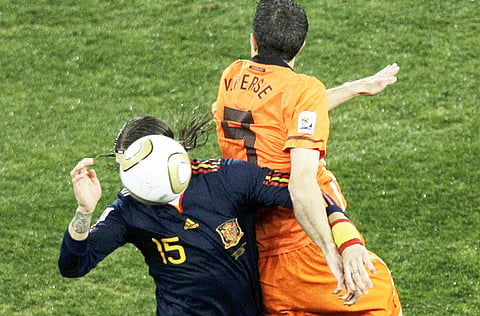
The Hague: Silence fell on an Amsterdam square on Sunday where about 180,000 football fans watched in disbelief on big TV screens as their team lost the 2010 football World Cup final to Spain.
As the final whistle blew, some supporters rested their heads in their hands in defeat as the earlier festive atmosphere turned somber and a cacophony of vuvuzelas suddenly died down. Read full match report
Some cried, others sank down to the ground; many started leaving the square in grim silence directly after the 1-0 extra time defeat.
The normally tranquil Museumplein was earlier transformed into a sea of orange with people in T-shirts, wigs, hats, flags and banners in the colour of the national team, nicknamed the Oranje Elftal (Orange Eleven).
Some had painted their faces, others wore lion suits or tails after the national symbol. There were orange rabbit's ears, orange clogs, orange hair, inflatable orange crowns and orange viking helmets.
Amsterdam officials had earlier urged people to stop coming to the Dutch capital as the city centre and Museumplein, with a maximum capacity of 100,000 visitors, filled up three hours before the match even started.
Gulf News: Blogging from the World Cup
Orange fans of all ages had gathered countrywide on squares, in bars and at each other's homes for the final clash, including more than 1,000 bars and restaurants in Amsterdam alone.
Entire homes had been covered in large orange sheets, many flew the Dutch flag, and several streets are lined with small orange flags fluttering noisily in the wind.
Read in-depth coverage: Fifa World Cup
Police in several cities said the atmosphere at mass fan gatherings had been festive before and during the match.
In the western port city of Rotterdam, some 24,000 people watched the game on two giant screens.
Another 5,000 people had gathered before a big screen erected on the outskirts of the central city of Utrecht, and up to 20,000 on two big screens on the main square of Maastricht in the south.


