Into paradise and beyond
Kerala is well-known for its backwaters, but the Indian state offers just as many pleasures to be discovered on land
"Are you a Jewess?" asked Sarah, her eyes lighting up with hope. I found myself apologising that I was not. In Cochin's Jew Town, octogenarian Sarah is one of only ten remaining white Paradesi Jews, whose ancestors arrived in Kerala in the 16th century, fleeing the Inquisition in Europe. Little is left of this once powerful community, feted by the local rulers. Their numbers were eroded when many emigrated in 1948.
Today, the narrow, picturesque streets of the town are a major tourist attraction, fast approaching museum status. Sarah sits, like a living exhibit, in colourful floral frock behind a grill in her lurid green house on Synagogue Lane, from which she sells her embroideries. All around her, former homes and godowns are occupied by Kashmiri traders, with their ubiquitous shawls and jewellery, and antiques emporia.
For most, Kerala is synonymous with the backwaters — a network of lagoons and canals covering 3,198 square kilometres, between the Arabian Sea and the uplands of the Western Ghats.
But before exploring these byways, we headed through coconut and pineapple plantations and up the mountains, to discover a different world, 100 kilometres away.
Lush terrain
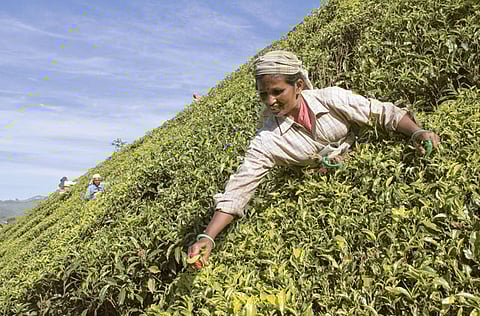
We climbed through lush forests into a granite landscape, cliffs glistening with waterfalls, to reach Munnar, whose misty hills are mottled with neat clumps of tea bushes. Women were at work, clipping the bushes with shears and collecting the leaves. Herds of elephants occasionally make their way through the plantations to the river below.
A region of huge biodiversity, it is a paradise for plant- and bird-lovers, home to the rare Nilgiri tahr — a kind of oversized goat — and the even rarer Neelakurinji plant, which flowers once every 12 years to carpet the slopes in purple blossoms (next flowering, October 2018).
Descending to Periyar, at 1,000 metres, the tea plantations give way to fragrant spice gardens. The streets are lined with shops selling exotic spices, essential oils and Ayurvedic remedies.
The region's highlight was hidden in the middle of nowhere. Serenity (by name and by nature) is an exquisite retreat in the village of Kanam. One can take in the sights of village life aboard Lakshmi, an exceptionally well-mannered elephant, rescued from a circus. We went past saw mills to the river, for her bath.
We reached the backwaters, where Purity has opened its doors on the lapping shores of Lake Vembanad. I cruised aboard the MV Apsara, transferring to a shikara to negotiate the canals between the sunken rice paddies. On the raised dykes that separate paddy from canal, a whole universe balanced: schools, hospitals, churches; and the homes of farmers and fishermen.
Kingfishers darted around us and Brahmini eagles soared overhead, as dusk fell and fishermen took to the lake, to cast their nets for the night. No visit to Kerala is complete without a stay on the 579-kilometre coastline. At Kovalam, Vivanta by Taj cloaks a hillside that overlooks a perfect coconut lagoon. I dined on seafood on the beach as moonlight shimmered on the roaring surf of the Arabian Sea. Even the breeze conspired to create perfection, keeping the mosquitoes at bay.


