AI-powered Siri: Can 'understand' images and describe visual content — 9 things users need to know
Siri receives its biggest upgrade yet, can remember past conversations, answers follow-ups
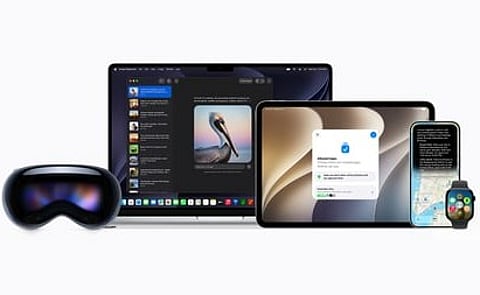
Apple recently unveiled its long-awaited artificial intelligence-powered version of Siri at its Worldwide Developers Conference (WWDC) 2026, marking the company's most significant upgrade to its digital assistant since the feature debuted more than a decade ago.
The announcement places Apple squarely in the rapidly intensifying AI race dominated by competitors such as OpenAI, Google, Microsoft and Anthropic, as major technology companies compete to make generative AI a core part of everyday computing.
Get updated faster and for FREE: Download the Gulf News app now - simply click here.
9 things to know about new Siri
Siri receives its biggest upgrade since launching in 2011.
AI-powered Siri can understand images and describe visual content.
The assistant can remember past conversations and answer follow-up questions.
Siri can learn from emails, messages, photos and calendars to provide personalized responses.
New capabilities include drafting emails, taking notes and completing actions across apps.
Users can customize Siri's voice, tone and speaking style.
The upgraded assistant will work across iPhone, iPad, Mac, Apple Watch and Vision Pro.
Public beta testing is expected later in 2026.
The move positions Apple more directly against ChatGPT, Gemini and other AI assistants.
First introduced in 2011, Siri revolutionised smartphone interactions by allowing users to control devices through voice commands.
What new Siri brings
But in recent years, the assistant lagged behind newer AI-powered chatbots capable of holding conversations, understanding context and generating content.
Apple's new Siri aims to close that gap.
The upgraded assistant can now understand images, generate descriptions, recall previous interactions and maintain context across conversations, bringing its capabilities closer to AI assistants such as ChatGPT and Gemini.
Siri will also gain access to a user's personal context — including emails, messages, photos and calendar information — to deliver more personalised and relevant responses.
Tasks
Apple said the new assistant will be capable of performing tasks across applications, answering follow-up questions, taking notes, drafting emails and helping users complete complex workflows without requiring multiple commands.
"We're excited to introduce Siri AI, a dramatically more capable and conversational assistant designed to help users find information and get things done throughout the day," said Craig Federighi, Apple's senior vice president of Software Engineering.
Combines AI, world knowledge, on-screen awareness, personal context understanding
Federighi said Siri AI combines broad world knowledge with on-screen awareness and personal context understanding, allowing it to assist users more naturally across Apple's ecosystem.
The company also announced new voice personalisation options, enabling users to customize Siri's speaking style, pacing and expressiveness.
The AI-powered Siri will be available across Apple's major product lineup, including the iPhone, iPad, Mac, Apple Watch and Apple Vision Pro headset. A beta version is expected to launch later this year before a wider rollout.
The announcement comes as AI has become the defining battleground of the technology industry.
Over the past three years, generative AI has transformed how users search for information, create content and interact with software, forcing major technology companies to rapidly integrate AI capabilities into their products.
For Apple, the Siri overhaul represents both a modernisation effort and a strategic attempt to catch up with rivals that have already embedded advanced AI assistants into smartphones, computers and cloud services.


